
Novo Nordisk's Guidance Cut: A Catalyst for Long-Term Growth in the Obesity Drug Sector?
The recent revision of Novo Nordisk's 2025 guidance has sparked significant debate among investors, with the Danish pharmaceutical giant citing slower-than-expected adoption of its GLP-1 weight-loss and diabetes treatments in the U.S. market. While the cut in sales and operating profit growth projections initially rattled nerves, a closer look reveals a nuanced story: a company grappling with short-term headwinds but positioned to capitalize on an expanding, innovation-driven obesity drug sector.
The Guidance Cut: A Symptom of Market Evolution
Novo Nordisk's revised 2025 guidance—sales growth of 13–21% and operating profit growth of 16–24%—reflects the disruptive rise of compounded GLP-1 therapies. These unbranded, custom-made alternatives, often sold by telehealth companies, have eroded Novo's pricing power and market share. The company's decision to slash Wegovy's price by over 50% on its NovoCare platform underscores its strategy to combat this threat. Yet, this move also highlights a broader industry trend: the commoditization of blockbuster drugs as demand outpaces supply.
Despite these challenges, Novo's Q1 2025 results remain robust. Net sales grew 18% year-on-year to €10.5 billion, with obesity care sales surging 65%. This resilience suggests that while compounded therapies pose a near-term threat, Novo's core products retain strong demand.
Competitive Landscape: Eli Lilly's Shadow and the Innovation Arms Race
Eli Lilly's Zepbound has emerged as a formidable rival, with clinical trials showing weight loss of 20–22%—outpacing Wegovy's 15–17%. The U.S. company's pipeline, including retatrutide (a triple-hormone agonist) and orforglipron (an oral GLP-1 therapy), further threatens Novo's dominance. Yet, Novo's response—CagriSema—offers a compelling counterpoint. This dual-acting semaglutide and cagrilintide combination has shown 15.7% weight reduction in trials, though it fell short of the 25% target. If approved, CagriSema's dual-chambered delivery system could redefine treatment paradigms, despite potential manufacturing complexities.
The obesity drug sector is also attracting heavyweights like Boehringer Ingelheim and emerging innovators, signaling a shift toward diversified, next-generation therapies. This competitive intensity, while challenging, is likely to drive innovation and expand the overall market.
Long-Term Potential: A $73 Billion Opportunity
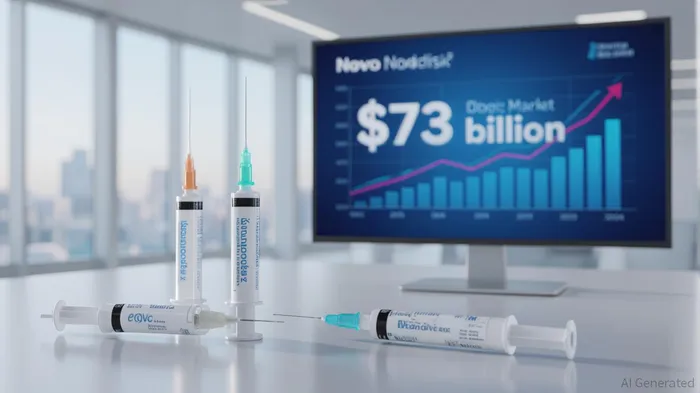
The U.S. obesity drug market is on track to exceed $73 billion by 2034, driven by rising obesity rates, evolving regulatory frameworks, and growing insurer coverage. With over 138 million Americans affected by obesity, the sector's growth is not just a healthcare imperative but an economic inevitability. Novo Nordisk's leadership in GLP-1 therapies positions it to benefit from this expansion, particularly as it prepares to file CagriSema for regulatory approval in early 2026.
However, investors must weigh near-term risks. The compounded GLP-1 market's growth could further compress margins, and CagriSema's commercial success hinges on overcoming logistical hurdles. Yet, the company's focus on expanding patient access and curbing unsafe compounding practices signals a strategic commitment to long-term value.
Investment Implications: Balancing Risks and Rewards
For long-term investors, Novo Nordisk's stock remains a compelling case study in navigating disruptive markets. While its 26% year-to-date decline reflects short-term pressures, the company's strong Q1 performance, robust pipeline, and dominant market position offer a buffer. The key question is whether Novo can adapt its pricing and distribution strategies to retain market share without sacrificing profitability.
CagriSema's approval and commercialization will be pivotal. If the drug achieves even 15% weight reduction in broader patient populations, it could reinvigorate Novo's growth trajectory. Meanwhile, the obesity drug sector's expansion—fueled by innovation and regulatory tailwinds—provides a strong macroeconomic backdrop.
In conclusion, Novo Nordisk's guidance cut should not deter investors with a long-term horizon. The company's ability to innovate, coupled with the sector's structural growth drivers, suggests that today's challenges may be tomorrow's catalysts for renewed expansion. For those willing to navigate the near-term turbulence, Novo's journey offers a glimpse into the future of obesity care—and the opportunities it holds.





Comentarios
Aún no hay comentarios