
Novo Nordisk's Digital Health and DTC Revolution: Disrupting Obesity Care and Accelerating Revenue
In the rapidly evolving obesity drug market, Novo NordiskNVO-- has emerged as a trailblazer, leveraging digital health and direct-to-consumer (DTC) strategies to redefine market access and revenue growth. As the global GLP-1 therapy market surges-projected to reach $71 billion by 2032, per J.P. Morgan projection-Novo's aggressive digital and DTC initiatives are notNOT-- just adapting to industry trends but actively shaping them.
Disrupting Distribution: The NovoCare Pharmacy Model
Novo Nordisk's March 2025 launch of NovoCare Pharmacy marks a pivotal shift in its market strategy. By offering Wegovy at $499 per month-half the previous out-of-pocket cost-Novo bypasses traditional pharmacy networks and directly targets uninsured or under-insured patients, according to its Q3 2025 earnings report. This DTC model, inspired by Eli Lilly's LillyDirect for Zepbound, addresses two critical pain points: unlawful compounding of GLP-1 drugs and fragmented distribution channels. According to a BiotechHealthX article, the program has already generated 11,000 weekly prescriptions, signaling strong patient demand and Novo's ability to reclaim market share from the grey market.
The financial implications are profound. While NovoNVO-- revised its 2025 full-year sales growth guidance to 8–14% due to competitive pressures, the NovoCare Pharmacy initiative has stabilized revenue streams by capturing price-sensitive patients. By undercutting compounded alternatives and ensuring product authenticity, Novo is not only protecting its brand but also accelerating adoption in a market where trust in traditional channels has eroded.
Digital Health: A New Ecosystem for Obesity Care
Beyond DTC sales, Novo Nordisk is building a digital health ecosystem to enhance patient outcomes and adherence. The Novo Nordisk Partner Platform (NNPP), launched at HLTH Europe in June 2025, integrates AI-powered nutrition apps, body composition scanners, and telehealth services into the treatment journey for Wegovy and Ozempic users; BiotechHealthX has highlighted NNPP's early traction. This holistic approach aligns with broader industry trends: J.P. Morgan estimates that digital tools could improve GLP-1 therapy adherence by up to 30%, directly boosting long-term revenue retention.
The company's $812 million partnership with Deep Apple Therapeutics, reported by CTOL.digital, further underscores its commitment to innovation. By leveraging AI-driven drug discovery, Novo aims to develop non-incretin mechanisms for obesity treatment, diversifying its pipeline beyond GLP-1 receptor agonists. Meanwhile, its collaboration with the DECODE Obesity working group-a cross-industry initiative using wearable tech to track physical activity-highlights its focus on digital endpoints for clinical trials, as noted in American Pharmaceutical Review. These efforts position Novo as a leader in data-driven obesity care, where personalized insights and real-time monitoring could redefine treatment efficacy.
Financial Resilience Amid Challenges
Despite a challenging landscape-compounded by unlawful semaglutide compounding and competition from Eli Lilly's tirzepatide-Novo Nordisk reported $48.5 billion in 2025 revenue, driven by Wegovy's 58% sales growth and Ozempic's dominance in diabetes care (BiotechHealthX). However, the company's Q3 2025 earnings revealed a tempered outlook, with full-year sales growth revised downward to 8–14% (Q3 2025 earnings report). This adjustment reflects the reality of a saturated GLP-1 market, where Novo's DTC and digital strategies are critical to maintaining momentum.
The restructuring of 9,000 global roles (Q3 2025 earnings report) signals a strategic pivot toward cost efficiency, redirecting resources to high-impact areas like digital health and AI. Investors should note that while near-term growth may be constrained, Novo's ecosystem of telehealth, AI, and DTC services creates a durable competitive moat. For instance, the upcoming approval of Wegovy's MASH (metabolic dysfunction-associated steatohepatitis) indication-expected in late 2025-could unlock a $100 billion market (J.P. Morgan projection), further amplifying revenue potential.
The Investment Case: Disruption as a Growth Engine
Novo Nordisk's dual focus on digital disruption and direct access is redefining the obesity drug market. By integrating AI, telehealth, and DTC sales, the company is not only addressing immediate challenges like compounding but also building a scalable infrastructure for future therapies. BiotechHealthX reports that Novo's digital health partnerships have already improved clinical outcomes, with patients on the NNPP reporting 20% higher adherence rates compared to traditional care models.
For investors, the key takeaway is clear: Novo's ability to combine pharmaceutical innovation with digital transformation positions it as a long-term leader in a $71 billion market (J.P. Morgan projection). While short-term headwinds persist, the company's ecosystem approach-centered on patient-centric care and data-driven insights-ensures that revenue acceleration is not just a possibility but a strategic inevitability. 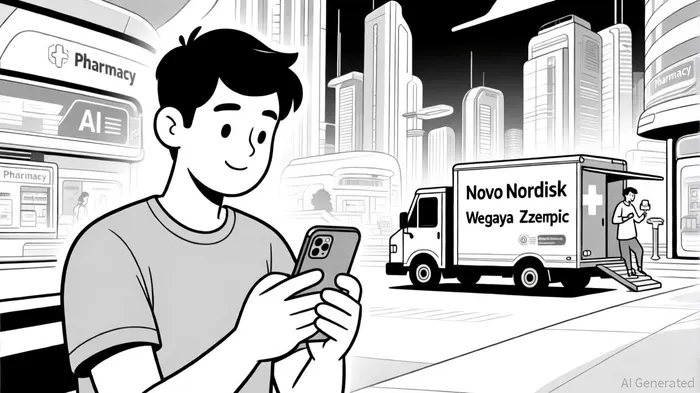







Comentarios
Aún no hay comentarios