
Novo Nordisk's Akero Acquisition: Strategic Momentum vs. Market Overreaction
In the ever-evolving landscape of biotech and pharma, strategic acquisitions often serve as both a lifeline and a litmus test for market sentiment. NovoNVO-- Nordisk's $5.2 billion acquisition of AkeroAKRO-- Therapeutics-focused on expanding its metabolic disease portfolio into the high-stakes arena of MASH (metabolic dysfunction-associated steatohepatitis)-has sparked a debate about whether the deal represents calculated momentum or a market overreaction to speculative potential.
Strategic Momentum: A Calculated Move into MASH
Novo Nordisk's acquisition of Akero is rooted in a clear strategic imperative: to dominate the next frontier of metabolic disease treatment. Akero's lead drug, efruxifermin (EFX), a fibroblast growth factor 21 (FGF21) analogue, has demonstrated unprecedented efficacy in phase 3 trials, with 49% of patients achieving fibrosis regression after 96 weeks compared to 19% on placebo, according to a GlobeNewswire release. This positions EFX as a potential blockbuster in a market projected to grow rapidly as obesity-related liver diseases become more prevalent.
The deal aligns with Novo's broader vision of leveraging its GLP-1 (glucagon-like peptide-1) expertise-already a cornerstone of its diabetes and obesity treatments-to address comorbidities like MASH. By acquiring Akero, Novo gains access to a drug that directly targets liver fibrosis, a critical unmet need in a patient population that overlaps significantly with its existing customer base, as reported by American Pharmaceutical Review. According to an Invezz report, this acquisition could solidify Novo's leadership in a $100 billion+ metabolic disease market, where MASH therapies alone could generate $30 billion in annual revenue by 2030.
Market Overreaction: The Price of Optimism
While the strategic rationale is compelling, the market's immediate reaction raises questions about whether the deal's valuation reflects realistic expectations. Akero's stock surged nearly 19% on the news, trading at $55 per share-just shy of the $54-per-share cash offer plus a $6 contingent value right (CVR) tied to FDA approval by 2031, as TS2 Tech reported. This implies that investors are already pricing in a high probability of regulatory success, despite the inherent risks of phase 3 trials and the complex approval landscape for MASH therapies.
Conversely, Novo Nordisk's shares dipped slightly post-announcement, with some analysts citing concerns about the $5.2 billion price tag-a 32% premium over Akero's 30-day volume-weighted average price, according to an Akero press release. The contingent nature of the CVR, which hinges on approval by June 2031, adds further uncertainty. As reported by the Economic Times, the acquisition could strain Novo's R&D budget in 2026, particularly if EFX requires additional trials or faces competition from rival therapies like Intercept Pharmaceuticals' ozanimod.
Balancing Act: Momentum or Overreach?
The key to evaluating this deal lies in assessing whether Novo's strategic momentum justifies the premium paid. On one hand, EFX's clinical results-particularly its ability to reverse advanced fibrosis-position it as a transformative asset in a market with limited alternatives. Novo's CEO has already framed EFX as a "cornerstone therapy" that complements its GLP-1 portfolio, suggesting a long-term vision that transcends short-term costs (as noted in the GlobeNewswire release).
On the other hand, the market's enthusiasm for Akero appears to discount the risks of regulatory delays, competitive pressures, and the inherent volatility of biotech pipelines. For instance, Akero's lack of revenue and reliance on a single drug candidate mean that its value is entirely speculative-a risk now transferred to Novo. While the CVR mechanism provides some upside, it also creates a scenario where Novo's shareholders could face diluted returns if EFX fails to meet its 2031 approval deadline.
Conclusion: A High-Stakes Bet with Long-Term Potential
Novo Nordisk's acquisition of Akero TherapeuticsAKRO-- is a textbook example of strategic momentum in action. By securing a leading position in the MASH space, Novo is positioning itself to capitalize on a growing market while addressing a critical unmet need. However, the market's overreaction-evidenced by Akero's near-19% surge and Novo's share price dip-highlights the tension between optimism and realism.
For investors, the key takeaway is that this deal represents a high-stakes bet on the future of metabolic medicine. While the science behind EFX is promising, the financial and regulatory hurdles remain significant. Novo's ability to integrate Akero's pipeline, manage R&D costs, and navigate competitive pressures will ultimately determine whether this acquisition is a masterstroke or a misstep. 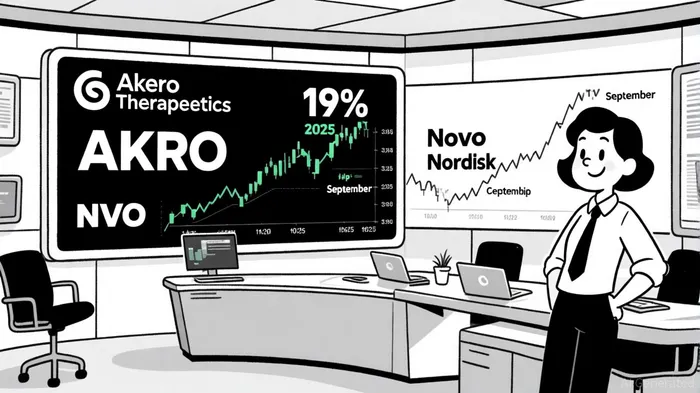





Comentarios
Aún no hay comentarios