
Novo Nordisk's 9,000-Job Layoff: A Strategic Rebalance or a Warning Sign for Growth?
In September 2025, Novo NordiskNVO-- announced plans to cut 9,000 jobs globally as part of a “strategic rebalancing” initiative aimed at streamlining operations and redirecting resources toward innovation. The move, framed as a proactive response to evolving market dynamics, has sparked debate among investors and analysts: Is this a calculated pivot to sustain long-term growth, or a sign of waning competitiveness in the fiercely contested obesity and diabetes drug markets?
Strategic Rebalancing: Streamlining for Innovation
According to a report by Staff Relief Georgia, NovoNVO-- Nordisk attributes the layoffs to the need to “optimize workforce structures” and reallocate capital toward high-potential therapeutic areas[1]. This aligns with broader industry trends, as companies like AC ImmuneACIU-- and ExelixisEXEL-- have similarly reduced headcount to sharpen pipeline focus[2]. The restructuring coincides with the departure of Novo's long-serving CEO, a transition that has already triggered share price volatility[4].
The company's decision to drop two obesity drug candidates—a GLP-1/GIP co-agonist and a CB1 receptor antagonist—further underscores its commitment to prioritizing programs with “clear competitive differentiation”[1]. By consolidating resources, Novo aims to accelerate development of amycretin, a unimolecular GLP-1 and amylin receptor agonist with potential advantages in dosing and efficacy[1]. This approach reflects strategic foresight, a methodology Novo has historically used to anticipate market shifts and invest early in disruptive technologies[3].
Competitive Pressures: Navigating a Crowded Market
Despite these efforts, Novo faces intensifying competition. Eli Lilly's Zepbound has emerged as a formidable rival, with clinical trials showing it outperforms Wegovy by 47% in weight loss outcomes[5]. Lilly's aggressive pricing strategies, including direct-to-consumer discounts and a robust supply chain, have further eroded Novo's market share[3]. Meanwhile, compounded versions of Wegovy—produced by pharmacies exploiting legal loopholes—have undercut Novo's pricing power, prompting costly legal battles[1].
Novo's response has included a price cut for Wegovy and a formulary win with CVS HealthCVS--, positioning it as the preferred obesity treatment for millions of insured patients[1]. However, these measures have not fully offset the headwinds. In Q1 2025, Novo lowered its full-year sales and operating profit guidance, citing compounded GLP-1 challenges and U.S. market pressures[2]. Analysts at UBSUBS-- downgraded the stock to “neutral,” warning that “persistent competitive and compounding pressures” could strain margins[6].
Financial Implications: Cost-Cutting vs. Innovation
The layoffs and hiring freeze are part of a broader cost-reduction strategy. Novo's global workforce expanded by nearly 100% between 2019 and 2023 to support Wegovy's rollout, but rising personnel costs and declining gross margins have forced a reversal[3]. New CEO Maziar Mike Doustdar has prioritized operational efficiency, targeting non-core roles such as sales and administration[3]. While these measures may stabilize short-term profitability, they risk slowing R&D momentum—a critical vulnerability in a sector defined by rapid innovation.
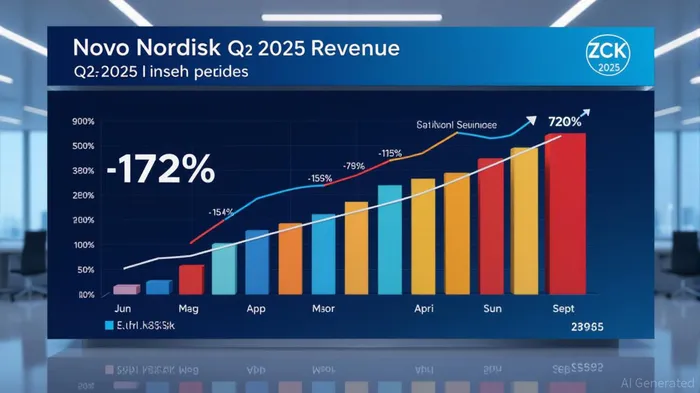
The financial toll is evident. Novo's market value has plummeted by $490 billion from its peak, and its Q2 2025 revenue from obesity drugs fell short of expectations[2]. In contrast, Lilly's Zepbound and Mounjaro generated $8.6 billion in Q2 revenue, driving a 172% year-over-year sales increase[5]. This disparity highlights the stakes of Novo's restructuring: without breakthroughs in its pipeline, cost-cutting alone may not offset the erosion of market leadership.
Long-Term Viability: Balancing Prudence and Ambition
Novo's strategic rebalancing hinges on its ability to innovate while maintaining operational discipline. The company's focus on amycretin and other next-gen GLP-1 therapies could reestablish its competitive edge, but success depends on clinical and regulatory milestones. Meanwhile, its legal battles against compounded drug providers and efforts to expand direct-to-consumer access remain critical to regaining pricing control[1].
However, the restructuring also raises questions about Novo's agility. By shedding non-core roles, the company risks losing institutional knowledge and slowing its response to market shifts. In an industry where first-mover advantage is paramount, even minor delays could prove costly. As one analyst noted, “Novo is playing catch-up in a race where the finish line keeps moving”[6].
Conclusion: A Calculated Gamble
Novo Nordisk's 9,000-job layoff represents a high-stakes bet on long-term growth. While the restructuring aligns with industry trends and prioritizes innovation, it also exposes the company to significant risks. The obesity and diabetes markets are defined by rapid technological advancements and aggressive pricing competition—factors that could amplify the consequences of missteps.
For investors, the key question is whether Novo's cost-cutting and pipeline reallocation will restore its growth trajectory or merely delay an inevitable decline. The coming months will test the company's ability to balance prudence with ambition, as it races to redefine its role in a market increasingly dominated by rivals like Eli LillyLLY--.





Comentarios
Aún no hay comentarios