
The November Jobs Report and Its Implications for Equity and Bond Markets
The November 2025 U.S. Jobs Report, released on December 16, 2025, offered a mixed but cautiously optimistic snapshot of the labor market amid lingering uncertainties from a 43-day federal government shutdown. The Bureau of Labor Statistics (BLS) combined October and November data into a single report, with October's household survey metrics-such as the unemployment rate-remaining unavailable due to the shutdown. Nonfarm payrolls rose by 50,000 in November, while the unemployment rate held steady at 4.4%, matching September's reading. Key sectors like healthcare added 43,000 jobs, while transportation and warehousing shed 25,000 positions. This report, though delayed, has become a pivotal piece of data for investors navigating a potential dovish shift in Federal Reserve policy.
A Dovish Scenario: Labor Market Softness and Rate-Cut Expectations
The report's muted job gains and sectoral shifts reinforce a narrative of a softening labor market. While the unemployment rate remained unchanged, economists note that the "low-hire, low-fire" trend-where job creation and attrition both slow-suggests a fragile equilibrium. This dynamic aligns with broader economic headwinds, including Trump-era tariffs, AI-driven layoffs and immigration policy changes. For investors, the report's implications hinge on how the Fed interprets this data.
A weaker-than-expected labor market could justify further rate cuts in 2026, a scenario that has already driven equity markets higher in anticipation. Michael Wilson of Morgan Stanley highlighted a "good is bad/bad is good" dynamic, where a weaker labor market is seen as positive for stocks if it accelerates monetary easing. The Fed has already cut rates three times in a row and signaled a pause, but traders continue to price in one or two additional cuts by year-end 2026. This dovish bias has created a tailwind for equities, particularly in sectors sensitive to lower borrowing costs, such as technology and growth-oriented industries.
Strategic Positioning in Equities and Bonds
For equity investors, the report underscores the importance of positioning for a Fed that may prioritize growth over inflation. Sectors like healthcare, which added jobs in November, and technology, which benefits from rate cuts, could outperform in a dovish scenario. Conversely, sectors tied to a tightening labor market-such as transportation and warehousing-may face headwinds. The S&P 500, a barometer of market sentiment, is likely to remain volatile as investors balance optimism over rate cuts with concerns about inflation and stagflation as reported by Nasdaq.
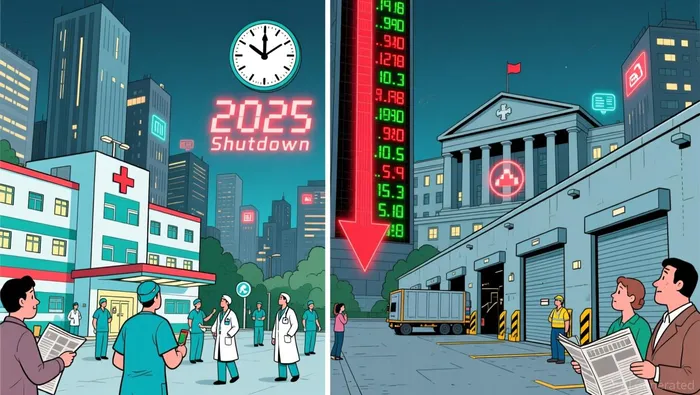
In the bond market, the report's mixed signals have created a tug-of-war between short-term and long-term yields. Short-term yields have fallen as rate-cut expectations rise, but long-term yields have climbed due to persistent inflation concerns. This divergence reflects investor uncertainty about the Fed's ability to balance growth and price stability. For bond investors, a strategic approach might involve extending duration to capitalize on potential rate declines while hedging against inflation risks through Treasury Inflation-Protected Securities (TIPS) or high-quality corporate bonds.
Navigating the Fed's Policy Crossroads
The delayed release of the November report has exacerbated market fragility, with investors operating in a vacuum of incomplete data. The absence of October's unemployment rate and labor force participation metrics leaves critical gaps in understanding the labor market's true health. This uncertainty has amplified the report's importance as a policy signal. If the Fed interprets the data as evidence of a cooling labor market, it could pivot further toward dovish policies, reinforcing the case for equity and bond allocations skewed toward growth and duration.
However, a stronger-than-expected jobs report could force a reevaluation of these strategies. A resilient labor market might delay rate cuts, pushing investors toward defensive equities and shorter-duration bonds. The key for investors is to remain agile, adjusting portfolios based on real-time Fed communication and subsequent data releases.
Conclusion
The November 2025 Jobs Report, while delayed and incomplete, provides a critical inflection point for investors anticipating a Fed policy shift. A dovish scenario-marked by weaker labor market data and aggressive rate cuts-presents opportunities in equities and bonds, but also requires careful risk management. As the Fed navigates the delicate balance between growth and inflation, strategic positioning will hinge on sectoral specialization, duration management, and a close watch on policy signals.







Comentarios
Aún no hay comentarios