
November Core PPI Surprises to the Downside at 2.6%—Implications for Sector Rotation and Fed Policy
The November 2025 Core Producer Price Index (PPI) report, released on December 18, 2025, delivered a stark surprise: a year-over-year increase of just 2.6%, well below the 3.5% consensus forecast. This marked a significant deceleration from the 3.7% annual rate in October and signaled a broad-based easing of inflationary pressures. For investors, this data point is a critical inflection point, reshaping strategic sector positioning and redefining expectations for Federal Reserve policy in 2026.
Disinflationary Pressures: A Structural Shift or Cyclical Pause?
The 2.6% core PPI reading—its lowest level since 2021—reflects a confluence of factors. Tariff-driven cost pressures, once a major concern, have softened as global supply chains adapt. Meanwhile, services inflation, which had been a stubborn source of stickiness, showed signs of moderation. The September 2025 data, delayed due to a government shutdown, had already hinted at this trend, with core PPI rising just 0.1% month-on-month. November's outcome confirms a broader disinflationary narrative, driven by weaker demand for goods and a cooling in services pricing.
This divergence from expectations has immediate implications for the Federal Reserve. With the 12-month core PPI now below 3%, the Fed's inflation-fighting mandate appears to be nearing its goal. The 81% probability of a December rate cut, already priced into markets, now gains additional momentum. A 2.6% core PPI reading could accelerate the timeline for rate normalization, with policymakers likely to prioritize easing financial conditions to support growth.
Sector Rotation: Winners and Losers in a Disinflationary Regime
The shift in inflation dynamics necessitates a strategic reevaluation of sector allocations. Historically, disinflationary environments favor sectors with pricing power and stable cash flows, while penalizing those reliant on inflation-linked revenue streams.
Consumer Staples and Utilities: These defensive sectors are poised to outperform as inflationary pressures recede. Companies with strong brand loyalty and predictable demand (e.g., Procter & Gamble, Coca-Cola) will benefit from reduced input costs and stable pricing. Utilities, which thrive in low-inflation environments, could see renewed interest as bond yields stabilize.
Technology and AI-Driven Sectors: While disinflation typically weighs on growth stocks, the current backdrop is unique. AI investments, which require capital-intensive infrastructure, could see accelerated adoption as borrowing costs decline. Sectors like semiconductors (e.g., NVIDIA, AMD) and cloud computing (e.g., Microsoft, Amazon) remain attractive, particularly if rate cuts spur a broader economic rebound.
Commodities and Real Estate: These sectors face headwinds. Commodity prices, already pressured by weak global demand, may further depreciate in a disinflationary environment. Real estate, which benefits from inflation-linked rent growth, could see valuation compression as yields stabilize.
Fed Signaling: From "Higher for Longer" to "Easing Earlier"
The November PPI surprise has forced a recalibration of Fed communication. The central bank's recent emphasis on "higher for longer" rates now appears increasingly outdated. With core PPI aligning closer to the 2% target, the Fed is likely to adopt a more dovish stance in early 2026. This shift will be reflected in three key areas:
- Rate Cuts: A 25-basis-point cut in December is now a near-certainty, with additional cuts likely in Q1 2026. The terminal rate may drop to 4.5% by mid-2026, down from 5.25% in November.
- Yield Curve Control: The Fed may allow the 10-year Treasury yield to stabilize around 3.75%, avoiding aggressive interventions that could distort market signals.
- Forward Guidance: Policymakers will likely emphasize the "data-dependent" nature of future decisions, reducing the risk of over-tightening.
Strategic Investment Recommendations
For investors, the November PPI surprise underscores the importance of agility. Here's how to position portfolios for the new regime:
- Overweight Defensive Sectors: Increase exposure to consumer staples and utilities, which offer resilience in a low-inflation environment.
- Rebalance Growth Portfolios: Allocate to AI-driven tech sectors, which benefit from lower borrowing costs and long-term productivity gains.
- Hedge Against Commodity Risk: Reduce exposure to energy and materials equities, which face margin compression as global demand weakens.
- Monitor Fed Signals: Use the Fed's December 2025 meeting and January 2026 policy statement to gauge the pace of rate cuts.
Conclusion: A New Equilibrium in Inflation and Policy
The November 2025 core PPI surprise marks a turning point in the inflation narrative. While the Fed's 2% target remains elusive, the data suggests a sustainable path toward disinflation. For investors, this creates opportunities to capitalize on sector rotation and policy-driven market shifts. The key is to remain nimble, leveraging macroeconomic signals to navigate the transition from inflationary resilience to a more balanced growth environment.
As the Fed pivots from restraint to easing, the markets will reward those who anticipate the shift—and act decisively.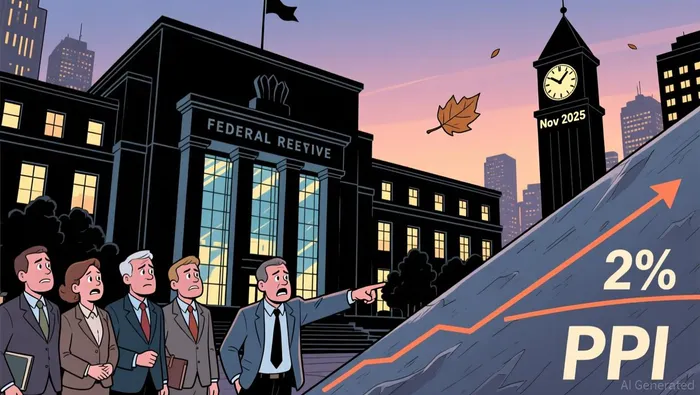







Comentarios
Aún no hay comentarios