
Nova Minerals and the Trump Administration's Potential Interest in Alaska's Strategic Mineral Project
The U.S. critical minerals landscape is undergoing a seismic shift, driven by geopolitical imperatives and a surge in resource nationalism. At the heart of this transformation lies Nova Minerals' Estelle Project in Alaska, a venture that has captured the attention of both the Trump administration and national security strategists. With antimony—a mineral vital for defense electronics, flame retardants, and industrial catalysts—emerging as a strategic bottleneck, Nova's efforts to establish a domestic supply chain reflect a broader U.S. push to counter China's dominance in critical mineral processing, supported by a $43.4 million award.
![]https://cdn.ainvest.com/aigc/hxcmp/images/compress-qwen_generated_1760453860303.jpg.png
Strategic Minerals and National Security
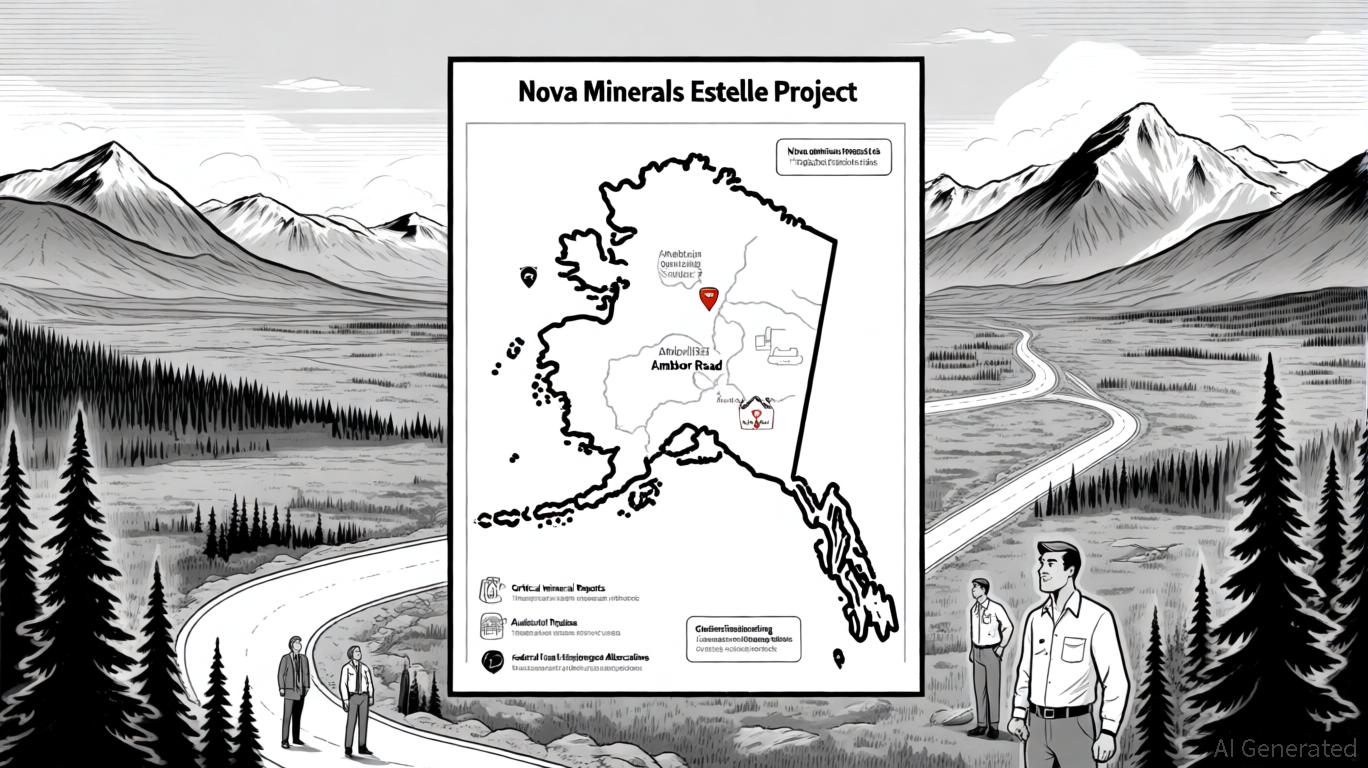
Nova's Estelle Project, located in Alaska's Tintina Gold Belt, spans 514 km² and hosts over 20 advanced prospects for gold and antimony. The project's recent $43.4 million award from the U.S. Department of War (DoW) underscores its national security significance. This funding, directed to Nova's subsidiary Alaska Range Resources LLC, aims to accelerate the development of a fully integrated antimony supply chain, with production targeting military specifications by 2026/27. The proposed refinery in Port MacKenzie, which will produce antimony trisulfide, trioxide, and metal, positions Nova as a first-mover in domestic antimony production—a critical step in reducing U.S. reliance on China, which currently controls over 90% of global antimony processing capacity, according to a CityBuzz report.
The Trump administration's January 2025 executive order, "Unleashing Alaska's Extraordinary Resource Potential," has further amplified this focus. By reversing prior restrictions on resource development and fast-tracking projects like the Ambler Road—a 211-mile access route to mineral-rich districts—the administration is creating a regulatory and financial tailwind for junior miners. The order also includes a $35.6 million investment in Trilogy Metals, a Canadian firm operating in the same region, signaling a pattern of federal support for Alaska's critical mineral projects, according to a Fox Business report.
Geopolitical Implications and Resource Nationalism
The U.S. strategy mirrors a global trend of resource nationalism, where nations prioritize domestic control over critical minerals to insulate supply chains from geopolitical shocks. China's dominance in processing rare earth elements and antimony has long been a vulnerability for the West, a reality starkly highlighted during the Russia-Ukraine conflict, which disrupted maritime trade routes and exposed the fragility of global mineral supply chains, as reported by AP News. By investing in Alaska's projects, the U.S. seeks to diversify its sources and build redundancy, a move that aligns with broader efforts to "friendshore" production to allies like Canada and Australia.
For junior miners like Nova, this environment presents both opportunities and challenges. On one hand, federal subsidies, expedited permitting, and public-private partnerships reduce capital risks. On the other, the high costs of establishing new processing facilities—compounded by environmental and Indigenous community concerns—remain significant hurdles. Critics argue that projects like the Ambler Road could harm caribou habitats and subsistence practices, creating regulatory friction even in a pro-development climate.
Investment Considerations
Nova's dual-commodity approach—combining gold with antimony—offers a unique value proposition. Gold provides immediate revenue to fund antimony development, while antimony aligns with long-term national security goals. This model could attract further federal support, particularly as the DoW and Department of Defense increasingly prioritize mineral projects with clear military applications. However, investors must weigh these benefits against the volatility of commodity prices and the political risks of relying on government funding.
The Trump administration's aggressive resource agenda, while favorable for Nova, also raises questions about sustainability. If the administration's policies face reversal in a future administration, projects like Estelle could lose momentum. Yet, given the bipartisan consensus on reducing China's influence in critical minerals, it is likely that some form of federal support will persist.
Conclusion
Nova Minerals' Estelle Project is emblematic of a larger shift in U.S. resource policy, where geopolitical imperatives are reshaping the mining sector. By leveraging Alaska's strategic location and the Trump administration's pro-development stance, Nova is positioning itself at the intersection of national security and economic opportunity. For junior miners, the path forward will require navigating a complex web of regulatory, environmental, and geopolitical factors—but the rewards for success could be transformative.





Comentarios
Aún no hay comentarios