
Norwegian Cruise Line's Resilience Amid Industry Headwinds: A Strategic Deep Dive
Norwegian Cruise Line's Outperformance and the Shadow of Structural Risks
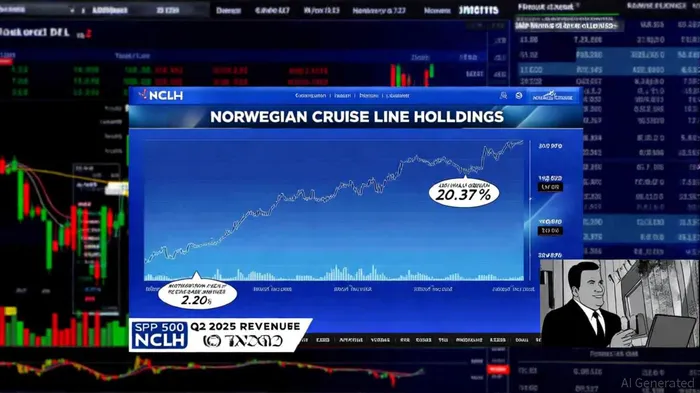
Despite the cruise industry's cyclical vulnerabilities, Norwegian CruiseNCLH-- Line Holdings Ltd. (NCLH) has defied expectations in 2025. As of September 25, 2025, its stock price reached $25.26, reflecting a 20.37% annual increase and outpacing the S&P 500's historically moderate returns [1]. This growth is underpinned by robust Q2 2025 results: $2.21 billion in revenue and $86.12 million in net income, both showing significant year-over-year gains [4]. However, this success story must be contextualized against persistent structural risks—overcapacity, fuel volatility, and regulatory pressures—that loom over the sector.
Structural Risks: A Double-Edged Sword for Cruise Operators
The cruise industry remains susceptible to macroeconomic and regulatory headwinds. Overcapacity concerns, driven by new ship deliveries from competitors like Carnival and Royal Caribbean, could erode pricing power in the medium term. Meanwhile, fuel costs—accounting for 10–15% of operating expenses for major cruise lines—remain sensitive to geopolitical tensions and carbon pricing reforms [5]. For NCLHNCLH--, its reliance on a high-beta stock profile (2.20) amplifies exposure to market downturns, making it a volatile bet during periods of economic uncertainty [1].
Management's Strategic Response: Innovation and Consumer-Centricity
NCLH's leadership has prioritized differentiation through the More At Sea™ package, bundling premium beverages, specialty dining, and high-speed Wi-Fi to address evolving consumer demands for value and convenience [3]. This strategy contrasts with competitors' mass-market approaches, positioning NCLH as a leader in premiumized cruising. For instance, the Aqua Slidecoaster on the Norwegian Luna—a hybrid waterslide and rollercoaster—exemplifies the company's focus on immersive, shareable experiences [2].
Family-centric offerings further underscore NCLH's adaptability. Promotions like “kids sail free” and bundled airfare deals cater to multigenerational travelers, a demographic segment projected to grow by 12% annually through 2030 [3]. Meanwhile, luxury-focused subsidiaries like Regent Seven Seas Cruises and Oceania Cruises emphasize all-inclusive itineraries and fine dining, aligning with affluent travelers' preferences for hassle-free, high-end vacations [5].
Sustainability as a Competitive Edge
NCLH's Sail & Sustain initiative—targeting net-zero emissions by 2050—addresses regulatory pressures and consumer demand for responsible travel. By investing in LNG-powered ships and carbon offset programs, the company mitigates long-term compliance risks while appealing to eco-conscious travelers [5]. This contrasts with rivals like Carnival, which have faced criticism for slower progress on environmental commitments.
Conclusion: Balancing Growth and Risk
NCLH's 2025 performance demonstrates its ability to capitalize on post-pandemic travel demand and strategic innovation. However, structural risks—particularly overcapacity and fuel volatility—could test its resilience. Analysts' 12-month price target of $28.56 suggests confidence in NCLH's trajectory, but investors must weigh this against the sector's inherent fragility. For now, NCLH's proactive approach to consumer trends and sustainability positions it as a standout in a challenging industry.







Comentarios
Aún no hay comentarios