
Norway's 30-Boeing 737 Order: A Catalyst for Aerospace and Green Aviation Growth?
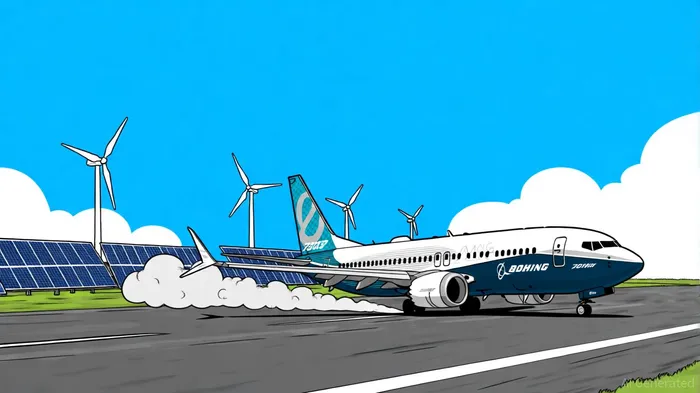
The recent developments in Norway's aviation sector—centered on Norwegian Air's strategic fleet modernization and its alignment with environmental, social, and governance (ESG) goals—have sparked renewed interest in aerospace and green aviation investments. With the airline's decision to transition to an all-Boeing 737 MAX 8 fleet by 2030, coupled with ambitious sustainability targets, the order represents more than a commercial transaction. It signals a pivotal shift in how airlines are repositioning themselves to meet decarbonization mandates while capitalizing on technological advancements in fuel efficiency and sustainable aviation fuel (SAF). For investors, this raises a critical question: Can Norway's 30-Boeing 737 order catalyze broader aerospace growth and ESG-aligned opportunities?
Strategic Aerospace Positioning: The 737 MAX as a Decarbonization Workhorse
Norwegian Air's order for 50 BoeingBA-- 737 MAX 8 aircraft, with 30 additional options, underscores the model's role as a cornerstone of modern aviation's sustainability agenda. The 737 MAX 8's 14% fuel efficiency improvement over older 737 NG models[1], combined with its compatibility with up to 50% SAF[2], positions it as a bridge between conventional operations and net-zero aspirations. This is particularly significant given the European Union's RefuelEU SAF mandate, which requires airlines to blend 6% SAF by 2030 and 70% by 2050[3].
The decision to own rather than lease these aircraft also reflects a strategic financial move. By reducing reliance on leasing, Norwegian Air gains long-term cost predictability and operational flexibility, which are critical in an industry still recovering from pandemic-era volatility[4]. For Boeing, the order reinforces the 737 MAX's relevance in a market increasingly prioritizing ESG metrics. The 30 options, with their “even more attractive pricing”[5], could further solidify Boeing's market share in the narrow-body segment, particularly as competitors like Airbus focus on hydrogen-powered aircraft for longer timelines.
ESG-Driven Innovation: SAF Partnerships and Carbon-Neutral Pathways
Norwegian Air's climate goals—reducing CO₂ emissions by 45% by 2030—hinge on a 20% SAF blend in its operations[1]. This ambition is bolstered by Boeing's collaboration with Norsk e-Fuel, a Norwegian company developing Power-to-Liquids (PtL) facilities to scale e-SAF production. By converting green hydrogen and recycled CO₂ into synthetic fuel, Norsk e-Fuel's technology promises over 90% emissions reductions compared to conventional jet fuel[3]. This partnership aligns with the EU's broader decarbonization agenda and positions Norway as a regional hub for SAF innovation.
For investors, such partnerships highlight the growing interdependence between aerospace manufacturers, energy firms, and governments in achieving climate targets. The scalability of SAF production remains a key risk, but Norway's strategic investments—such as its $1.3 billion Green Hydrogen Fund—suggest a commitment to overcoming these challenges[6].
Financial and Operational Risks: Balancing Ambition with Realism
While the 737 MAX order and SAF initiatives are promising, they are not without risks. The 737 MAX's grounding from 2019 to 2020 left a legacy of reputational and financial scars for Boeing, and any operational hiccups in Norwegian Air's fleet transition could disrupt timelines. Additionally, SAF's current high costs—estimated at 2–3 times that of conventional jet fuel—pose a near-term financial burden[7]. Norwegian Air's ability to secure cost-competitive SAF at scale will be critical to its ESG and profitability goals.
Moreover, the airline's decision on the 30 aircraft options—expected by late 2025—will serve as a litmus test for its confidence in the 737 MAX's long-term viability. If exercised, these options could inject $3–4 billion into Boeing's order backlog, providing a much-needed boost to its commercial aviation division[5].
A Blueprint for ESG-Aligned Aerospace Investing
The Norwegian Air-Boeing-Norsk e-Fuel triad offers a blueprint for ESG-aligned aerospace investments. For investors, three themes emerge:
1. Aircraft Manufacturers with ESG-Integrated Portfolios: Boeing's 737 MAX, paired with SAF-compatible designs, demonstrates how traditional aerospace firms are adapting to decarbonization demands.
2. SAF Producers and PtL Technologies: Companies like Norsk e-Fuel, which leverage renewable energy and carbon capture, are poised to benefit from regulatory tailwinds and airline partnerships.
3. Regional Aviation Hubs: Norway's investment in green hydrogen and SAF infrastructure highlights the role of national policies in accelerating sector-wide decarbonization.
Conclusion: A Catalyst with Conditions
Norway's 30-Boeing 737 order is more than a fleet modernization play—it is a strategic lever for aerospace and green aviation growth. By aligning operational efficiency with ESG imperatives, Norwegian Air and its partners are demonstrating how airlines can navigate the dual pressures of profitability and planetary boundaries. However, the success of this model depends on scalable SAF production, regulatory consistency, and technological advancements. For investors, the key lies in identifying companies that are not only adapting to these shifts but actively shaping them.





Comentarios
Aún no hay comentarios