
Northrop Grumman: A Cornerstone of U.S. Defense Resilience in a Geopolitically Fractured Era
In an era marked by escalating geopolitical tensions and the urgent need to modernize the U.S. defense industrial base, Northrop GrummanNOC-- (NOC) has emerged as a pivotal player in fortifying national security through strategic innovation, supply chain resilience, and international collaboration. As the Department of Defense (DoD) advances its FY2025 National Defense Industrial Strategy Implementation Plan (NDIS-IP), the aerospace and defense giant is not only aligning with key priorities but also redefining the boundaries of technological capability in uncrewed systems, missile defense, and industrial base modernization.
Strategic Partnerships and Autonomy Innovation
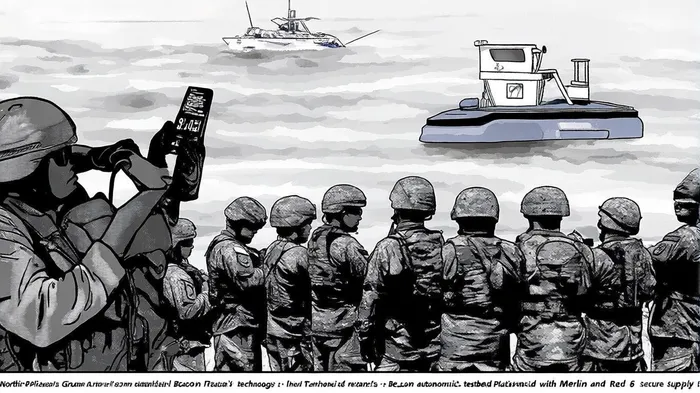
Northrop Grumman's recent partnerships with Merlin and Red 6 underscore its commitment to accelerating the development of autonomous defense platforms. By integrating advanced autonomy solutions onto its Beacon testbed, the company is directly supporting U.S. government initiatives to deploy uncrewed systems capable of operating in contested environments[6]. These collaborations are not merely incremental; they represent a paradigm shift toward software-driven, adaptive systems that can reduce human exposure to risk while enhancing operational flexibility. According to a report by Sahm Capital, this strategic pivot positions Northrop Grumman as a leader in next-generation defense innovation, with shareholders poised to benefit from the scalability of autonomous technologies[6].
The company's autonomy roadmap extends beyond partnerships. Northrop Grumman's investment in the MQ-4C Triton high-altitude unmanned system-a $200 million contract award in Q2 2025-highlights its focus on persistent surveillance and multi-domain operations[1]. Meanwhile, the Beacon platform's development aligns with the DoD's emphasis on rapid prototyping and fielding capabilities to counter emerging threats in the Indo-Pacific and beyond[1].
Financial Strength and Industrial Base Modernization
Northrop Grumman's Q2 2025 financial results reinforce its robust positioning in the defense sector. The company reported earnings per share (EPS) of $8.15, a 28% year-over-year increase, and revenue of $10.4 billion, with international sales rising 18% year-on-year[1]. These figures reflect not only strong operational execution but also the growing demand for advanced defense systems amid global instability.
A critical component of Northrop's financial strategy is its $1 billion investment in solid rocket motor production capacity, aimed at scaling output from 13,000 to 25,000 units by 2029[2]. This initiative directly supports the DoD's goal of reducing foreign dependencies in critical munitions production, a cornerstone of the NDIS-IP's supply chain resilience pillar[2]. Furthermore, the company's 15-year sourcing agreement with Norway's Chemring Nobel AS for HMX-a high-energy explosive-ensures a stable, secure supply of materials for warhead production, mitigating risks associated with geopolitical disruptions[3].
Historical analysis of NOC's earnings release performance from 2022 to 2025 reveals mixed signals for investors. While the company's Q2 2025 results demonstrated strong operational execution, a backtest of seven earnings events since January 2024 shows average excess returns versus the benchmark were negligible across all horizons, with statistically insignificant directional bias. However, the win rate-defined as positive returns within 30 days of an earnings release-hovered between 57-71%, suggesting a modest but inconsistent tendency for positive outcomes[6]. These findings highlight that while NOC's fundamentals remain robust, earnings announcements alone may not drive material price movements, underscoring the importance of focusing on long-term strategic catalysts like autonomy innovation and Indo-Pacific contracts.
Geopolitical Risk Mitigation and Indo-Pacific Deterrence
The FY2025 NDIS-IP identifies Indo-Pacific deterrence as a top priority, and Northrop Grumman is at the forefront of this effort. A $1.4 billion contract awarded in April 2025 underscores the company's role in modernizing air and missile defense systems, including the Integrated Battle Command System (IBCS), which will be deployed to Guam and Poland[4]. The IBCS's ability to link radars and sensors across vast distances enables real-time decision-making and interoperability with allied forces, a critical advantage in countering adversarial aggression[4].
Northrop's contributions to Indo-Pacific security also extend to platforms like the B-2 Spirit Stealth Bomber and E-2D Advanced Hawkeye, which provide multi-domain situational awareness and strike capabilities[4]. These systems are integral to the DoD's strategy of maintaining a "free and open Indo-Pacific," particularly as China's military expansion and regional assertiveness intensify[5].
A Model for Defense Industrial Resilience
Northrop Grumman's strategic alignment with the NDIS-IP's six pillars-Indo-Pacific deterrence, supply chain resilience, workforce readiness, international collaboration, infrastructure modernization, and intellectual property protection-positions it as a linchpin in the U.S. defense ecosystem[2]. Its long-term partnerships, such as the $500 million in contracts awarded to Norway over the past decade, exemplify how international collaboration can strengthen NATO's collective security posture while diversifying supply chains[3].
Conclusion
As geopolitical risks proliferate and the DoD ramps up investments in industrial base modernization, Northrop Grumman's dual focus on technological innovation and supply chain security makes it a compelling investment. The company's ability to translate strategic initiatives-such as autonomy partnerships and Indo-Pacific deterrence contracts-into measurable financial and operational outcomes underscores its resilience in an uncertain world. For investors, Northrop Grumman represents not just a defense contractor but a critical architect of U.S. national security in the 21st century.







Comentarios
Aún no hay comentarios