
North Korean Nukes and Northeast Asia's Defense Boom: Why Investors Should Take Cover—and Profit
The geopolitical landscape of Northeast Asia is reaching a boiling point, and investors who ignore the tectonicTECX-- shifts in defense spending are missing a historic opportunity. North Korea’s recent missile tests and nuclear posturing—supervised by Kim Jong-un in May 2025—have escalated regional tensions to their highest level in years. This isn’t just about headlines; it’s a market-moving catalyst for defense contractors, tech innovators, and strategic investors. Let’s unpack why Northeast Asia’s defense sector is primed for growth and why now is the time to act.
The North Korean Threat: A Catalyst for Defense Spending
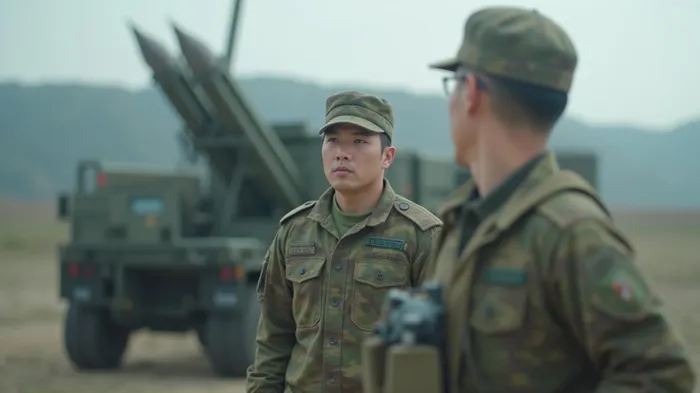
North Korea’s May 8 missile tests—featuring systems resembling Russia’s Iskander and 600mm rocket launchers—were more than saber-rattling. They underscored Pyongyang’s advancing nuclear capabilities, including hypersonic missiles and potential exports to Russia. State media framed these launches as a “rapid counteraction posture” to U.S.-South Korean drills, while Seoul’s Joint Chiefs labeled them a “clear act of provocation.” The message is clear: North Korea is no longer just a regional irritant but a destabilizing actor with global implications.
This aggression has forced South Korea, Japan, and the U.S. to prioritize defense modernization. South Korea’s defense budget has grown by 45% since 2020, outpacing GDP growth. Meanwhile, Japan’s defense spending hit a record 5.4 trillion yen ($36 billion) in 2024, with plans to double it by 2027.
The Winners in a Nervous Northeast Asia
The defense sector is a multi-front opportunity. Here’s where to focus:
South Korean Defense Giants:
Companies like Samsung Techwin (009260.KS), a subsidiary of Samsung Heavy Industries, are at the forefront of missile defense systems. Its exports of radar and surveillance tech to Japan and the U.S. have surged.
Hanwha Systems (058410.KS), another leader in missile defense and drones, is also a must-watch. Its partnerships with U.S. firms like Raytheon (RTX) could amplify its global reach.Japanese Tech Powerhouses:
Mitsubishi Heavy Industries (7012.T), a key player in Japan’s missile defense and submarine programs, is capitalizing on Tokyo’s shift toward “proactive defense.” Its collaboration with Lockheed Martin (LMT) on the Aegis Ashore system—a critical defense against North Korean missiles—is a gold mine.U.S. Global Contractors:
Lockheed Martin (LMT) and Raytheon Technologies (RTX) are entrenched in Northeast Asia. Their F-35 fighter sales to South Korea and Japan, along with missile defense systems like the Terminal High Altitude Area Defense (THAAD), are linchpins of regional security.
Why Now? The Perfect Storm for Defense Investors
- Geopolitical Certainty: Unlike fickle tech trends, defense spending is recession-resistant. Even if North Korea and the U.S. pursue “stable coexistence,” deterrence remains a priority.
- Technological Leapfrogging: Hypersonic missiles and AI-driven surveillance require constant upgrades, creating recurring revenue streams for contractors.
- Alliance Tightening: The U.S.-South Korea-Japan trilateral defense coordination is deepening. Joint exercises and tech sharing (e.g., Japan’s lifting of arms export restrictions) are fueling demand for interoperable systems.
The Risks—and Why They’re Overblown
Critics argue that arms races can fizzle, but the calculus here is different. North Korea’s nuclear doctrine—which envisions preemptive strikes—leaves no room for complacency. Even a miscalculation could trigger a crisis, making defense preparedness a non-negotiable.
How to Play It
- ETFs for Diversification: The SPDR S&P Defense ETF (XAR) offers broad exposure to companies like Boeing (BA), Raytheon, and Northrop Grumman (NOC).
- Sector-Specific Picks: Prioritize firms with direct ties to Northeast Asia’s modernization (e.g., Samsung Techwin, Mitsubishi Heavy).
- Hardware Over Software: While cybersecurity and AI are vital, physical systems—missiles, radars, submarines—are the immediate beneficiaries of budget hikes.
Final Call: Act Before the Surge
The writing is on the wall: North Korea’s nuclear ambitions are a permanent feature, not a temporary storm. Defense spending in Northeast Asia is a multiyear growth story. Investors who wait for “proof” will miss the rally. The time to position for this geopolitical reality is now—before the next missile test makes headlines, and the market moves.
This is not just an investment thesis—it’s a survival strategy in a region where preparedness is the ultimate currency.







Comentarios
Aún no hay comentarios