
North Dakota's State-Backed Roughrider Coin and Its Implications for Municipal Innovation in Digital Finance
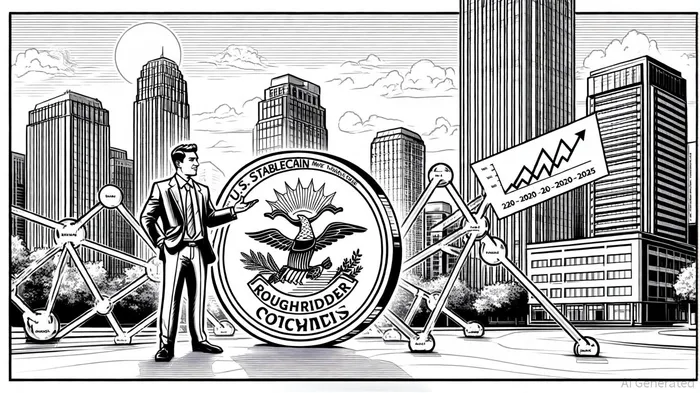
In 2026, North Dakota will launch the Roughrider Coin, its first state-backed stablecoin, marking a pivotal moment in municipal innovation and digital finance. Named after Theodore Roosevelt's Rough Riders, the coin is fully backed by U.S. dollars and developed in partnership with FiservFI--, a financial technology firm processing over 90 billion transactions annually, according to Yahoo News. This initiative, described by Governor Kelly Armstrong as a "cutting-edge approach," aims to streamline financial transactions among the state's banks and credit unions, particularly in loan settlements and global payments. The project reflects a broader shift in U.S. policy, where federal and state actors are increasingly prioritizing stablecoins over central bank digital currencies (CBDCs) to reinforce dollar dominance and financial innovation, according to an Atlantic Council analysis.
Post-Fed Policy Environment: A Framework for Stablecoin Growth
The U.S. regulatory landscape in 2025 has been reshaped by a clear policy preference for stablecoins over CBDCs. The Anti-CBDC Surveillance State Act explicitly prohibits the Federal Reserve from issuing a public CBDC, while the GENIUS Act establishes a robust framework for stablecoin regulation, requiring 1:1 U.S. dollar reserves and annual audits, as described by Bitget. These measures align with the Trump administration's executive order emphasizing stablecoins as tools to preserve the dollar's global role, as noted by the Atlantic Council analysis. Meanwhile, the Federal Reserve has rescinded restrictive guidance on digital assets, allowing banks greater flexibility to innovate, per a Federal Reserve press release. This regulatory clarity has positioned stablecoins like the Roughrider Coin as viable instruments for municipal finance, enabling states to experiment with digital infrastructure while adhering to federal safeguards, according to a Digital Finance News report.
Strategic Implications for North Dakota
The Roughrider Coin's design underscores its strategic value for North Dakota. By leveraging Fiserv's blockchain infrastructure, the state aims to reduce transaction costs and enhance transparency in financial operations. Initial use cases focus on institutional transactions, but future plans include stablecoin-based deposit accounts for clients, potentially expanding access to digital finance. This approach mirrors broader trends in municipal innovation, such as California's AB 1180, which permits stablecoins for state payments, and could serve as a model for other states seeking to integrate digital assets into public treasuries while mitigating risks highlighted by the FTX collapse, such as custody vulnerabilities and governance gaps.
Investment Potential and Risks
The investment potential of government-backed digital assets like the Roughrider Coin hinges on their ability to balance innovation with stability. As of 2025, the global stablecoin market has grown to $227 billion, driven by demand for efficient cross-border payments and institutional-grade digital assets, a trend noted by the Atlantic Council analysis. States like New Hampshire and Texas are also exploring strategic BitcoinBTC-- reserves, signaling a growing appetite for digital diversification, according to Digital Finance News. However, risks persist. The scalability of the Roughrider Coin will depend on institutional adoption and interoperability with existing financial systems, an issue analysts highlighted in the Bitget coverage. Additionally, while the GENIUS Act mandates transparency, regulatory shifts or geopolitical pressures-such as European CBDC initiatives-could alter the competitive landscape, as discussed by the Atlantic Council.
Municipal Innovation and the Future of Public Finance
North Dakota's initiative highlights the transformative potential of digital assets in public finance. By 2025, at least 40 U.S. states had introduced legislation related to digital assets, reflecting a redefinition of treasury practices, according to Digital Finance News. The Roughrider Coin's focus on institutional efficiency aligns with this trend, offering a blueprint for states to modernize financial infrastructure while adhering to federal guidelines. However, success will require addressing challenges such as cybersecurity, public trust, and the integration of digital assets into legacy systems, issues emphasized in the Federal Reserve's guidance withdrawal.
Conclusion
North Dakota's Roughrider Coin represents a bold experiment in municipal innovation, leveraging stablecoin technology to enhance financial efficiency and align with a post-Fed policy environment that prioritizes private-sector-driven digital assets. While risks remain, the project underscores the growing role of states as pioneers in digital finance-a role that could reshape public treasuries and global payment systems in the years ahead. As the U.S. navigates the tension between CBDC skepticism and stablecoin advocacy, initiatives like the Roughrider Coin will serve as critical test cases for the future of government-backed digital assets.
- Yahoo News
- Atlantic Council analysis
- Bitget
- Federal Reserve press release
- Digital Finance News report





Comentarios
Aún no hay comentarios