
North Carolina's Green Surge Overtakes Texas in Business Rankings: A Shift Toward Sustainable Infrastructure Investments
North Carolina's ascent to the top of CNBC's 2025 Business-Friendly States Ranking signals a pivotal shift in economic strategy, prioritizing renewable energy corridors and supply chain resilience over traditional fossil fuel dominance. While Texas retains its position as a logistics powerhouse, North Carolina's bipartisan infrastructure investments—focused on solar manufacturing, battery tech, and sustainable logistics—are redefining the criteria for long-term economic growth. For investors, this marks a clear signal: states that embed sustainability into their infrastructure ecosystems will outperform in the decades ahead.
The Rise of North Carolina: Green Infrastructure as a Growth Engine
North Carolina's $1.4 billion Natron Energy battery plant and $300 million Boviet Solar facility exemplify its commitment to renewable energy. These projects, paired with bipartisan policies like the $4.2 billion Environmental Bond Act, are creating a clean energy supply chain that attracts global investors. The state's renewable energy corridors, supported by $300 million in transportation infrastructure upgrades, ensure efficient movement of solar panels and battery components to global markets.
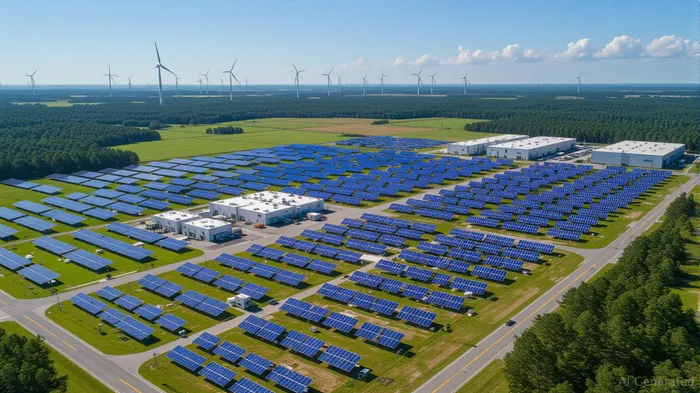
North Carolina's logistics resilience further strengthens its appeal. Its $10 billion HyVelocity Hydrogen Hub—the nation's largest planned clean hydrogen production site—integrates energy and transportation infrastructure, reducing reliance on carbon-heavy fuels. Meanwhile, bipartisan support for worker training programs and rural broadband expansion ensures a skilled labor force, mitigating the supply chain bottlenecks plaguing other states.
Texas: A Logistics Titan, But Sustainable Growth Lags
Texas remains the gold standard for business-friendly policies, boasting no income tax and a streamlined permitting process. Its $148 billion infrastructure plan, including the Texas Clear Lanes initiative, has slashed traffic delays by 77% in Dallas and 100% in San Antonio. Projects like Freyr Battery's $340 million facility and Delta Electronics' grid-support investments underscore its shift toward clean energy logistics.
However, Texas faces headwinds. Its Q1 2025 GDP contraction (-0.1%) contrasts sharply with North Carolina's 0.8% growth, signaling vulnerabilities in its fossil fuel-reliant economy. While Texas's $34 billion in border infrastructure investments and rail expansions (e.g., the South Orient Rail Line) support trade, its lack of worker protections and reliance on carbon-intensive industries leave it exposed to ESG-driven capital shifts.







Comentarios
Aún no hay comentarios