
North America's Pipeline Boom: US to Drive Growth by 2030
PorAinvest
lunes, 18 de agosto de 2025, 7:10 am ET2 min de lectura
CVX--
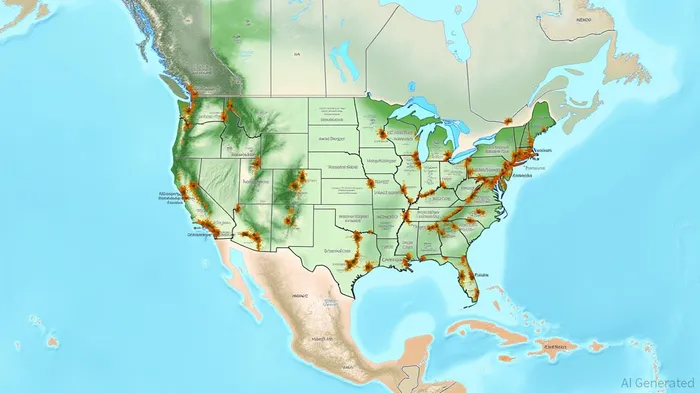
North America is poised to experience significant growth in oil and gas pipeline length additions by 2030, driven primarily by the region's ongoing shale gas production boom, substantial investments in liquified natural gas (LNG) export infrastructure, and the construction of new pipeline networks to meet energy demand. According to recent reports, North America is expected to account for approximately 15% of the total upcoming global pipeline length by 2030 [1].
The United States is set to dominate these additions, accounting for about 58% of the region's length additions by 2030. This growth is largely due to robust shale production, which continues to drive demand for expanded midstream infrastructure. Additionally, the U.S. is rapidly increasing its export capacity for both crude oil and natural gas, necessitating new pipelines to connect production hubs with processing facilities and export terminals [1].
Canada is expected to follow the U.S. in terms of pipeline length additions, accounting for nearly 23% of the total length additions in the region by 2030. The majority of the pipeline length additions in Canada are from projects in the pre-construction stages, such as the Canadian Prosperity Project and the Prince Rupert Gas Transmission Project [1].
Mexico accounts for the remaining pipeline length additions in North America, with nearly 5,377km of length expected to be added by 2030. Pipelines in the early stages of development, including feasibility, front-end engineering design (FEED), and approval, are set to make up half of the upcoming length in the country, while projects in the construction and commissioning stages account for the rest [1].
Notably, projects in the pre-construction stages, including feasibility, FEED, and approval, are set to account for nearly three-fourths of the country’s upcoming pipeline length by 2030. The Permian-Louisiana gas pipeline, for example, is a major upcoming project that extends from Texas to Louisiana with a length of 1,262km. Dela Express is the operator while Moss Lake Partners is the equity owner of this onshore pipeline, currently in the approval stage and expected to commence operations in 2028 [1].
The U.S. Energy Information Administration (EIA) reports that nearly one-third of the energy the country produced in 2024 was exported, with nearly all of the exports being fossil fuels destined for other countries in North America, Europe, or Asia. This trend is likely to continue, with the U.S. exporting significant amounts of crude oil, natural gas, and petroleum products to meet global demand [3].
Algeria, another significant player in the global energy market, is close to finalizing agreements with Exxon and Chevron to explore and invest in its shale gas resources. These deals are expected to boost Algeria's gas pipeline and LNG exports to Europe, providing a stable and long-term supply for the continent [2].
In conclusion, North America is set to witness substantial oil and gas pipeline length additions by 2030, driven by robust shale production, investments in LNG export infrastructure, and new pipeline networks. The U.S. is expected to dominate these additions, with Canada and Mexico also contributing significantly to the region's pipeline infrastructure growth.
References:
[1] https://www.offshore-technology.com/analyst-comment/us-drive-north-americas-transmission-pipeline-length-additions-2030/
[2] https://www.ainvest.com/news/algeria-set-finalize-shale-gas-deals-exxon-chevron-2508/
[3] https://www.offshore-energy.biz/eia-nearly-a-third-of-us-made-energy-exported-in-2024-mostly-fossil-fuels/
XOM--
North America is set to witness significant oil and gas pipeline length additions by 2030, driven by shale gas production, liquified natural gas export infrastructure investments, and new pipeline networks to meet energy demand. The US is expected to dominate these additions, accounting for 58% of the region's length additions by 2030, primarily due to robust shale production and increased export capacity for crude oil and natural gas. Canada and Mexico will also contribute to pipeline length additions in the region.
Title: North America to See Substantial Oil and Gas Pipeline Length Additions by 2030North America is poised to experience significant growth in oil and gas pipeline length additions by 2030, driven primarily by the region's ongoing shale gas production boom, substantial investments in liquified natural gas (LNG) export infrastructure, and the construction of new pipeline networks to meet energy demand. According to recent reports, North America is expected to account for approximately 15% of the total upcoming global pipeline length by 2030 [1].
The United States is set to dominate these additions, accounting for about 58% of the region's length additions by 2030. This growth is largely due to robust shale production, which continues to drive demand for expanded midstream infrastructure. Additionally, the U.S. is rapidly increasing its export capacity for both crude oil and natural gas, necessitating new pipelines to connect production hubs with processing facilities and export terminals [1].
Canada is expected to follow the U.S. in terms of pipeline length additions, accounting for nearly 23% of the total length additions in the region by 2030. The majority of the pipeline length additions in Canada are from projects in the pre-construction stages, such as the Canadian Prosperity Project and the Prince Rupert Gas Transmission Project [1].
Mexico accounts for the remaining pipeline length additions in North America, with nearly 5,377km of length expected to be added by 2030. Pipelines in the early stages of development, including feasibility, front-end engineering design (FEED), and approval, are set to make up half of the upcoming length in the country, while projects in the construction and commissioning stages account for the rest [1].
Notably, projects in the pre-construction stages, including feasibility, FEED, and approval, are set to account for nearly three-fourths of the country’s upcoming pipeline length by 2030. The Permian-Louisiana gas pipeline, for example, is a major upcoming project that extends from Texas to Louisiana with a length of 1,262km. Dela Express is the operator while Moss Lake Partners is the equity owner of this onshore pipeline, currently in the approval stage and expected to commence operations in 2028 [1].
The U.S. Energy Information Administration (EIA) reports that nearly one-third of the energy the country produced in 2024 was exported, with nearly all of the exports being fossil fuels destined for other countries in North America, Europe, or Asia. This trend is likely to continue, with the U.S. exporting significant amounts of crude oil, natural gas, and petroleum products to meet global demand [3].
Algeria, another significant player in the global energy market, is close to finalizing agreements with Exxon and Chevron to explore and invest in its shale gas resources. These deals are expected to boost Algeria's gas pipeline and LNG exports to Europe, providing a stable and long-term supply for the continent [2].
In conclusion, North America is set to witness substantial oil and gas pipeline length additions by 2030, driven by robust shale production, investments in LNG export infrastructure, and new pipeline networks. The U.S. is expected to dominate these additions, with Canada and Mexico also contributing significantly to the region's pipeline infrastructure growth.
References:
[1] https://www.offshore-technology.com/analyst-comment/us-drive-north-americas-transmission-pipeline-length-additions-2030/
[2] https://www.ainvest.com/news/algeria-set-finalize-shale-gas-deals-exxon-chevron-2508/
[3] https://www.offshore-energy.biz/eia-nearly-a-third-of-us-made-energy-exported-in-2024-mostly-fossil-fuels/
Divulgación editorial y transparencia de la IA: Ainvest News utiliza tecnología avanzada de Modelos de Lenguaje Largo (LLM) para sintetizar y analizar datos de mercado en tiempo real. Para garantizar los más altos estándares de integridad, cada artículo se somete a un riguroso proceso de verificación con participación humana.
Mientras la IA asiste en el procesamiento de datos y la redacción inicial, un miembro editorial profesional de Ainvest revisa, verifica y aprueba de forma independiente todo el contenido para garantizar su precisión y cumplimiento con los estándares editoriales de Ainvest Fintech Inc. Esta supervisión humana está diseñada para mitigar las alucinaciones de la IA y garantizar el contexto financiero.
Advertencia sobre inversiones: Este contenido se proporciona únicamente con fines informativos y no constituye asesoramiento profesional de inversión, legal o financiero. Los mercados conllevan riesgos inherentes. Se recomienda a los usuarios que realicen una investigación independiente o consulten a un asesor financiero certificado antes de tomar cualquier decisión. Ainvest Fintech Inc. se exime de toda responsabilidad por las acciones tomadas con base en esta información. ¿Encontró un error? Reportar un problema


SOBRE NOSOTROS
Nuestra historiaAutores de noticiasBase de conocimientosPolítica de privacidadTérmino de usoDescargo de responsabilidad de corretaje de tercerosTérminos de uso de AIMEDivulgaciones de riesgos de AInvest AICarrerasCONTÁCTENOS
Email: support@ainvest.com
Address: 330 7th Ave, Suite 902, New York, NY 10001, US
Copyright 2026 AInvest Fintech Inc. All rights reserved.


Comentarios
Aún no hay comentarios