
The New Normal: How Demographics and Productivity Are Locking in Low Interest Rates and Reshaping Global Markets
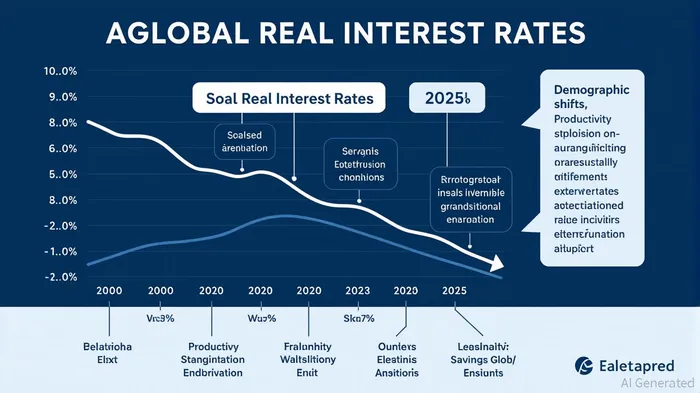
The global neutral rate of interest (r-star) has been in a long-term decline for over four decades, a trend now entrenched by structural forces that show no sign of reversing. For investors, this shift is reshaping the landscape of fixed income and equity markets, forcing a reevaluation of traditional assumptions about returns, risk, and the role of central banks. The answer lies not in short-term volatility but in the deep, unrelenting currents of demographics, productivity, and global capital flows.
The Demographic Time Bomb
Aging populations in advanced economies are the most powerful force depressing r-star. As life expectancy rises and birth rates fall, households are saving more to fund longer retirements. In Japan, where the population is shrinking and the median age exceeds 48, savings rates have surged. Similar trends are evident in Europe and the U.S., where pension systems strain under the weight of an expanding elderly cohort. This surge in savings creates a global "savings glut," driving down real interest rates as demand for investment opportunities outstrips supply.
The implications for fixed income markets are stark. With central banks unable to cut rates further (many are already near zero or negative), bond yields have nowhere to go but sideways or lower. The 10-year U.S. Treasury yield, once a barometer of economic health, now trades in a narrow range, reflecting a world where growth is anemic and inflation is subdued.
Productivity Stagnation and the "Secular Stagnation" Trap
Even as savings rise, productivity growth has sputtered. Advanced economies are struggling to replicate the innovation-driven growth of the post-WWII era. The digital revolution, while transformative, has yet to deliver the same broad-based gains in productivity as the industrial or information technology revolutions. This mismatch between savings and investment creates a chronic shortfall in aggregate demand—a core tenet of the secular stagnation hypothesis.
For equities, this means valuations are being propped up by low discount rates rather than robust earnings growth. The S&P 500's price-to-earnings ratio has expanded to levels not seen since the dot-com bubble, driven by central bank liquidity rather than fundamentals.
Central Banks: From Rate Cuts to Unconventional Tools
The era of aggressive rate cuts is over. With r-star near zero, central banks are forced to rely on unconventional tools like quantitative easing (QE) and forward guidance. The Federal Reserve's balance sheet, which ballooned to $9 trillion during the pandemic, now acts as a floor for asset prices. Similarly, the ECB and Bank of Japan have embraced negative rates and bond-buying programs to stave off deflation.
This shift has profound implications. Fixed income investors must now navigate a world where central bank interventions distort yield curves and create artificial demand for risk assets. Equities, meanwhile, benefit from a "Fed put" that cushions downturns but also inflates valuations to unsustainable levels.
Investment Strategies for a Low-R-Star World
- Embrace Equities with Strong Cash Flow: In a low-yield environment, equities with durable cash flows and pricing power (e.g., tech, healthcare) will outperform. Avoid sectors reliant on high-growth assumptions without tangible revenue.
- Diversify into Alternatives: Real assets like infrastructure, real estate, and commodities offer returns uncorrelated with bond yields. Gold and inflation-protected securities (TIPS) can hedge against central bank overreach.
- Hedge Currency and Inflation Risks: A global savings glut may eventually fuel inflation as demographics and fiscal policies collide. Position in currencies and assets that benefit from rising prices.
- Monitor Central Bank Policy Shifts: The Fed's pivot to a "higher for longer" rate regime is a game-changer. Watch for signals of policy normalization, which could trigger volatility in overvalued equities and fixed income.
Conclusion: A New Paradigm
The decline in r-star is not a temporary anomaly but a structural shift driven by demographics, productivity, and global capital flows. For investors, this means abandoning the search for quick returns and instead building portfolios resilient to a world of low growth and low yields. The winners will be those who adapt to the new normal—leveraging the tools of the past while anticipating the challenges of the future.







Comentarios
Aún no hay comentarios