
Norinchukin's $1.75 Billion Exposure to First Brands and Strategic Implications for Agricultural Finance
The collapse of First Brands Group in September 2025 has sent shockwaves through global financial markets, exposing systemic vulnerabilities in supply chain financing and trade credit structures. For Japan's Norinchukin Bank, a key player in agricultural finance, the fallout is particularly acute. A joint venture between Norinchukin and Mitsui & Co. now holds $1.75 billion in unpaid receivables from trade financing extended to First Brands, a bankruptcy that has amplified scrutiny of opaque financing models and their sector-specific implications, according to a Bloomberg Law report. This case study offers a critical lens through which to assess risk, opportunity, and broader ripple effects in agribusiness lending.
The Nature of Norinchukin's Exposure
Norinchukin's exposure to First Brands is not a direct loan but rather a trade financing arrangement involving purchased receivables. The joint venture, acting as a trade-finance lender, extended credit to First Brands through invoice-based programs, a structure that masked the auto-parts supplier's true leverage. Court documents and reporting show the venture's $1.75 billion in unpaid receivables reflects the fragility of such arrangements, particularly when intermediaries like Katsumi Global manage hundreds of thousands of receivables. This exposure underscores the risks of distributed credit models, where lenders may lack visibility into borrower solvency or collateral quality.
The fallout from First Brands' bankruptcy has also exposed broader weaknesses in private credit markets. The company's use of off-balance-sheet debt-nearly $2 billion-and its alleged $2.3 billion in vanished supply-chain financing funds highlight the dangers of unregulated intermediation, according to a Ts2 Tech analysis. For Norinchukin, a bank traditionally focused on stable, long-term agricultural lending, this episode marks a departure from its core competencies and raises questions about its risk management frameworks.
Strategic Adjustments and Sector Implications
Norinchukin's financial health has already been strained by unrelated bond portfolio losses, with the bank reporting a $12.6 billion loss in fiscal 2024 due to devalued U.S. and European government bonds, according to Reuters. The First Brands exposure compounds these challenges, forcing the bank to accelerate strategic overhauls. Recent announcements indicate a pivot toward project financing, collateralized loan obligations (CLOs), and fee-based asset management, alongside a planned ¥1.2 trillion capital raise from farming cooperatives, according to a Japan Times article. These moves signal a shift away from speculative securities trading toward more conservative, sector-aligned investments.
For agricultural finance, the implications are twofold. First, the crisis may prompt stricter oversight of trade financing and invoice factoring, practices that have long been underregulated in agribusiness. Regulators and industry experts are already calling for transparency mandates, echoing lessons from past failures like Greensill Capital, as discussed in a Bloomberg article. Second, Norinchukin's strategic pivot could lead to a reallocation of capital toward sustainable agriculture initiatives, such as its carbon credit intermediation service and partnerships with JForest Group, Reuters reported. While these efforts align with long-term sustainability goals, they may come at the expense of short-term liquidity, potentially limiting the bank's ability to support small-scale farmers during periods of market stress.
Ripple Effects in Agribusiness Lending
The First Brands bankruptcy has also exposed vulnerabilities in cross-sector financing. Agricultural supply chains, which rely heavily on just-in-time inventory systems and third-party logistics, are particularly susceptible to cascading defaults. For example, the collapse of First Brands' supply-chain financing programs-linked to $866 million in opaque transactions-has left smaller lenders like Millennium and UBS with significant losses, according to Legal United States. This raises concerns about the interconnectedness of agribusiness credit networks and the potential for localized defaults to trigger systemic instability.
In response, creditors are likely to adopt more conservative lending practices. Bloomberg reported that banks are now demanding stricter collateral requirements and real-time transparency in invoice financing arrangements. For Norinchukin, this could mean a return to its traditional role as a long-term lender, prioritizing direct farm loans and infrastructure financing over complex trade receivables. However, such a shift may reduce the bank's ability to scale its services, particularly in a sector where margins are already thin.
Conclusion: Balancing Innovation and Risk
Norinchukin's exposure to First Brands serves as a cautionary tale about the perils of overreaching into high-risk credit markets. While the bank's strategic adjustments-divesting low-yielding assets, raising capital, and exploring CLOs-offer a path to recovery, they also highlight the tension between innovation and stability in agricultural finance. The sector's future will depend on its ability to balance growth-oriented financing models with robust risk management frameworks.
As the Ministry of Agriculture, Forestry and Fisheries (MAFF) pushes for increased lending to the food industry, as reported by the Japan Times, Norinchukin's experience underscores the need for regulatory guardrails. The First Brands collapse has already reignited debates about transparency in trade finance, and further reforms may be necessary to prevent similar crises. For investors, the key takeaway is clear: in agribusiness lending, the line between opportunity and overexposure is perilously thin.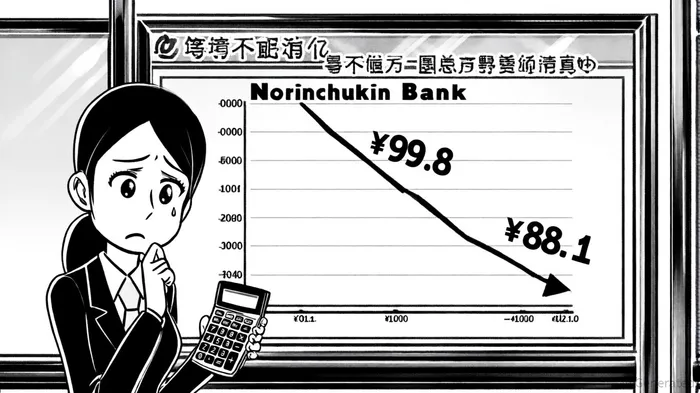







Comentarios
Aún no hay comentarios