
Is Norfolk Southern (NSC) Still a Buy Amid Moderate Earnings Growth and Valuation Concerns?
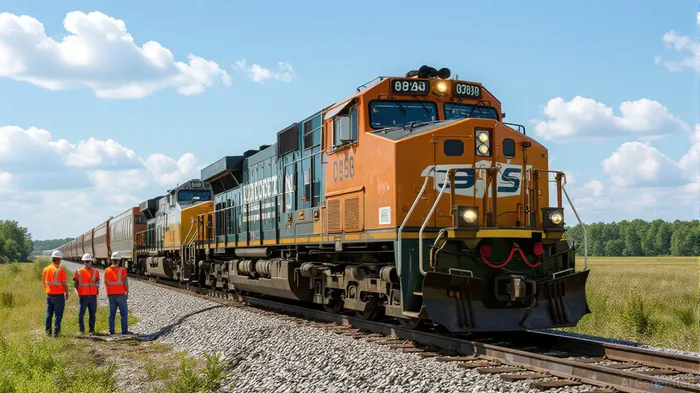
Norfolk Southern (NSC), a stalwart in the U.S. freight rail industry, has long been a favorite among income-focused investors for its consistent dividends and operational resilience. However, as the broader economy faces a potential slowdown in 2025 and the company navigates sector-specific headwinds, the question arises: Is NSCNSC-- still a compelling long-term investment? This analysis weighs NSC's intrinsic value, earnings potential, and sector-specific risks to determine whether the stock warrants a place in a diversified portfolio.
Intrinsic Value: A Mixed Picture of Strength and Leverage
Norfolk Southern's valuation metrics present a nuanced picture. The stock currently trades at a trailing P/E of 18.92 and a forward P/E of 18.00, reflecting expectations of 13.23% earnings growth in the next fiscal year. These figures position NSC as a moderately valued player in the transportation sector, though its debt-to-equity ratio of 122.3% raises eyebrows. While this leverage could amplify losses during an economic downturn, NSC's robust interest coverage ratio of 5.8x and operating cash flow generation (23.5% debt coverage) provide reassurance. The company's ability to fund $2.2 billion in 2025 capital expenditures—focused on infrastructure upgrades and locomotive efficiency—further underscores its financial discipline.
For income investors, NSC's 36.89% payout ratio and a $1.35-per-share dividend (yielding ~2.3% as of July 2025) offer a balanced approach to shareholder returns. However, the payout ratio's sustainability in a weaker economic environment remains a concern, particularly if freight demand contracts.
Earnings Potential: Operational Efficiency as a Buffer
NSC's 2025 guidance—3% revenue growth, $150 million in productivity savings, and a 1.5-point operating ratio improvement—highlights its focus on cost control and efficiency. The company's Precision Scheduled Railroading 2.0 (PSR 2.0) strategy, which optimizes train speeds and reduces terminal dwell times, has already driven a 200-basis-point improvement in its operating ratio to 67.9% in Q1 2025. These gains are critical in a slowing economy, where volume-driven growth may become less reliable.
Analysts project NSC's EPS to rise from $13.00 in FY2025 to $14.72 in FY2026, a 13.2% increase. While this growth is below the 20%+ rates seen in the mid-2010s, it aligns with the sector's normalization post-pandemic. The company's diversified revenue streams—spanning coal, intermodal, and merchandise freight—offer some insulation against sector-specific downturns. However, coal's declining share of revenue (down to 8% in Q1 2025) means NSC must rely increasingly on higher-growth segments like e-commerce logistics and automotive freight.
Sector-Specific Risks: A Ticking Clock for the Industry
The railroad sector faces headwinds that could pressure NSC's margins. Infrastructure limitations, particularly aging track and bridges on short-line railroads, threaten freight capacity. Only 48% of U.S. track miles and 53% of bridges can support the industry-standard 286,000-pound rail car weight, according to the American Short Line and Regional Railroad Association. NSC's reliance on these secondary lines for connectivity means delays and maintenance costs could rise.
Environmental and regulatory risks also loom. Extreme weather events, such as Hurricane Helene in 2024 and heatwaves in the Northeast Corridor, have disrupted operations, while the Federal Railroad Administration's (FRA) new crew-safety regulations could increase labor costs. Additionally, the industry's shift toward precision-scheduled railroading (PSR) has sparked workforce reductions and safety concerns, with critics arguing that cost-cutting measures may compromise service reliability.
Strategic Positioning: Innovation and the Merger Conundrum
NSC's recent partnerships and technological investments position it to mitigate some of these risks. Collaborations with Alstom to develop battery-diesel hybrid locomotives and Georgia Tech for AI-driven track inspections highlight its commitment to decarbonization and operational modernization. The company's $150 million investment in signaling and track maintenance by 2025 further signals a long-term focus on infrastructure resilience.
Yet the most transformative development is the ongoing merger speculation between NSC and Union PacificUNP-- (UNP). A potential $200 billion transcontinental railroad would streamline operations by eliminating handoff delays and reducing interchange costs. While Union Pacific CEO Jim Vena has championed the deal as a path to “operational excellence,” regulatory hurdles remain. The Surface Transportation Board (STB), currently split 2-2 with one seat vacant, must determine whether the merger would enhance competition—a high bar under the 2001 rail merger rules. Political dynamics under President Donald Trump, who has advocated for deregulation, could tip the scales, but the process is likely to be protracted.
Investment Thesis: A Buy with Caution
For long-term investors, NSC offers a compelling blend of defensive characteristics and growth potential. Its operational efficiency, dividend yield, and strategic investments in AI and sustainability make it well-positioned to navigate a moderate economic slowdown. However, sector-specific risks—infrastructure limitations, regulatory pressures, and the uncertainty around the UP-NS merger—warrant caution.
The key to NSC's success will be its ability to execute its capital allocation plan while adapting to a shifting economic landscape. If the company can maintain its operating ratio improvements and expand into high-growth freight segments, it could outperform expectations. Conversely, a prolonged economic contraction or regulatory setbacks could weigh on its valuation.
In conclusion, Norfolk SouthernNSC-- remains a buy for investors who prioritize operational resilience and dividend income but should be prepared to monitor sector dynamics closely. The stock's moderate earnings growth and valuation concerns are offset by its strategic positioning and financial strength, making it a viable long-term hold in a diversified portfolio.





Comentarios
Aún no hay comentarios