
Nordstrom’s Exit from S&P Composite 1500: A Catalyst for Undervalued Retail Opportunity?
The retail sector is in flux, and Nordstrom’s (NYSE: JWN) recent exclusion from the S&P Composite 1500 has sparked debate about its strategic future. While the delisting marks a significant shift, it also creates a rare opportunity for investors to reassess the value of this iconic retailer amid its transition to private ownership. Let’s dissect the implications and uncover why this could be a turning point for shareholders.
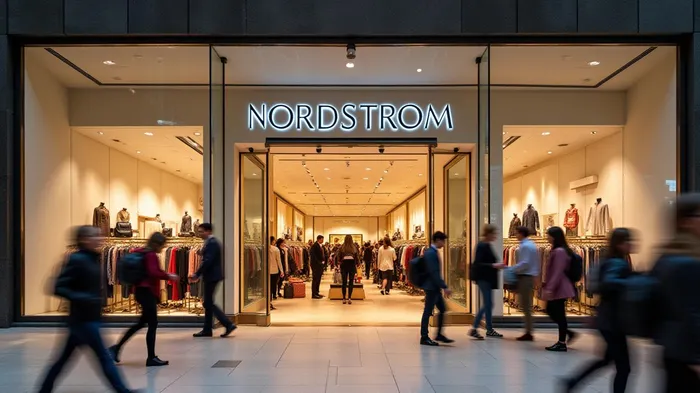
The Delisting Dilemma: What Does S&P’s Move Mean?
Nordstrom’s removal from the S&P Composite 1500—effective May 2025—reflects shifting market capitalization thresholds. The S&P 500 now requires firms to have a market cap of $20.5 billion or higher, while the MidCap 400 and SmallCap 600 tiers have similarly raised entry barriers. Nordstrom’s exclusion likely stemmed from its market cap falling below these thresholds, though S&P explicitly states removal isn’t automatic unless ongoing conditions (e.g., liquidity or earnings) deteriorate.
This exclusion, however, is more of a symptom than a cause. The real story lies in the privatization deal led by the Nordstrom family and Liverpool, which culminated in the company’s delisting from the NYSE on May 21, 2025. The $1.2 billion cash buyout signals confidence in the brand’s long-term potential but raises questions: How will exclusion from major indices impact investor sentiment, and what opportunities arise from this restructuring?
The Privatization Play: Freedom to Pivot
Going private offers Nordstrom a critical advantage: operational flexibility. Public companies face relentless pressure to meet quarterly earnings targets, which can stifle long-term strategies. Under private ownership, Nordstrom can:
- Rebalance its inventory (up 11.4% in Q4 2024 despite flat revenue growth), addressing overstocking concerns.
- Invest in tech and experiential retail without diluting short-term profits.
- Reposition its brand in a post-pandemic landscape where consumer preferences favor curated, personalized shopping.
Consider this: Nordstrom’s comparable sales rose 4.7% in Q4 2024, driven by strong performance in apparel and active wear. While inventory challenges persist, its digital sales (38% of Q4 revenue) suggest a growing online presence—a critical edge in today’s market.
Undervalued Opportunities in Privatized Retail Giants
The exclusion from S&P indices may have artificially depressed Nordstrom’s valuation. Institutional investors tracking the S&P 500 were forced to sell their stakes, creating buying opportunities for private investors. Meanwhile, the privatization price—$23.50 per share—suggests the family and partners believe the stock was undervalued.
Why this is a retail sector bellwether:
1. Debt Management: Nordstrom’s $2.6 billion in long-term debt (Q4 2024) is manageable with its $1.035 billion in cash, especially if it renegotiates terms post-privatization.
2. Store Strategy: The 23 new Nordstrom Rack stores opened in 2024 (with more planned) target price-sensitive shoppers, a smart move in an inflationary environment.
3. ESG Alignment: While excluded from S&P indices, its inclusion in AXA’s ESG-focused indices (noted in the May 22, 2025 update) highlights its potential to attract sustainability-focused capital.
Risks and the Path Forward
Skeptics will point to Nordstrom’s rising SG&A expenses (up 200 basis points to 34.4% of sales in Q4 2024) and the uncertain macroeconomic backdrop. However, the privatization addresses these headwinds:
- Lower overhead: Exits from public markets reduce compliance and investor-relations costs.
- Strategic reinvestment: Freed from Wall Street’s gaze, Nordstrom can prioritize customer experience over short-term metrics.
Conclusion: A Retail Turnaround Play
Nordstrom’s exclusion from the S&P Composite 1500 and subsequent privatization mark the end of an era—but also the beginning of a new strategic chapter. For investors, the question isn’t whether the exclusion signals weakness, but whether the privatization unlocks value in a brand with enduring customer loyalty and a scalable model.
Act now: If you believe in retail’s comeback story—and the power of private ownership to drive efficiency—Nordstrom’s legacy and fundamentals position it as a compelling contrarian bet. The stock’s post-delisting trajectory may surprise even the most skeptical observers.
Gary’s Take:
The S&P’s exclusion is a catalyst, not a verdict. Nordstrom’s pivot to private ownership could be the reset button it needs. For investors willing to look beyond index noise, this is a rare chance to capitalize on a retail giant’s reinvention.







Comentarios
Aún no hay comentarios