
Nordic Construction Sector Resilience: The Role of Public Education Infrastructure Investment
The Nordic construction sector is navigating a complex landscape of challenges and opportunities in 2025, with public infrastructure investment in education emerging as a critical driver of resilience and growth. While the region grapples with high interest rates, supply chain disruptions, and aging populations, education infrastructure projects are increasingly positioned as stabilizing forces. These investments not only address systemic inequities in public education but also stimulate demand for sustainable construction practices, job creation, and long-term economic stability.
The Education Infrastructure Dilemma
Public education funding in the Nordic countries has faced mounting pressures due to decentralized financial models and shifting priorities. In Sweden, where local municipalities bear full responsibility for school funding, disparities in per-student investment have widened, with wealthier areas allocating significantly more resources to facilities and teacher training than less affluent regions [1]. Similarly, Finland's state funding for education has declined from 31% to 22% over the past decade, forcing municipalities to cover 97% of primary and secondary school operations [2]. Norway, while allocating targeted investments such as 13.1 million NOK for decentralized education and 20 new ICT study places in 2025, still faces per-student funding gaps of up to $19,000 between municipalities [3].
These disparities are compounded by teacher shortages, with up to 50% of newly trained teachers in some Nordic countries leaving the profession within five years due to poor working conditions and underfunding [4]. The Nordic Teachers' Council (NLS) has repeatedly called for equitable funding models and increased public investment to address these systemic issues [5].
Construction Sector Recovery: Education as a Catalyst
Despite these challenges, education infrastructure projects are playing a pivotal role in the Nordic construction sector's tentative recovery. Sweden's National Plan for Transport Infrastructure (2022–2033), which includes $94.6 billion in railway and road development, has indirectly spurred demand for civil engineering expertise, with the subsector projected to grow by 3% in 2025 [6]. Meanwhile, Finland's construction sector is expected to expand by 4% in 2025, reversing an 8% decline in 2024, driven by school and university upgrades aligned with sustainability goals [7].
In Norway, the government's 2025 budget includes infrastructure projects such as highway upgrades (E39 and E6) and railway electrification in Trøndelag, which are expected to create thousands of jobs and stimulate regional economic activity [8]. These projects align with broader Nordic trends toward sustainable construction, including the adoption of cross-laminated timber (CLT) and life cycle assessment (LCA) frameworks to reduce carbon emissions [9].
Public-Private Partnerships and Long-Term Stability
The Nordic construction sector's resilience is further bolstered by public-private partnerships (PPPs), which are increasingly mobilizing institutional investors to bridge funding gaps. For instance, Sweden's $94.6 billion transport plan relies heavily on PPPs to finance long-term infrastructure, while Finland's education projects have attracted private capital through green bonds and climate-resilient design initiatives [10]. These collaborations are critical in addressing aging infrastructure and accelerating the energy transition, with the Nordic construction market projected to reach €90 billion by 2026 [11].
Sustainability and the Future of Nordic Construction
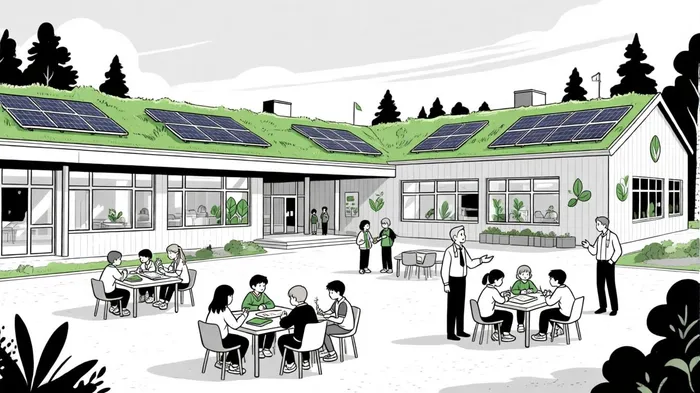
Sustainability is reshaping the Nordic construction landscape, with education infrastructure at the forefront. The World Bank's Global Program for Safer Schools (GPSS) has influenced climate-resilient design practices, such as retrofitting schools to withstand extreme weather and integrating renewable energy systems [12]. Denmark and Sweden, in particular, have pioneered regulatory frameworks mandating carbon-neutral construction by 2030, driving demand for CLT and other low-carbon materials [13].
These efforts are not without challenges. High material costs, labor shortages, and geopolitical uncertainties threaten to slow progress. However, the Nordic model's emphasis on long-term planning, public-private collaboration, and sustainability innovation positions the region as a global leader in resilient infrastructure development.
Conclusion
The interplay between public education infrastructure investment and construction sector resilience in the Nordic countries underscores a broader trend: strategic, equitable, and sustainable infrastructure spending can drive economic recovery while addressing social and environmental challenges. As governments and investors continue to prioritize education and climate resilience, the Nordic construction sector is well-positioned to lead the global transition toward sustainable development.







Comentarios
Aún no hay comentarios