
Nonresidential Construction Sector: Navigating the Tapering Outlook (2025–2027)
The nonresidential construction sector is entering a period of strategic recalibration as it grapples with a tapering outlook marked by uneven growth, labor shortages, and macroeconomic headwinds. While government-driven initiatives and technological innovation are creating pockets of resilience, investors must navigate a fragmented landscape where strategic divestment and sector rotation are becoming critical.
A Mixed Landscape: Growth Amidst Constraints
According to the AIA Consensus Construction Forecast, nonresidential construction spending is projected to grow by 1.7% in 2025 and 2.0% in 2026, with institutional facilities leading the charge at 6.1% growth in 2025. However, this optimism is tempered by a 2.0% decline in the manufacturing sector in 2025, driven by inflationary pressures and tariffs on imported materials, as noted in the AIA forecast. The Q3 2025 Today's Construction Economy Report underscores this duality: while data centers and military readiness projects remain robust, public-sector activity is forecasted to decline by 16.8% in 2025 due to delayed permitting reforms and shifting federal priorities.
The sector's challenges are further compounded by persistent labor shortages. DPR Construction notes in its Q3 2025 Market Conditions Report that firms are prioritizing retention over recruitment, emphasizing upskilling and partnerships with academia to address a skills gap that has left 382,000 job openings monthly. Meanwhile, immigration enforcement has disrupted trades reliant on foreign-born labor, exacerbating workforce instability (as detailed in DPR's Q3 2025 analysis).
Strategic Divestment: Where to Exit
For investors, certain sub-sectors warrant caution. The manufacturing segment, already reeling from a 2.0% decline in 2025, faces additional headwinds from rising material costs and margin compression, according to the AIA forecast. Similarly, public-sector construction-despite its long-term potential-is under immediate pressure, with project starts projected to drop sharply in 2025, as highlighted in Today's Construction Economy Report.
The FMI Index, a key barometer of industry sentiment, fell from 52.2 in Q2 2025 to 50.8 in Q3, signaling growing concerns over tariffs, materials costs, and financing constraints (reported in Today's Construction Economy Report). These trends suggest that investors should consider reducing exposure to segments with weak near-term fundamentals, particularly those reliant on discretionary spending or vulnerable to regulatory shifts.
Sector Rotation: Capitalizing on Resilience
Conversely, the sector offers compelling opportunities in areas aligned with technological and policy-driven tailwinds. Data center construction, for instance, is a standout performer, with planning activity up 23% year-over-year, driven by AI demand and government incentives, as discussed in Deloitte's 2025 industry outlook. The Infrastructure Investment and Jobs Act (IIJA) and Inflation Reduction Act (IRA) are also fueling growth in industrial infrastructure and energy projects, creating a favorable environment for firms specializing in green construction and advanced manufacturing, per the AIA forecast.
Institutional facilities-encompassing education, healthcare, and government buildings-are another bright spot. The AIA forecasts 6.1% growth in 2025, driven by long-term demographic trends and public investment. Additionally, the adoption of AI, Building Information Modeling (BIM), and modular construction is enhancing efficiency, making these projects more attractive to investors seeking resilience (as reported in Today's Construction Economy Report).
The Role of Innovation and Policy
The sector's future hinges on its ability to integrate innovation. According to Deloitte's analysis, AI-enabled automation and digital tools are critical for addressing labor shortages and improving productivity. Investors should favor firms that leverage these technologies to streamline operations and reduce costs.
Policy clarity is equally vital. While the One Big Beautiful Bill Act (OBBBA) aims to supercharge construction through tax incentives, its implementation remains uncertain, creating risks for project planning (a point emphasized in Today's Construction Economy Report). Investors must monitor regulatory developments closely, particularly in federal work and heavy infrastructure, where policy shifts could unlock or stifle growth.
Conclusion: A Call for Pragmatism
The nonresidential construction sector is at a crossroads. While macroeconomic risks and labor challenges persist, strategic investors can capitalize on its fragmented growth by exiting underperforming segments and rotating into innovation-driven niches. As the industry navigates this tapering outlook, agility-paired with a focus on technology and policy alignment-will be the key to long-term success.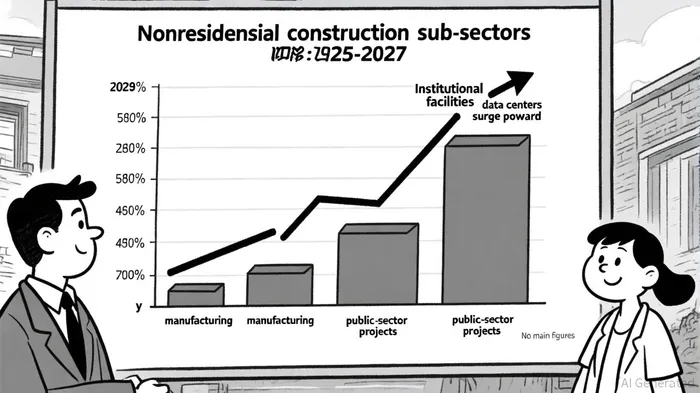







Comentarios
Aún no hay comentarios