
Nollywood's Emerging Financial Power and Investment Potential: Cultural Capital and Box Office Scalability as New Assets in Entertainment Investing
Nollywood, Nigeria's film industry, is no longer just a cultural phenomenon-it's a financial force. Over the past five years, the industry has transformed from a volume-driven, low-budget sector into a high-growth entertainment ecosystem with scalable revenue streams, driven by cultural storytelling and diaspora engagement. For investors, this evolution presents a compelling case: Nollywood is now a market where cultural capital translates directly into financial returns.
The Box Office Surge: A Foundation for Scalability
Nollywood's box office revenue has skyrocketed in recent years, defying global trends. In 2023, the industry grossed ₦7.24 billion ($16.5 million) at the box office, a figure that surged to ₦11.5 billion ($26 million) in 2024 and is projected to hit ₦15 billion ($34 million) by year-end 2025 according to reports. This growth is fueled by a shift toward theatrical releases, which build audience trust and create anticipation for high-quality films. Blockbusters like Gingerrr (₦509.3 million) and Ori: Rebirth (₦419.57 million) demonstrate that Nollywood audiences are willing to pay premium prices for culturally resonant content according to data.
The industry's scalability is further underscored by its global reach. Nollywood produces over 2,500 films annually, making it the second-largest film industry in the world by volume, trailing only Bollywood and Hollywood according to industry analysis. While many films bypass theaters, the theatrical segment's growth signals a maturing industry capable of sustaining long-term revenue.
Cultural Capital: Storytelling as a Financial Asset
Nollywood's strength lies in its ability to leverage cultural capital-stories rooted in Nigerian and African experiences that resonate with both local and diaspora audiences. Films like Iyalode (a historical drama) and A Tribe Called Judah (a social commentary on gender dynamics) reflect societal values, traditions, and contemporary issues, creating emotional connections that drive box office performance according to research.
The diaspora, particularly in the UK and US, plays a pivotal role in monetizing this cultural capital. Nigerian expatriates view Nollywood films as a cultural touchstone, maintaining ties to their heritage and passing narratives to younger generations according to community insights. This audience is not just a demographic-it's a revenue stream. For instance, Everybody Loves Jenifa grossed ₦1.88 billion ($4.3 million) in 2024, with a significant portion attributed to diaspora viewership according to market analysis.
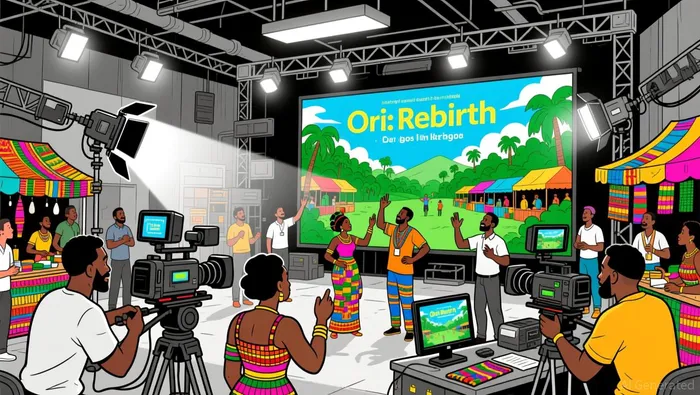
The financial returns for Nollywood investments are striking. Asset managers like MBO Capital have entered the space, offering $500,000 investments in films with projected returns of 30–40% according to industry reports. This is a stark contrast to traditional entertainment markets, where returns often hover around single digits. The appeal lies in Nollywood's low production costs relative to Hollywood, combined with its ability to scale through digital platforms.
International investors are also taking notice. Tiger Global Management's $8 million investment in iROKOtv, a Nollywood streaming platform, highlights the sector's global potential according to investment trends. Meanwhile, the retreat of global streaming giants like NetflixNFLX-- and Amazon Prime from commissioning Nigerian originals has created an opening for local investors to build ownership and control revenue streams according to industry analysis.
Challenges and Opportunities
Despite its promise, Nollywood faces hurdles. Limited infrastructure, inconsistent production quality, and a lack of formal IP protections have historically deterred institutional investment according to industry reports. However, these challenges are being addressed. The Nigerian government and industry stakeholders are pushing for better IP frameworks, while private capital is funding studio development and workforce training according to industry analysis.
For investors, the key is to focus on structured opportunities. Slate financing-funding multiple films at once-reduces risk while leveraging Nollywood's volume-driven model. Additionally, partnerships with global streaming platforms and diaspora-focused distribution strategies can unlock new revenue channels beyond theatrical releases according to market research.
Conclusion: A New Frontier in Entertainment Investing
Nollywood represents a unique intersection of cultural storytelling and financial scalability. Its box office growth, diaspora-driven demand, and improving production standards position it as a high-return asset class. For investors willing to navigate its challenges, the rewards are clear: a market where cultural capital is not just a narrative device but a measurable financial driver.
As Nollywood continues to professionalize, it's not just reshaping African cinema-it's redefining what it means to invest in entertainment.





Comentarios
Aún no hay comentarios