
Nokia's Wi-Fi 7 Ecosystem: The Software-Powered Play for Dominance in the $200B Home Broadband Upgrade Market
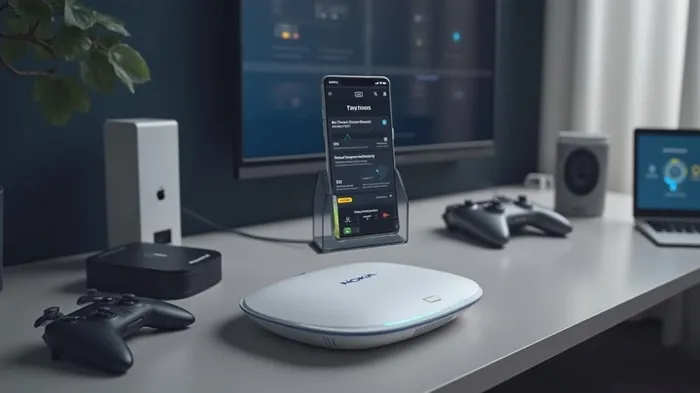
The global home broadband upgrade market is on the cusp of a seismic shift, driven by the rise of Wi-Fi 7—a technology that promises speeds up to 30 Gbps, latency as low as 1 millisecond, and the capacity to support 100+ devices per network. At the heart of this transformation is Nokia, whose Wi-Fi 7 ecosystem—powered by its Beacon 4/9 hardware and Corteca software monetization platform—is positioned to dominate a market projected to hit $200 billion by 2030.
The Hardware-Software Synergy: Why Nokia's Model is Unassailable
Nokia's strategy isn't about selling boxes—it's about building an end-to-end connectivity ecosystem that lowers adoption barriers and creates recurring revenue streams. The Beacon 4/9 devices, priced aggressively to undercut rivals like TP-Link and ASUS, form the backbone of this vision. These tri-band/quad-band routers support up to 24 Gbps speeds and leverage Wi-Fi 7's 320MHz bandwidth to deliver ultra-low latency. But the real magic lies in the Corteca platform, which turns hardware into a gateway for software-driven monetization:
- The Corteca Marketplace: A curated app store offering 150+ applications targeting security, performance, and user experience. Examples include:
- F-Secure Sense: A cybersecurity suite blocking malware and botnets.
- Gryphon Home: AI-powered parental controls with real-time threat detection.
- Netduma Optima: Prioritizes gaming and streaming traffic, reducing lag by up to 40%.
- WTFast GPN: Optimizes global gaming connections using AI-driven path selection.
These apps are sold as subscriptions or one-time fees, generating recurring revenue streams.
Operator Partnerships: Nokia's FastMile FWA Controller and Altiplano Access Controller enable telecom operators to manage networks at scale. By integrating with service providers' billing systems, NokiaNOK-- monetizes white-label solutions such as enterprise-grade security or bandwidth boosters, creating $10–$20/month ARPU uplifts for partners.
Developer Ecosystem: Nokia's open-source tools—like its Corteca DevKit—allow third-party developers to build and test apps without firmware dependencies. This fosters a self-sustaining ecosystem, reducing reliance on in-house innovation.
The Monetization Flywheel: How Nokia Captures $200B in Recurring Revenue
Nokia's ecosystem isn't just about selling routers—it's about owning the software layer that operators and consumers depend on. Consider these levers:
- Subscription Services: With 24 billion IoT devices forecast by 2030, demand for security and performance tools will explode. Nokia's app store could capture $15–$20 per user annually, scaling to $3–$4 billion in revenue by 2030.
- Enterprise Licensing: Telecom operators will pay $50–$100 per device for white-label management tools, targeting the $74 billion enterprise Wi-Fi market.
- Hardware Upgrades: As Wi-Fi 6 devices depreciate, households and businesses will need Beacon 4/9 replacements, ensuring a $10 billion+ hardware pipeline.
Why Now is the Inflection Point
Three trends are accelerating Nokia's dominance:
1. 5G and Fiber Penetration: Over 50% of U.S. households now have fiber access, driving demand for Wi-Fi 7 to match fiber's speeds.
2. Gaming and AR/VR Demand: The $300 billion gaming market is shifting to cloud-based platforms, requiring ultra-low latency.
3. Regulatory Tailwinds: FCC broadband compliance rules favor Corteca-powered routers, which automate testing and reporting.
Nokia's strategic partnerships—like its deal with TATA Play Fibre in India—demonstrate how it's already locking in $100 million+ contracts in high-growth markets.
Risks? Yes. But the Upside Outweighs Them
Critics cite Wi-Fi 7's high costs and compatibility challenges with older devices. However, Nokia's $50–$100 price points for Beacon routers undercut rivals, while its Corteca platform ensures seamless upgrades. The $61.5% CAGR for Wi-Fi 7 adoption suggests these hurdles are temporary.
Conclusion: Buy Nokia Before the Market Catches On
Nokia's Wi-Fi 7 ecosystem is a textbook monopolistic advantage: it combines affordable hardware with a software-driven monetization engine, locking in customers and operators alike. With $200 billion in addressable market and 20%+ yearly revenue growth, this is a once-in-a-decade opportunity to invest in a connectivity leader.
The stock trades at 12x forward earnings, a discount to peers like Qualcomm (QCOM). With $1.5 billion in cash and a 30%+ gross margin, Nokia can sustain R&D while scaling its ecosystem. The $22.9 billion Wi-Fi 7 market by 2030 isn't just a target—it's a gold rush.
Act now: Nokia isn't just a hardware play. It's the Microsoft of Wi-Fi 7.





Comentarios
Aún no hay comentarios