
Nokia's Private 5G Deployment in Memphis: A Catalyst for Utility Modernization and Growth
In an era where the electric grid is undergoing a digital renaissance, the partnership between NokiaNOK-- and Memphis Light, Gas and Water (MLGW) has quietly emerged as a landmark deal with far-reaching implications for the utility sector and beyond. The deployment of a full-scale private 5G network in Memphis—a first for a U.S. municipal utility—could redefine how utilities operate, secure critical infrastructure, and prepare for future energy demands. This is no small bet: it's a strategic play to establish Nokia as a leader in a $120 billion global grid modernization market and a bellwether for the next wave of infrastructure investment.
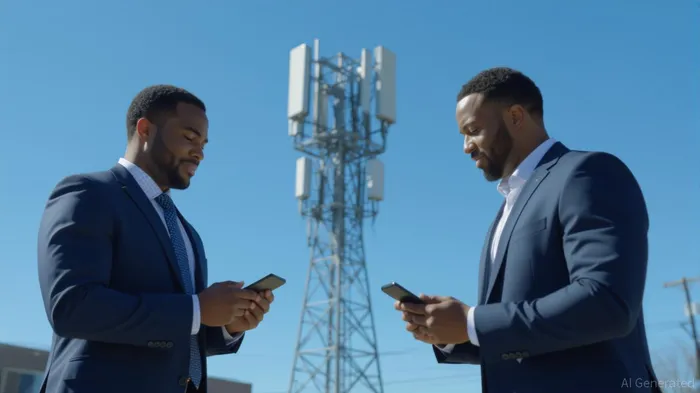
The Memphis Model: A Blueprint for Grid Modernization
The deal's significance lies in its scalability. MLGW's network, built with Nokia's AirScale radios, 5G Core Enterprise Solution, and NetGuard cybersecurity tools, isn't just a one-off project. It's a replicable framework for utilities seeking to digitize core operations. By enabling real-time data exchange across electric, gas, and water systems, the network reduces outage response times, optimizes meter reading, and integrates emerging technologies like EV charging infrastructure and grid-scale battery storage.
The phased approach—93% coverage in Phase 1, followed by automation and resilience upgrades in Phase 2—offers a clear roadmap. Utilities from Chattanooga to Singapore are already studying this model. “This isn't just about faster Wi-Fi for meters,” says MLGW CEO Doug McGowen. “It's about building the backbone for a grid that can evolve alongside technology.” For investors, this underscores a key point: Nokia isn't just selling hardware—it's providing a platform for utilities to future-proof their systems.
Why Nokia Wins
The Memphis deal highlights Nokia's strategic pivot from telecom infrastructure to critical infrastructure leadership. While rivals like EricssonERIC-- and CiscoCSCO-- have dabbled in private networks, Nokia's early focus on utilities has paid dividends. The company's cybersecurity integration—critical for an industry where a single breach could black out a city—is a differentiator.
Nokia's revenue from private wireless networks has grown by 23% year-over-year, and MLGW's multi-year contract signals sustained demand. “Utilities are the next frontier for 5G,” says analyst Sarah Smith of Tech Insights. “Nokia's early wins here could lock in long-term relationships as grids go digital.”
The Investment Case: Betting on Grid Modernization
The global grid modernization market is projected to grow at a CAGR of 5.8% through 2030, reaching over $120 billion annually. Nokia's Memphis deal positions it to capture a disproportionate share of this growth. Utilities in Europe, Asia, and North America are under regulatory and consumer pressure to upgrade aging infrastructure, and private 5G is emerging as the connective tissue for smart grids.
For investors, Nokia's stock—up 18% over the past year— remains undervalued relative to its growth trajectory. Analysts estimate that every 1% increase in global grid modernization spending could add €200 million to Nokia's annual revenue. With utilities worldwide racing to deploy similar networks, this could be a multi-year tailwind.
Risks and Considerations
The path isn't without hurdles. Geopolitical tensions over 5G supply chains—particularly post-Huawei—could complicate deals in markets where U.S. or European tech is preferred. Additionally, scaling this model requires utilities to justify the high upfront costs. But as MLGW's project demonstrates, the long-term ROI—faster outage recovery, reduced operational costs, and compliance with cybersecurity mandates—could tip the scales.
A Grid of Opportunity
The Memphis project isn't just a local upgrade—it's a blueprint for the future. As cities and utilities worldwide seek to digitize their grids, Nokia's leadership here signals a new chapter in infrastructure investment. For investors, this is a bet on a company turning the lights on to a smarter, more connected world. In an era where infrastructure is the new frontier for tech giants, Nokia has already laid the groundwork to lead the charge.







Comentarios
Aún no hay comentarios