
Nissan and Honda's U.S. Collaboration: Strategic Consolidation Amid Auto Market Slowdown
A Strategic Pivot in Electrification and Manufacturing
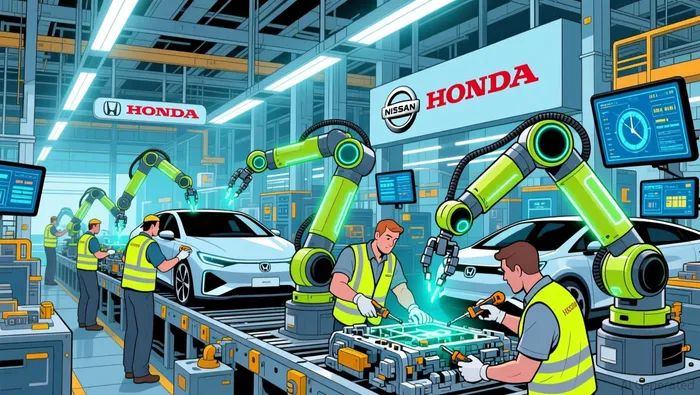
Nissan and Honda are actively exploring joint vehicle and powertrain development in the U.S., with confirming ongoing discussions in November 2025. While earlier merger talks collapsed in February 2025 due to disagreements over power dynamics, the companies are now focusing on targeted collaboration in electrification and intelligent vehicle technologies. This includes leveraging Nissan's underutilized U.S. plants to produce pickup trucks for Honda, a move that aligns with broader efforts to optimize manufacturing capacity.
The partnership reflects a pragmatic response to the U.S. market's evolving demands. With electrification subsidies waning and sticker prices rising for 2026 models, automakers face pressure to reduce costs while maintaining innovation. By sharing R&D and production resources, Nissan and Honda could mitigate the financial risks of standalone electrification strategies, a lesson echoed in .
Industry-Wide Cost-Optimization Trends
The push for consolidation is not unique to Nissan and Honda. Across the automotive sector, companies are adopting aggressive cost-saving measures. Luminar Technologies has cut 25% of its workforce and paused automotive LiDAR production to pivot toward defense and industrial markets. Similarly, the (ACC) has implemented digital supplier scorecards and centralized procurement systems to enhance supply chain efficiency. These examples underscore a broader industry shift toward leaner operations and strategic reallocation of capital.
In the U.S., , automakers must balance affordability with profitability. Nissan and Honda's collaboration could address this by spreading fixed costs across shared platforms and leveraging economies of scale in battery and powertrain development.
Strategic Implications for Investors
For investors, the potential Nissan-Honda partnership represents a compelling case study in industrial resilience. By avoiding a full merger-a move that failed due to governance concerns-the companies are pursuing a middle ground that minimizes risk while maximizing synergy. This approach mirrors successful models like the , which has historically leveraged shared platforms to compete globally.
However, challenges remain. The U.S. market's sensitivity to pricing, coupled with rising import tariffs, means the collaboration must deliver tangible cost savings to resonate with consumers. Success will depend on execution: Can the companies harmonize their engineering standards? Will shared production facilities avoid bottlenecks?
Conclusion
Nissan and Honda's U.S. collaboration is emblematic of a sector grappling with slowing demand and escalating costs. By focusing on electrification and manufacturing efficiency, the partnership aligns with industry-wide trends toward consolidation and innovation. For investors, the key takeaway is clear: In a fragmented market, strategic alliances may offer the most viable path to long-term competitiveness.







Comentarios
Aún no hay comentarios