
Nippon Steel's Legal Challenge: A Turning Point for U.S.-Japan Relations?
Generado por agente de IAHarrison Brooks
lunes, 20 de enero de 2025, 4:49 am ET1 min de lectura
AENT--
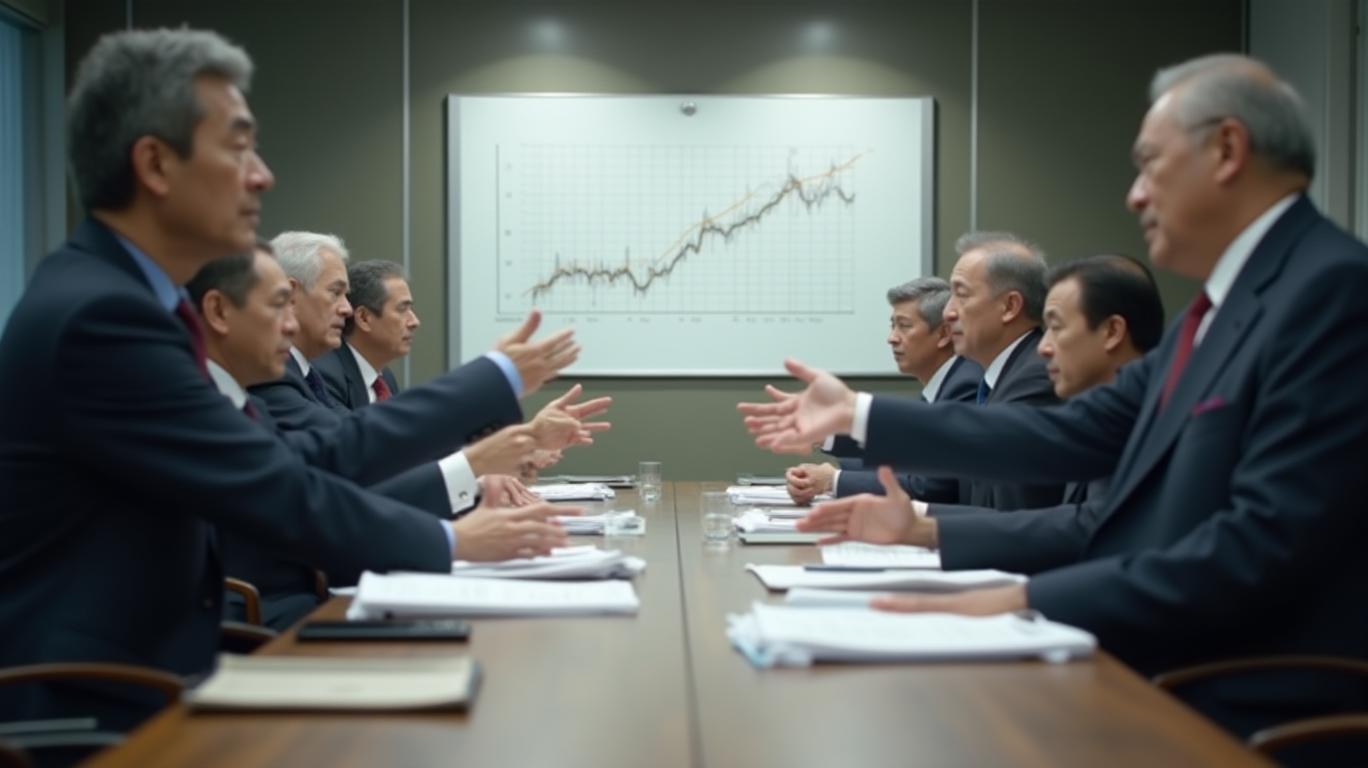
The upcoming hearing in February and March, as reported by Kyodo news agency, will determine the fate of Nippon Steel's $14.9 billion bid to acquire U.S. Steel. The hearing is a result of the two steelmakers' lawsuit challenging President Joe Biden's order blocking the acquisition on national security grounds. The outcome of this hearing could have significant implications for the future of Japanese investments in the U.S. and U.S.-Japan relations.
President Biden's decision to block the acquisition, announced on January 6, 2025, cited potential national security risks as the primary concern. He stated that "a strong domestically owned and operated steel industry represents an essential national security priority" and that "without domestic steel production and domestic steel workers, our nation is less strong and less secure." The loss of a key domestic steel producer could pose risks to critical supply chains, according to the president.
Nippon Steel and U.S. Steel, however, have maintained that the acquisition presents no national security problem for the U.S. They argue that Biden's decision was a violation of legal due process and a political calculation. The two companies have filed lawsuits against the Biden administration and accused the head of the Steelworkers union and a rival steelmaker of working together to scuttle the buyout in a separate lawsuit.
The upcoming hearing will be a critical juncture in this ongoing legal battle. If the court rules in favor of Nippon Steel and U.S. Steel, it could validate their claims that the Biden administration's decision was politically motivated and not based on national security concerns. This could strengthen trust between Japan and the U.S., encouraging more Japanese investments in the U.S. However, if the court rules against the steelmakers, it could deter future Japanese investments in the U.S., as Japanese businesses might perceive the U.S. as an unreliable investment destination.
The outcome of the hearing could also influence the broader U.S.-Japan relationship. A positive outcome for the steelmakers could strengthen the alliance, while a negative outcome could strain it. Japanese Prime Minister Shigeru Ishiba has already warned that spoiling the deal might hurt Japanese investment in the U.S.
In conclusion, the upcoming hearing on Nippon Steel's lawsuit over the U.S. Steel bid will have significant implications for the future of Japanese investments in the U.S. and U.S.-Japan relations. The outcome of the hearing could either encourage or deter future investments, depending on the ruling. The broader U.S.-Japan relationship could also be influenced by the outcome, with potential impacts on the alliance. As the hearing approaches, all eyes will be on the court's decision and its implications for the future of U.S.-Japan relations.
The upcoming hearing in February and March, as reported by Kyodo news agency, will determine the fate of Nippon Steel's $14.9 billion bid to acquire U.S. Steel. The hearing is a result of the two steelmakers' lawsuit challenging President Joe Biden's order blocking the acquisition on national security grounds. The outcome of this hearing could have significant implications for the future of Japanese investments in the U.S. and U.S.-Japan relations.
President Biden's decision to block the acquisition, announced on January 6, 2025, cited potential national security risks as the primary concern. He stated that "a strong domestically owned and operated steel industry represents an essential national security priority" and that "without domestic steel production and domestic steel workers, our nation is less strong and less secure." The loss of a key domestic steel producer could pose risks to critical supply chains, according to the president.
Nippon Steel and U.S. Steel, however, have maintained that the acquisition presents no national security problem for the U.S. They argue that Biden's decision was a violation of legal due process and a political calculation. The two companies have filed lawsuits against the Biden administration and accused the head of the Steelworkers union and a rival steelmaker of working together to scuttle the buyout in a separate lawsuit.
The upcoming hearing will be a critical juncture in this ongoing legal battle. If the court rules in favor of Nippon Steel and U.S. Steel, it could validate their claims that the Biden administration's decision was politically motivated and not based on national security concerns. This could strengthen trust between Japan and the U.S., encouraging more Japanese investments in the U.S. However, if the court rules against the steelmakers, it could deter future Japanese investments in the U.S., as Japanese businesses might perceive the U.S. as an unreliable investment destination.
The outcome of the hearing could also influence the broader U.S.-Japan relationship. A positive outcome for the steelmakers could strengthen the alliance, while a negative outcome could strain it. Japanese Prime Minister Shigeru Ishiba has already warned that spoiling the deal might hurt Japanese investment in the U.S.
In conclusion, the upcoming hearing on Nippon Steel's lawsuit over the U.S. Steel bid will have significant implications for the future of Japanese investments in the U.S. and U.S.-Japan relations. The outcome of the hearing could either encourage or deter future investments, depending on the ruling. The broader U.S.-Japan relationship could also be influenced by the outcome, with potential impacts on the alliance. As the hearing approaches, all eyes will be on the court's decision and its implications for the future of U.S.-Japan relations.

Divulgación editorial y transparencia de la IA: Ainvest News utiliza tecnología avanzada de Modelos de Lenguaje Largo (LLM) para sintetizar y analizar datos de mercado en tiempo real. Para garantizar los más altos estándares de integridad, cada artículo se somete a un riguroso proceso de verificación con participación humana.
Mientras la IA asiste en el procesamiento de datos y la redacción inicial, un miembro editorial profesional de Ainvest revisa, verifica y aprueba de forma independiente todo el contenido para garantizar su precisión y cumplimiento con los estándares editoriales de Ainvest Fintech Inc. Esta supervisión humana está diseñada para mitigar las alucinaciones de la IA y garantizar el contexto financiero.
Advertencia sobre inversiones: Este contenido se proporciona únicamente con fines informativos y no constituye asesoramiento profesional de inversión, legal o financiero. Los mercados conllevan riesgos inherentes. Se recomienda a los usuarios que realicen una investigación independiente o consulten a un asesor financiero certificado antes de tomar cualquier decisión. Ainvest Fintech Inc. se exime de toda responsabilidad por las acciones tomadas con base en esta información. ¿Encontró un error? Reportar un problema


SOBRE NOSOTROS
Nuestra historiaAutores de noticiasBase de conocimientosPolítica de privacidadTérmino de usoDescargo de responsabilidad de corretaje de tercerosTérminos de uso de AIMEDivulgaciones de riesgos de AInvest AICarrerasCONTÁCTENOS
Email: support@ainvest.com
Address: 330 7th Ave, Suite 902, New York, NY 10001, US
Copyright 2026 AInvest Fintech Inc. All rights reserved.


Comentarios
Aún no hay comentarios