
Nippon Steel's Green Hydrogen Gamble: A Goldmine for Decarbonization Investors
The steel industry is one of the world's largest carbon emitters, responsible for roughly 7% of global CO2 emissions. But what happens when a titan of this industry—Nippon Steel—places a multi-billion-dollar bet on green hydrogen to transform its carbon footprint? The answer could redefine industrial decarbonization and create a once-in-a-generation investment opportunity.
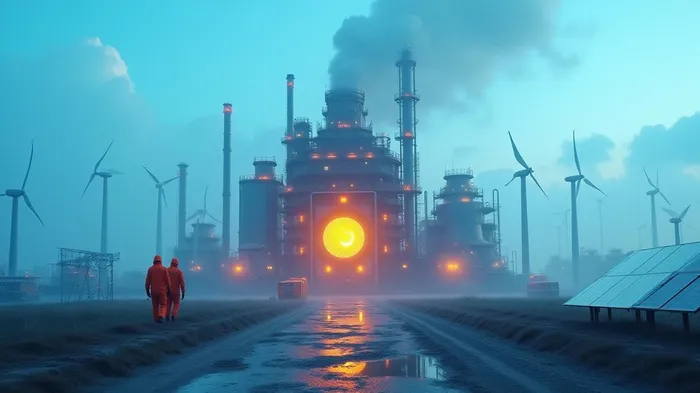
The Problem: Steel's Carbon Conundrum
Traditional blast furnace steelmaking relies on coal, producing vast amounts of CO2. With global net-zero targets looming, the industry faces existential pressure to decarbonize. Enter green hydrogen—a clean-burning fuel produced via renewable energy—that could replace coal as the energy source for reducing iron ore.
Nippon Steel isn't just dabbling in this space. By 2025, it's already testing hydrogen in blast furnaces, building new hydrogen-based iron reduction facilities, and scaling electric arcARCC-- furnaces (EAFs) powered by scrap and renewables. These moves are no accident: they're a strategic play to dominate the $1.7 trillion global steel market in a low-carbon future.
The Playbook: Nippon Steel's 2025 Milestones
Hydrogen Direct Reduction of Iron (Hydrogen DRF):
By late 2024, Nippon Steel will have a new 10-ton electric arc furnace (EAF) in its Hasaki R&D center, testing high-grade steel production using scrap and direct reduced iron (DRI) made with green hydrogen. By 2025, experiments will begin in a small hydrogen test furnace, aiming to scale this process by 2040.Blast Furnace Hydrogen Injection:
Nippon's COURSE50/Super COURSE50 initiative targets a 50% CO2 reduction in blast furnaces by 2030. By 2025, a demonstration test at its Kimitsu plant will aim for 40% reduction, building on a 33% success in late 2023.Global EAF Expansion:
In the U.S., Nippon's ArcelorMittal JV will add 1.5 million tonnes of EAF capacity by 2025, leveraging scrap and renewable energy—a move that reduces reliance on carbon-heavy blast furnaces.
The Edge: Partnerships and Policy Tailwinds
Nippon Steel isn't flying solo. Its partnerships with JFE Steel and Kobe Steel ensure shared R&D costs for blast furnace hydrogen tech. Meanwhile, its GI Fund-backed projects—Japan's $200 billion Green Innovation Fund—provide critical capital for scaling. Overseas, collaborations like its ArcelorMittal JV in India and Ovako subsidiary in the Nordics (which already uses 90% renewable energy) position it to dominate regional decarbonization trends.
The Risk? A Pothole, Not a Roadblock
Skeptics will point to challenges: green hydrogen's high cost, infrastructure gaps, and the $5 trillion Nippon estimates for global steel decarbonization by 2050. But here's the kicker: these hurdles are being addressed. Japan's 2030 renewable energy targets (36–38% of power generation) and emerging carbon pricing mechanisms will subsidize Nippon's investments. Meanwhile, its early-mover advantage in hydrogen DRF and EAF tech could lock in cost efficiencies long before rivals catch up.
The Investment Case: Why Buy Now?
First-Mover Profitability:
As green hydrogen costs fall (analysts predict a 50% drop by 2030), Nippon's early infrastructure will become a profit engine. Its 2025 test results could validate its path to 50% CO2 cuts—a milestone that would make its steel cheaper than carbon-heavy alternatives under stricter emissions pricing.Global Demand Surge:
Electric vehicles, green buildings, and renewable energy infrastructure all require high-grade steel—exactly what Nippon's new EAFs and hydrogen DRI processes will produce.ESG Investor Gold:
With ESG assets projected to hit $53 trillion by 2025, Nippon's decarbonization milestones align perfectly with institutional investor mandates.
The Bottom Line: 2025 is the Pivot
This year is Nippon Steel's proving ground. The Kimitsu blast furnace test and Hasaki hydrogen furnace experiments will either validate its strategy—or expose flaws. But given its partnerships, policy tailwinds, and global scale, the odds favor success. For investors, this is the moment to buy into a company positioned to lead the $1.2 trillion industrial decarbonization market.
The steel industry's green revolution isn't just coming—it's here. Nippon Steel is building the tanks for this revolution. Don't miss the rally.







Comentarios
Aún no hay comentarios