
Nippon Steel's $5.6 Billion Loan: A Masterstroke in Capital Structure and Shareholder Value
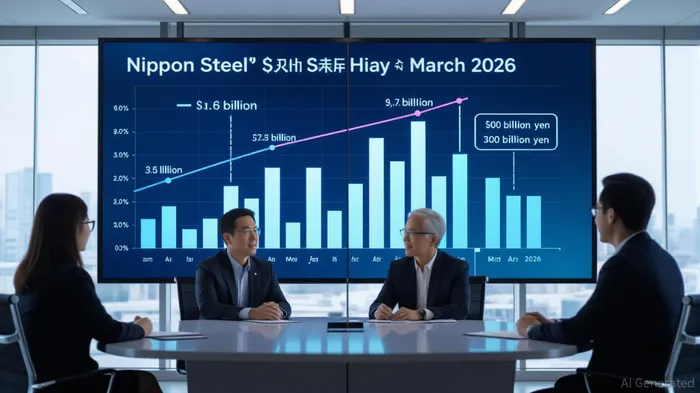
. . ; it's engineering a financial architecture that prioritizes long-term stability and scalability [1].
Strategic Capital Structure Optimization: A Balancing Act
The loan's structure is a masterclass in capital efficiency. . Steel deal, which had a higher interest burden and shorter maturity [2]. By replacing it with a subordinated loan featuring 35–40 year maturities and interest deferral options, Nippon Steel extends its debt horizon and reduces immediate cash flow pressure. Meanwhile, .
What makes this move particularly clever is the loan's hybrid classification. Rating agencies like S&P Global and Japan Credit Rating Agency (JCR) are expected to treat 50% of the subordinated debt as equity for credit rating purposes [4]. . , but this loan, combined with asset sales and earnings growth, .
Credit Ratings and the Path to Financial Flexibility
The loan's subordination and long-term nature also insulate Nippon Steel from near-term refinancing risks. In bankruptcy proceedings, these loans would rank behind senior debt, . .
Moreover, . If cash flow tightens—say, . This is a lifeline in an industry as cyclical as steelmaking.
Shareholder Value: Growth Without Dilution
Here's where Nippon Steel's strategy shines brightest. By avoiding new share issuance, . Shareholders get to benefit from the synergies of the U.S. . , Sumitomo Mitsui, , .
, but context matters. . . Plus, .
The Long Game: A Global Steel Titan Emerges
. The U.S. , . , the company can invest in modernizing U.S. Steel's plants, .
For investors, . ; it's building a platform for sustained growth. , .







Comentarios
Aún no hay comentarios