
NIO vs. Rivian: Navigating EV Market Volatility and Investment Opportunities
The electric vehicle (EV) sector remains a battleground of contrasts: NIO's relentless growth in China's premium SUV market versus Rivian's struggles to navigate U.S. policy headwinds and production bottlenecks. Both companies face near-term risks—from cash burn to regulatory shifts—but their long-term trajectories diverge sharply. For investors, the question is whether to bet on NIO's momentum or Rivian's potential, or to wait for clearer skies.
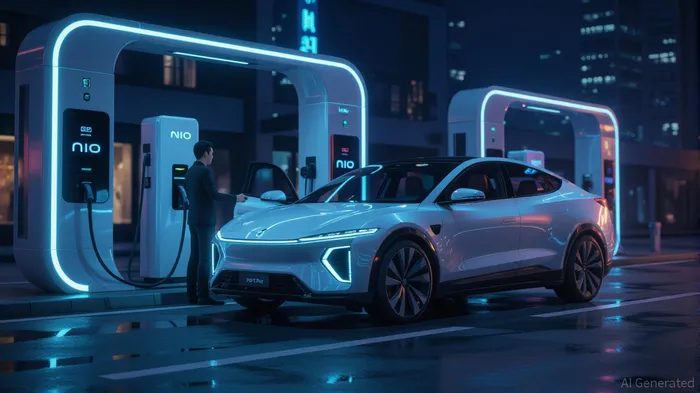
NIO: Riding China's EV Wave, But Cash Is a Concern
NIO delivered 72,056 vehicles in Q2 2025, a 25.6% year-over-year jump, driven by its Firefly model targeting China's booming small EV segment (growing 42% in 2024). This momentum, however, masks deeper financial struggles.
- Profitability Struggles: Vehicle margins improved to 10.2% in Q1 2025 but fell from 13.1% in Q4 due to lower production volumes. Gross margins dipped to 7.6%, reflecting volatility.
- Cash Burn: NIO's cash reserves dropped to RMB26 billion (≈$3.7 billion) by March 2025, down from RMB42 billion in late 2024. Analysts warn that cash below $2.5 billion could trigger liquidity risks.
- Valuation Edge: Trading at a forward price/sales ratio of 0.43, slightly below the industry average of 0.45, NIONIO-- appears undervalued.
Key Risk: NIO's shareholder equity turned negative in Q1 2025, signaling potential insolvency if losses persist. A March 2025 Hong Kong share sale raised only HK$510 million, insufficient to offset losses.
Growth Catalyst: The Firefly's success is critical. If it captures 5-7% of China's EV market (projected to hit 10 million units by 2027), NIO could stabilize margins and justify its valuation.
Rivian: Policy Headwinds and Production Hurdles
Rivian's Q2 2025 production fell to 5,979 vehicles, a 37% YoY drop, as it retooled factories for its upcoming R2 SUV. Deliveries slid 22.7% to 10,661 units, missing consensus.
- Policy Risks: The U.S. “One Big, Beautiful Bill” (OBBB) eliminates EV tax credits starting September 2025, stripping RivianRIVN-- of a $7,500-per-vehicle incentive. Guggenheim downgraded Rivian to “Hold” from “Buy,” citing reduced demand forecasts and a lowered 2028 sales target of 150,000 units (vs. prior 185,000).
- Valuation Pressures: Rivian's stock has dropped 28% over 12 months, trading at $14.56—a 33% discount to its June 2025 VW-backed equity price of $19.42.
- Long-Term Hopes: The R2, priced at $45,000, aims to rival Tesla's Model Y. A $1 billion investment from Volkswagen Group (part of a $5.8 billion joint venture) bolsters liquidity, but execution risks remain.
Key Risk: Without tax credits, Rivian's R2 must compete on price and specs without federal subsidies. Analysts warn it needs 400,000 annual sales for profitability—a tall order.
Macro Headwinds: Tax Credits, China's Market, and Global Competition
- U.S. Policy Shift: The OBBB's tax credit removal disproportionately hurts Rivian, which relies on U.S. sales and lacks China's scale.
- China's EV Market: NIO benefits from BYD's dominance driving infrastructure investment (e.g., battery swap stations) and government support.
- Global Rivals: Tesla's Model Y and BYD's mid-range EVs squeeze margins for both NIO and Rivian, forcing premium branding and innovation (e.g., NIO's battery-as-a-service).
Valuation and Investment Strategy
| Metric | NIO | Rivian |
|---|---|---|
| Price/Sales Ratio | 0.43 (vs. industry 0.45) | 0.65 (vs. industry 0.70) |
| Cash Runway | ~12 months (management) | ~2 years (analysts) |
| Key Catalyst | Firefly adoption | R2 launch success |
NIO's Play:
- Hold until Q2 results (July/August 2025) confirm revenue growth and margin stabilization. Historically, NIO has seen gains in the short term following earnings releases: a 57.14% win rate over 3 days and 50% over 10 days since 2022, though returns decline to 21.43% after 30 days. This suggests potential upside around earnings-driven catalysts.
- Buy dips below $3: Potential for 50-70% returns by 2026 if Firefly gains traction and cash burn slows.
Rivian's Play:
- Avoid until post-tax-credit sales data emerges (2026+) and R2 production ramps up.
- Hold for now, but watch for further dilution risks or partnerships to offset policy headwinds.
Conclusion: NIO Offers Near-Term Opportunity, Rivian a Longer Gamble
NIO's Firefly-driven growth and China's EV tailwinds make it a selective buy on dips, provided it avoids liquidity traps. Historical performance around earnings releases underscores the near-term upside potential. Rivian, meanwhile, is a wait-and-see story: its R2 and VW partnership hold promise, but near-term risks—from policy changes to execution—are too high to justify aggressive buying now.
For investors: NIO's undervaluation and growth trajectory make it the better near-term bet, but keep a close eye on its Q2 results. Rivian's potential is there, but it's a call for patience.





Comentarios
Aún no hay comentarios