
Nintendo's Switch 2 Ignites a New Era of AI-Driven Gaming Growth
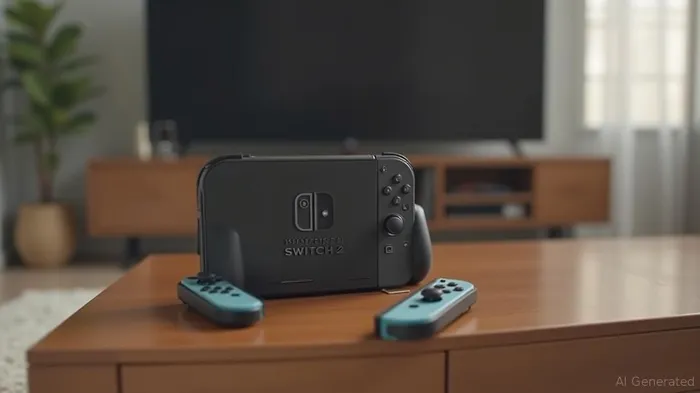
The Nintendo Switch 2, launched on June 5, 2025, has set a new benchmark for hybrid consoles, propelling Nintendo's stock to record highs and positioning it as a leader in the tech-driven entertainment sector. Combining AI-powered hardware upgrades, a robust ecosystem of franchises, and strong technical momentum, Nintendo is primed to capitalize on the growing demand for immersive, accessible gaming experiences.
AI Integration: A Quiet Revolution in Gaming
While Nintendo's AI strategy isn't explicitly detailed, the Switch 2's hardware innovations reflect a strategic embrace of AI-driven technologies. The console's custom NVIDIA processor, featuring Tensor Cores, enables Deep Learning Super Sampling (DLSS)—a neural rendering technique that upscales graphics and improves visual performance. This allows the Switch 2 to deliver 4K resolution when docked and 120Hz refresh rates in handheld mode, while maintaining battery life.
The integration of DLSS marks a critical step toward consumer-ready AI rendering, as Nintendo prioritizes stability and accessibility over cutting-edge complexity. For instance, the GameChat 2 feature, which supports voice and video calls, leverages AI to enhance communication quality, aligning with Nintendo's family-friendly ethos. Meanwhile, backward compatibility with 95% of original Switch games ensures a seamless transition for its 150 million-strong installed base.
Brand Equity: The Power of Iconic Franchises
Nintendo's portfolio of AAA franchises—Super Mario, Zelda, Pokémon, and Animal Crossing—remains its most formidable asset. These titles not only drive hardware sales but also create a flywheel effect: more Switch 2 units sold mean more software purchases, and vice versa. The Switch 2's launch bundle, Mario Kart World, sold at $499.99, exemplifies this synergy, combining hardware upgrades with a proven hit game.
Analysts project the Switch 2 could sell 40–50 million units over its lifecycle, a testament to Nintendo's ability to innovate iteratively. Unlike competitors like Sony's PS5 or Microsoft's handheld efforts, Nintendo's hybrid design—portable yet powerful—fills a unique niche, appealing to both casual families and core gamers.
Technical Indicators: A Bullish Setup
Nintendo's stock (TYO:7974) has surged 46% year-to-date, reaching an all-time high of 13,320 yen on June 5. Technical analysis reveals a rising wedge pattern, suggesting a potential breakout to 18,160 yen—a 36% upside from current levels. Additionally, a bullish RSI divergence signals sustained upward momentum, even as the stock trades in overbought territory.
The stock's P/E ratio of 50 reflects investor optimism about long-term growth, though it carries risks. Analysts recommend setting a trailing stop-loss at 10% below entry points to mitigate volatility. With a beta of 0.76—indicating lower volatility than the broader market—Nintendo offers a defensive play in a tech sector facing macroeconomic headwinds.
Risks and Considerations
Nintendo isn't without challenges. A potential 25% tariff hike on Vietnamese-manufactured units, if imposed post-July 2025, could squeeze margins. The company's Q1 2025 gross margin had already dipped to 48% from 52% in 2023, underscoring sensitivity to cost pressures. Competitors like Sony's GTA 6 and live-service games also pose threats, though Nintendo's hybrid advantage and family-friendly ecosystem remain unmatched.
Investment Thesis: Buy the Dip, Monitor Tariffs
Nintendo's Switch 2 launch is a catalyst for sustained growth, blending AI-driven innovation with its unmatched brand equity. Investors should accumulate positions on dips below 12,500 yen, with a stop-loss at 11,000 yen. A resolution of tariff disputes or positive earnings surprises could accelerate the stock's climb toward analyst targets of 20,780 yen.
In a crowded gaming landscape, Nintendo's focus on user-friendly technology and emotional engagement continues to differentiate it. As the Switch 2 reshapes expectations for hybrid consoles, the company is not just a gaming giant but a pioneer in the AI-powered entertainment of tomorrow.
Final Note: Nintendo's success hinges on sustaining supply chain resilience and navigating tariffs. Monitor gross margin trends and trade negotiations closely.







Comentarios
Aún no hay comentarios