
Nikkei 225, KOSPI Surge 1.9%, 4.4% on Trump's Tariff Pause
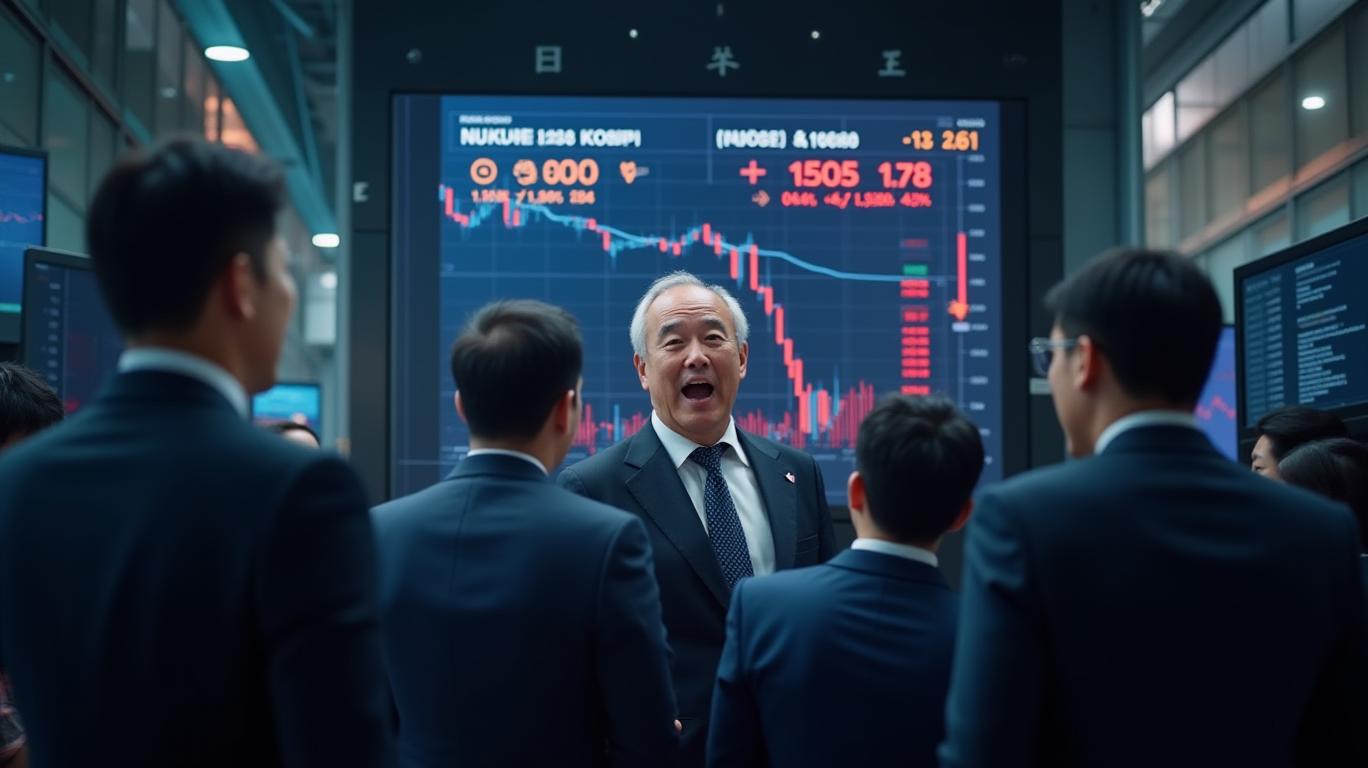
The Japanese and South Korean stock markets experienced a significant surge at the open, with the Nikkei 225 Index rising by 1.9% and the South Korean KOSPI Index surging by 4.4%. This rally came after a period of global trade tensions and market volatility, which had been exacerbated by the threat of widespread trade wars. The surge in these markets was driven by the announcement from US President Donald Trump, who declared a 90-day pause on his sweeping tariffs, excluding China, which faced an immediate increase in tariffs to 125%.
Trump's decision to pause tariffs for most countries, except China, was seen as a relief by investors who had been bracing for further market turmoil. This announcement led to a sharp rally in US stock markets, with the S&P 500 and Nasdaq experiencing significant gains. The positive sentiment from the US markets spilled over into the Asian markets, with Japan's Nikkei 225 and South Korea's KOSPI index both showing strong gains at the open. The pause on tariffs was seen as a temporary reprieve, allowing markets to stabilize and providing a window for negotiations to potentially resolve the ongoing trade disputes.
The decision to exclude China from the tariff pause was a clear indication of the escalating tensions between the two economic superpowers. Trump's move to increase tariffs on Chinese imports to 125% was a bold step aimed at pressuring China into making concessions in trade negotiations. This escalation in the trade war between the US and China has raised concerns about the potential impact on global economic growth and stability. The World Trade Organization had earlier warned that the trade tensions between the US and China could lead to a significant reduction in global trade and economic growth.
The pause on tariffs was also seen as a strategic move by Trump to gain leverage in trade negotiations with other countries. By excluding China from the tariff pause, Trump was able to send a clear message to other trading partners that the US was serious about addressing trade imbalances and unfair practices. This move was seen as a way to pressure other countries into making concessions in trade negotiations, while also providing a temporary relief to global markets.
The rally in Japanese and South Korean stock markets was also driven by the positive sentiment in US markets, which had surged after Trump's announcement. The pause on tariffs was seen as a positive development for global markets, which had been under pressure due to the threat of widespread trade wars. The rally in US markets was also driven by the expectation that the pause on tariffs would provide a window for negotiations to potentially resolve the ongoing trade disputes.
The surge in Japanese and South Korean stock markets at the open was a clear indication of the positive sentiment in global markets following Trump's announcement. The pause on tariffs was seen as a temporary reprieve, allowing markets to stabilize and providing a window for negotiations to potentially resolve the ongoing trade disputes. The decision to exclude China from the tariff pause was a clear indication of the escalating tensions between the two economic superpowers, and the potential impact on global economic growth and stability. The rally in US markets was also driven by the expectation that the pause on tariffs would provide a window for negotiations to potentially resolve the ongoing trade disputes.







Comentarios
Aún no hay comentarios