
Nikkei 225 Drops 2.8% Amid U.S. Tariff Concerns, Bank of Japan Uncertainty
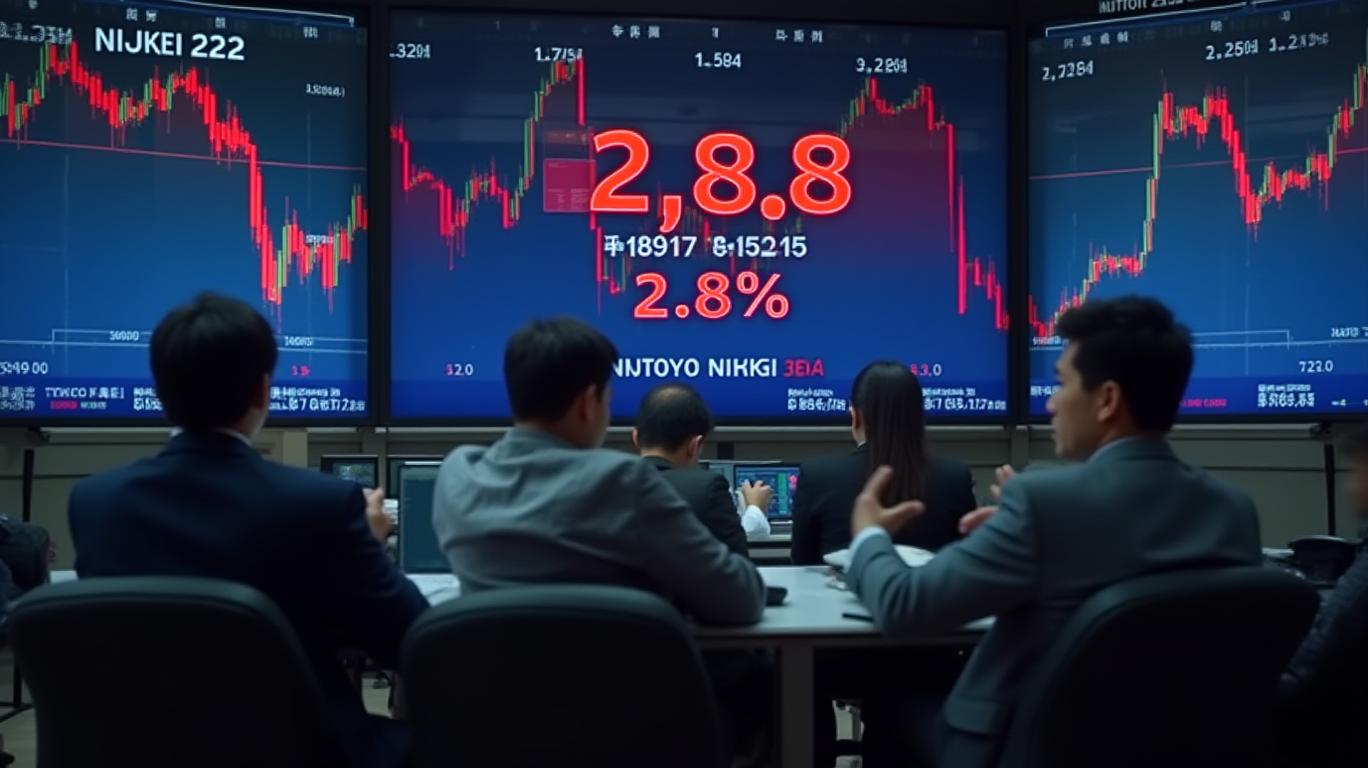
The Nikkei 225 index experienced a significant decline, falling 2.8% to 33,780.58 points, marking its lowest level since August 5, 2023. This drop was primarily driven by concerns over the global economic outlook and uncertainty surrounding the Bank of Japan's interest rate pathPATH--, following the announcement of new U.S. tariff measures. The Tokyo Stock Exchange (TSE) index also saw a substantial decrease, dropping 3.4% to 2482.06 points, and has entered a correction phase, having fallen over 10% from its March high.
The decline in the Nikkei 225 index can be attributed to several factors. The new U.S. tariff measures have raised concerns about the global economic outlook, as they could potentially disrupt supply chains and increase costs for businesses. This uncertainty has led to a sell-off in global markets, with investors seeking safe-haven assets. Additionally, the Bank of Japan's interest rate path remains uncertain, with some analysts expecting the central bank to maintain its accommodative monetary policy, while others anticipate a gradual tightening. This uncertainty has contributed to the volatility in the Japanese stock market.
The decline in the TSE index is also a reflection of the broader market sentiment, as investors remain cautious about the global economic outlook. The index has entered a correction phase, with some analysts predicting further declines in the near term. However, others believe that the market may have already priced in the worst-case scenario, and that a rebound could be on the horizon.
The decline in the Nikkei 225 and TSE indices highlights the challenges facing the Japanese economy, as it grapples with the impact of U.S. tariff measures and uncertainty surrounding the Bank of Japan's interest rate path. While the short-term outlook remains uncertain, some analysts believe that the Japanese economy has the resilience to weather these challenges and emerge stronger in the long run.
Investors are now closely monitoring the potential responses from various governments around the world to the recent U.S. tariff measures. The dollar against the yen was reported at 146.07, compared to 146.06 at 5 p.m. Eastern Time on Thursday.
In the midst of this market turmoil, certain sectors have been particularly hard hit. Chip and financial stocks have led the decline, with notable drops in companies such as Kabuto, Renesas Electronics, Mizuho Financial GroupMFG--, and Mitsubishi UFJ FinancialMUFG-- Group. The 10-year Japanese government bond yield also decreased by 20 basis points to 1.160%.







Comentarios
Aún no hay comentarios