
Nike's Waning Growth Momentum: Assessing Long-Term Brand Resilience and Strategic Reinvention in a Shifting Consumer Landscape
Nike, a once-unassailable titan in the sportswear industry, is grappling with a waning growth trajectory as of 2025. The company's recent financial results and competitive challenges underscore a critical juncture for its long-term brand resilience. While Nike's iconic status remains intact, its ability to adapt to evolving consumer behavior, margin pressures, and aggressive competition will determine whether it can reclaim its footing in a rapidly transforming market.
Financial Performance: A Tale of Mixed Results
Nike's Q3 2025 results revealed a 9% year-on-year revenue decline on a reported basis, with currency-neutral revenue down 7%. This slump was driven by weaker sales across both its Direct and Wholesale segments, as well as a 330-basis-point drop in gross margin to 41.5%. The Q4 2025 performance showed slight improvement, with revenue flat year-on-year at $12.43 billion-beating analyst estimates by 1.7%-but margin pressures persisted, with gross margin declining by 300 basis points. U.S. import tariffs, particularly on Vietnamese imports, and a shift toward lower-margin wholesale channels exacerbated these challenges.
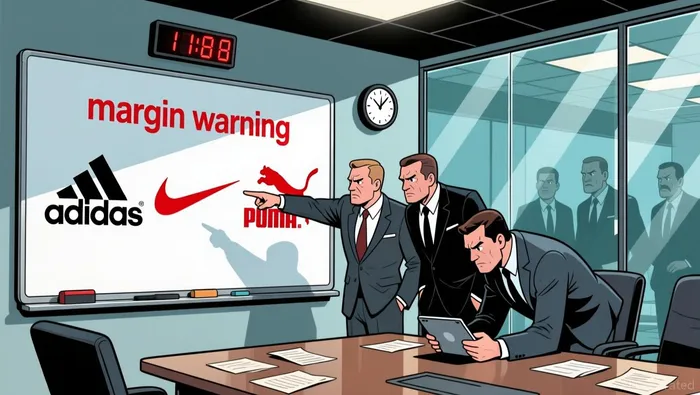 Despite these headwinds, Nike's GAAP earnings per share (EPS) outperformed expectations in both quarters, with Q4 EPS of $0.53 surpassing forecasts by 41.9%. Shareholder returns also remained robust, with $1.1 billion distributed via dividends and buybacks in Q3 according to investor reports. However, these short-term gains mask deeper structural issues: North America's 9% revenue growth contrasted sharply with a 17% decline in Greater China, highlighting regional imbalances.
Competitive Positioning: Adidas and the Rise of Disruptors
Nike's dominance in the sportswear industry-accounting for 27% global market share-is under threat from rivals like Adidas, Puma, and emerging brands such as On Running and Hoka according to market analysis. Adidas, in particular, is gaining ground with its "Own the Game" strategy, which aims to make DTC 50% of sales by 2025 and double e-commerce growth. By 2025, Adidas plans to source 90% of its products from sustainable materials, a stark contrast to Nike's "Move to Zero" campaign, which targets zero carbon emissions by 2050.
Nike's DTC strategy, while still a cornerstone of its business, has faced execution challenges. In Q3 2025, DTC revenue fell 12% year-on-year to $4.7 billion, suggesting that its aggressive shift to DTC may have overextended its digital infrastructure. Meanwhile, Skechers and New Balance are leveraging strategic partnerships and versatile product lines to capture market share according to industry reports. The rise of athleisure and the integration of smart technologies-such as AI-powered wearables and biometric apparel-further complicate Nike's ability to maintain its edge.
Strategic Reinvention: A Race Against Time
Under CEO Elliott Hill, NikeNKE-- is attempting a strategic reinvention centered on its "Win Now" initiative. This strategy prioritizes performance innovation over lifestyle-driven product lines, aiming to restore the brand's credibility with athletes and reduce reliance on heavily discounted retro models. Hill's leadership has also emphasized rebuilding relationships with wholesale partners, a departure from the previous administration's DTC-centric approach.
However, execution risks remain. The company's operating margin fell to 8% in Q4 2025, down from 11.2% in the prior year according to financial analysis, reflecting ongoing cost pressures. Additionally, macroeconomic headwinds-including tariffs and supply chain disruptions- threaten to undermine margin recovery. For Nike to succeed, it must balance innovation with profitability while addressing the growing demand for sustainability and customization.
Broader Industry Trends: A Double-Edged Sword
The sportswear industry is undergoing a seismic shift. Consumers now prioritize sustainability, technological integration, and brand purpose. Nike's "Move to Zero" campaign aligns with these trends, but its progress lags behind Adidas's aggressive sustainability targets. Meanwhile, the rise of athleisure and digital customization tools-such as 3D knitting and on-demand production-has raised the bar for customer expectations.
The global sportswear market is projected to grow from $404.8 billion in 2025 to $855.3 billion by 2033, but Nike's ability to capture this growth will depend on its agility. Competitors are leveraging AI and IoT to create hybrid wearable products, while Nike's focus on performance innovation must translate into tangible, differentiated offerings.
Conclusion: A Test of Resilience
Nike's long-term brand resilience hinges on its capacity to execute its strategic reinvention effectively. While its historical innovation capabilities and strong brand equity provide a foundation for recovery, the company must navigate a complex landscape of margin pressures, competitive threats, and shifting consumer priorities. If Nike can successfully pivot back to performance-driven innovation, strengthen its wholesale partnerships, and accelerate its sustainability efforts, it may yet reclaim its position as the sportswear industry's leader. However, the path forward is fraught with challenges, and the window for reinvention is narrowing.







Comentarios
Aún no hay comentarios