
Nike's Turnaround: A Value Investor's Assessment of Moat, Price, and Margin of Safety
Nike is navigating a difficult period marked by significant cost headwinds and a decline in key markets. , which is already being passed on to consumers and prompting a strategic shift away from China. At the same time, the company's largest growth market, , . . These figures highlight the severe impact of both the tariff burden and the China slump on Nike's profitability.
This is the reality that tests the durability of Nike's famed brand moat. For years, the company's strength came from its ability to command premium pricing and defend market share through innovation and athlete partnerships. Now, that moat is being tested on multiple fronts. Consumers are pulling back on discretionary spending, making high-priced apparel less of a priority. Simultaneously, NikeNKE-- is aggressively right-sizing major product franchises like Air Force 1 and Dunk, a move that signals the need to defend share in a more competitive and cost-conscious environment. The business is no longer compounding capital efficiently at these levels. The combination of rising input costs, a weakening key market, and the need for strategic recalibration means the company is fighting to maintain its footing rather than growing its economic engine.
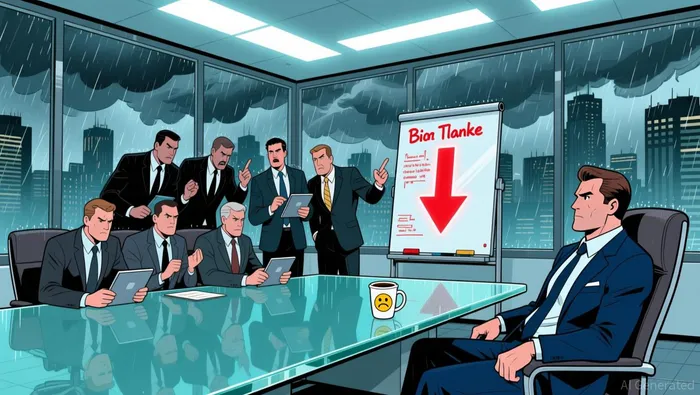
The bottom line for a value investor is that intrinsic value is being pressured. The current trajectory suggests that Nike's ability to generate high returns on capital, the hallmark of a wide moat, is under threat. While the brand remains powerful, the path to restoring that profitability is proving longer and more expensive than hoped, with the tariff cost alone eating into the bottom line for years to come.
The Insider Signal: Confidence or Contrarian Bet?
The recent wave of insider buying at Nike presents a clear, if small, signal of internal confidence. In late December, Apple CEO , who has served on Nike's board since 2005, . This single transaction nearly doubled his stake in the company. He was joined by Nike's new CEO, , . The purchases were part of a broader boardroom move, with other directors also buying, .
This buying occurred against a stark backdrop. . In that light, the purchases align with the classic value investing principle of "buying when others are fearful." The insiders are putting their own capital at risk just as the market has been punishing the shares, suggesting they see a disconnect between the current price and the company's long-term prospects.
Yet, the signal must be weighed carefully. While the purchases are significant in aggregate, they represent a tiny fraction of the buyers' personal wealth. For a CEO or a billionaire board member, even a $1 million investment is a rounding error. This is a vote of conviction, not a financial bet that guarantees a near-term rebound. , , or the need to defend market share in a tougher environment.
The bottom line is that this is a potential indicator of internal confidence, a sign that those closest to the business believe the worst may be over. It adds a layer of conviction to the turnaround narrative. But for a value investor, it is just one data point. It must be weighed against the tangible, ongoing pressures on the business. The insiders are betting on the long-term, but the market is focused on the immediate, painful path to profitability.
Valuation and the Margin of Safety
The core question for a value investor is whether the current price offers a sufficient margin of safety relative to the business's intrinsic value. Based on a , . That figure, however, is a snapshot of a company in transition. The market is currently pricing the stock at a significant discount to that estimate, but the real test is whether that discount is wide enough to compensate for the tangible risks ahead.
The primary catalyst for a re-rating is the execution of CEO Elliott Hill's "Win Now" strategy. The early signs are encouraging: the company is reigniting brand momentum through sport and has made initial progress in stabilizing its North American business. The key will be whether these actions translate into a sustained recovery in sales and, more critically, in margins. The tariff cost is a known, , but the company's ability to manage its China transition and defend pricing power will determine if gross margin pressure eases. A successful turnaround would close the gap between the current depressed earnings and the DCF's fair value.
The primary risk, however, is that the headwinds persist and the competitive moat erodes further. If the 17% sales drop in Greater China continues unabated, or if consumer pullback in discretionary spending intensifies, the path to profitability becomes longer and more expensive. In that scenario, Nike's earnings would remain under severe pressure, and the stock could trade at a premium to its depressed earnings for an extended period. This would offer no margin of safety, as the market would be pricing in a recovery that may not materialize.
Applying classic value investing principles, the current setup is one of high uncertainty. The insider buying suggests a belief that the worst is over, but the business fundamentals remain fragile. For a disciplined investor, the margin of safety is not just about a low price-to-earnings ratio; it is about the confidence that the business can navigate its challenges and compound capital again. Given the $1 billion tariff, the China slump, and the need to aggressively rightsize major product lines, the intrinsic value is being pressured. Until there is clearer evidence that Hill's strategic priorities are gaining traction and that the headwinds are being mitigated, the current price does not offer a sufficient margin of safety. The stock may be cheap, but it is cheap for a reason.







Comentarios
Aún no hay comentarios