
Nike's Strategic Shift and Tariff Headwinds: A Tipping Point for Rebalance and Recovery?
Nike Inc. (NKE) stands at a crossroads as it grapples with a confluence of challenges: margin compression from tariffs, a faltering DTC strategy, and divergent regional performance. The company's fiscal 2025 third-quarter results underscored these pressures, with total revenues slipping 9% year-over-year to $11.3 billion and gross margins contracting to 41.5%-a 3.3 percentage point decline driven by aggressive discounting and inventory overhang. Yet beneath the near-term pain lies a strategic recalibration that could redefine its long-term trajectory.
The DTC Strategy: From Overreach to Rebalance
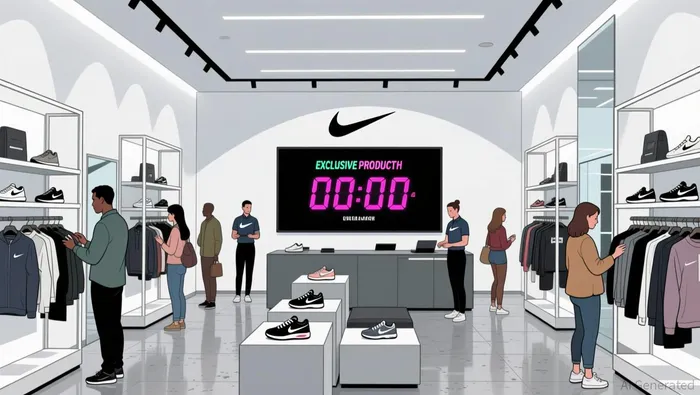
Nike's pivot to DTC, once hailed as a transformative force, now faces scrutiny. Direct-to-consumer revenues fell 12% in Q3, with digital sales plunging 15% as consumers increasingly bypassed full-price channels. The company's reliance on deep discounts-exacerbated by $8 billion in excess inventory-has eroded brand equity and profitability. However, recent moves to shift clearance items to outlet stores and reduce promotional days signal a pivot toward full-price selling. This shift, while painful in the short term, aligns with broader industry trends emphasizing brand premiumization. Analysts note that the decelerating rate of digital sales declines-now at 15% versus double-digit drops in prior quarters-suggests early signs of stabilization.
Tariff Headwinds: A Prolonged Drag on Margins
External pressures loom large. Tariffs on imports from China and Mexico are now projected to add $1.5 billion in annualized costs for fiscal 2026, a 50% increase from earlier estimates. This represents a 120-basis-point hit to gross margins, compounding existing challenges from promotional activity and inventory write-downs. CFO Matthew Friend warned that Q4 will reflect the "largest impact" of strategic adjustments, with revenue declines in the mid-teens range according to CNBC. While NikeNKE-- has historically offset such costs through pricing and operational efficiency, the current environment-marked by weak consumer confidence and competitive intensity-limits its flexibility.
Regional Divergence: China's Struggle and North America's Stumble
The regional picture is starkly mixed. Greater China, Nike's most volatile market, saw revenues plummet 17% to $1.73 billion in Q3, hampered by underperforming seasonal sales and a promotional-driven market. CEO Elliott Hill acknowledged the need for accelerated innovation and localized branding in key cities like Beijing and Shanghai. Meanwhile, North America-Nike's largest market-posted a 10% decline in DTC sales, with digital and physical store channels both underperforming according to investor reports. Analysts attribute this to shifting consumer preferences and rising competition from niche brands like On and Hoka.
Long-Term Potential: Strategy vs. Execution
Despite these headwinds, Nike's strategic playbook retains upside. Early progress in categories like running-up over 20% year-over-year-and a renewed focus on integrating wholesale and DTC channels hint at a path to margin recovery. The company's emphasis on product innovation and localized marketing in China could rekindle growth, though execution risks remain. Analysts project a 24.1% decline in adjusted EPS for fiscal 2026 but a 54.2% rebound in 2027, contingent on successful inventory management and tariff mitigation. A "Moderate Buy" rating from key analysts reflects cautious optimism, with price targets implying potential upside if Nike navigates its current turbulence according to market analysis.
Conclusion: A Tipping Point, Not a Death Knell
Nike's current struggles are emblematic of broader challenges in the athletic apparel sector, where margin pressures and shifting consumer behavior test even the most established brands. However, the company's strategic pivot-prioritizing full-price selling, inventory discipline, and regional innovation-positions it to emerge stronger. The coming quarters will be critical: if Nike can stabilize its DTC model, absorb tariff costs without sacrificing brand value, and reignite growth in key markets, it may yet transform this period of turbulence into a catalyst for long-term resilience. For investors, the key will be monitoring the pace of these adjustments and the company's ability to balance short-term pain with long-term gain.







Comentarios
Aún no hay comentarios