
Nigeria's Inflation Drop Below 20%: A Gateway to Emerging Market Recovery?
The recent drop in Nigeria's headline inflation to 18.02% in October 2025, its lowest level in over two years, has sparked renewed optimism about the country's economic trajectory. This decline, coupled with strategic interventions by the Central Bank of Nigeria (CBN) and a resilient equity market, raises a critical question: Is this a gateway to broader emerging market recovery in Africa's largest economy?
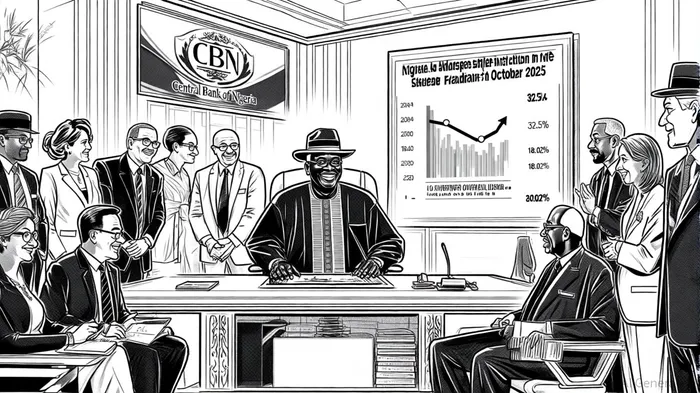
Central Bank Interventions and Disinflationary Momentum
The CBN's decision to cut the Monetary Policy Rate (MPR) to 27% in September 2025 marked a pivotal shift after five consecutive months of disinflation, Reuters reported. This reduction, the first since 2020, followed a steady decline in headline inflation from 24.48% in January 2025 to 18.02% in October, according to Bagudu. Analysts attribute this trend to a combination of factors: a stronger naira (trading within N1,480–N1,600 per USD), improved food supply from the harvest season, and stable energy prices, Investors King reported. The CBN's hawkish stance since May 2022-maintaining the MPR at 27.5% until September-has anchored inflation expectations, while global monetary easing (notably the U.S. Federal Reserve's rate cuts) provided a buffer against capital flight.
However, the central bank remains cautious. While headline inflation has eased, core inflation (excluding food and energy) still reflects underlying pressures, and risks such as exchange rate volatility and supply chain disruptions persist, as Bagudu noted. The CBN's Inflation Targeting Framework, introduced in November 2023, underscores its commitment to balancing disinflation with economic growth, according to the Open Africa Data Hub.
Nigerian Equities: A Magnet for Strategic Investors
The NGX All Share Index (ASI) has mirrored this economic optimism, surging 35.82% year-to-date by September 2025, according to Investors King. The Insurance and Industrial Goods sectors have been key drivers, reflecting confidence in domestic consumption and manufacturing recovery. For instance, the NGX Insurance Index rose 42% in Q3 2025, fueled by improved liquidity and regulatory reforms, Reuters noted. Similarly, Industrial Goods firms benefited from a rebound in agricultural output and infrastructure spending.
This performance has attracted both local and foreign investors. According to a report by Bloomberg, Nigerian equities now offer a risk-adjusted return profile comparable to peers in South Africa and Egypt, with valuations trading at a 30% discount to regional averages. PanAtlanticKompass also highlighted Moody's upgrade to B3. The NGX's liquidity has also improved, with average daily trading volumes exceeding $50 million in Q3 2025, Reuters observed.
Local Debt Market: Yields and Credit Rating Improvements
Nigeria's local debt market has similarly shown resilience. Treasury bill yields fell to 16.37% in October 2025 for short-term maturities, reflecting reduced inflationary pressures and improved investor sentiment, the Open Africa Data Hub reported. Fixed-income funds have capitalized on this environment, with top performers like Comercio Partners Fixed Income Fund delivering 30% year-to-date returns, according to Investors King.
Credit rating upgrades have further bolstered confidence. Fitch affirmed Nigeria's long-term foreign-currency rating at 'B' with a stable outlook, while Moody's upgraded the country to B3 from Caa1, citing fiscal reforms and stronger foreign exchange reserves, as PanAtlanticKompass reported. S&P Global's affirmation of 'B-/B' ratings in 2025 added to this positive momentum, Investors King noted. These upgrades, coupled with a projected decline in public debt-to-GDP from 42.9% to 39.8% in 2025, signal improving fiscal sustainability.
Strategic Entry Points and Risks
For investors, the current environment presents a unique window. The NGX's valuation discount, combined with the CBN's accommodative stance, suggests potential for further equity gains. Meanwhile, local debt offers attractive yields (16–18% for Treasury bills) with reduced inflation risk. However, challenges remain: currency fluctuations, political uncertainty, and structural issues in energy and agriculture could reignite inflation if not managed, Bagudu warned.
Minister Atiku Bagudu's projection of inflation easing to 15.75% in 2025 and 14.21% in 2026 hinges on consistent monetary and fiscal policies. Investors must monitor the CBN's next moves and the government's ability to implement structural reforms, such as boosting agricultural productivity and diversifying the economy.
Conclusion
Nigeria's inflation drop below 20% is more than a statistical milestone-it is a signal of stabilizing macroeconomic conditions. While risks persist, the interplay of central bank interventions, equity market resilience, and credit rating upgrades creates a compelling case for strategic entry into Nigerian markets. For investors willing to navigate the complexities of an emerging economy, this moment offers a rare alignment of opportunity and caution.







Comentarios
Aún no hay comentarios