
Nigeria's Creator Economy: A Booming Frontier for Digital Content Investment
Nigeria's creator economy is no longer a niche phenomenon-it's a seismic shift in the global digital landscape. By 2025, the sector had already reached a valuation of $31.2 million, with the broader African creator economy projected to balloon to $17.84 billion by 2030 at a 28.5% annual growth rate, according to a ReadCommunique piece. For investors, this represents a rare confluence of youthful energy, technological adoption, and policy tailwinds. But what makes Nigeria's digital content platforms a compelling bet? Let's dissect the numbers and narratives driving this surge.
The Engine of Growth: Digital Platforms and Monetization
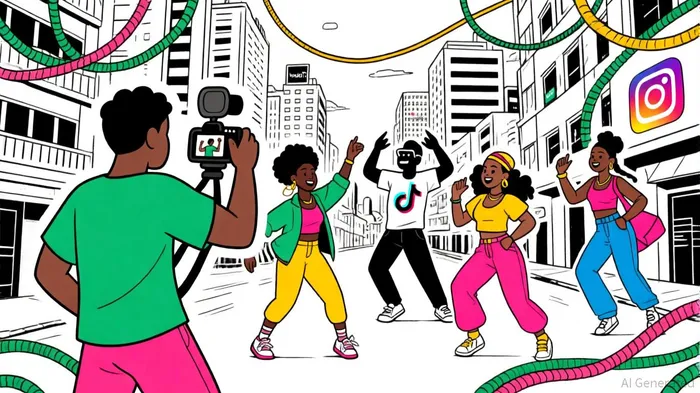
Nigerian creators are leveraging platforms like TikTok, YouTube, and Instagram to monetize their talents in ways previously unimaginable. Top TikTok creators, for instance, can earn up to $5,000 monthly through the platform's Creator Fund, while YouTube and Instagram offer ad revenue, sponsorships, and merchandise sales, according to Business Insider Africa. Women, in particular, are dominating niches such as fashion, wellness, and education, signaling a diversification of creative output and audience engagement, according to TechCabal.
The rise of these platforms is underpinned by a rapidly expanding digital ecosystem. Nigeria's internet user base hit 107 million in 2025, representing 45.4% of the population, with mobile internet penetration at 64%, reported by the International Trade Administration. Smartphone adoption has surged from 44% in 2021 to 64% in 2025, enabling seamless content creation and consumption (the TechCabal analysis cited earlier provides similar figures). This infrastructure is not just a backdrop-it's a catalyst. The Information and Communications Technology (ICT) sector, for example, grew by 31.63% year-on-year in Q1 2025, driven by broadband expansion and data-heavy content platforms, according to MarketNewsNG (see the MarketNewsNG report cited above).
Policy and Partnerships: A Government-Backed Boom
Nigeria's National Digital Economy Policy and Strategy (2020–2030) is a critical enabler. By prioritizing digital literacy and infrastructure, the government is laying the groundwork for a creator-friendly environment, as noted by the International Trade Administration. Initiatives like the Creative Economy Development Fund (CEDF) and Creative Leap Acceleration Programme (CLAP) aim to bridge the gap between talent and capital, offering grants and mentorship to emerging creators (MarketNewsNG details these programs). These programs are not just symbolic-they're strategic, targeting income inequality within the sector, where 56% of creators earn under $100 monthly, while only 3% surpass $5,000 (as highlighted in the TechCabal piece).
Challenges and Opportunities
Despite the optimism, hurdles remain. Inconsistent internet connectivity and limited monetization tools compared to global standards persist (Business Insider Africa covers these constraints). However, these challenges are not insurmountable. The Nigerian fintech boom-driven by mobile money and digital payments-provides a blueprint for scaling solutions (MarketNewsNG explores these parallels). Moreover, the World Bank's projection of 3.6% GDP growth for 2025 underscores a macroeconomic environment increasingly conducive to innovation (reported by Business Insider Africa).
The Investment Thesis
For investors, Nigeria's creator economy offers a dual opportunity: cultural capital and financial returns. The sector's projected contribution of $100 billion to GDP by 2030-driven by music, film, and digital media-signals a shift from oil-dependent growth to a diversified, creative-driven economy (MarketNewsNG discusses the broader economic implications). Platforms that enable cross-border storytelling, like TikTok's global reach, position Nigerian creators to tap into international markets, amplifying both influence and revenue.
Yet, success hinges on addressing income disparities and infrastructure gaps. Investors who partner with local fintechs, telecoms, and content platforms to build scalable monetization tools will be best positioned to capitalize on this wave.
Conclusion
Nigeria's creator economy is a testament to the power of digital democratization. While challenges like inflation and food insecurity linger (covered in Business Insider Africa), the sector's growth trajectory is undeniable. For those willing to navigate the complexities, the rewards are vast-a chance to invest in a generation of creators who are not just shaping Nigeria's future but redefining its global narrative.







Comentarios
Aún no hay comentarios