
The Nickel Bull Case: Oversupply Fears Fade as Structural Shifts Unlock Value
The global nickel market stands at a crossroads. While near-term oversupply and weak prices have cast a shadow over the sector, a closer look reveals structural shifts-driven by China's strategic interventions and evolving demand dynamics-that are quietly reshaping the long-term value proposition for nickel. Investors who focus solely on current price pressures risk missing the broader narrative of supply-side rebalancing and the critical role of nickel in the energy transition.
China's Strategic Stockpiling: A Game Changer
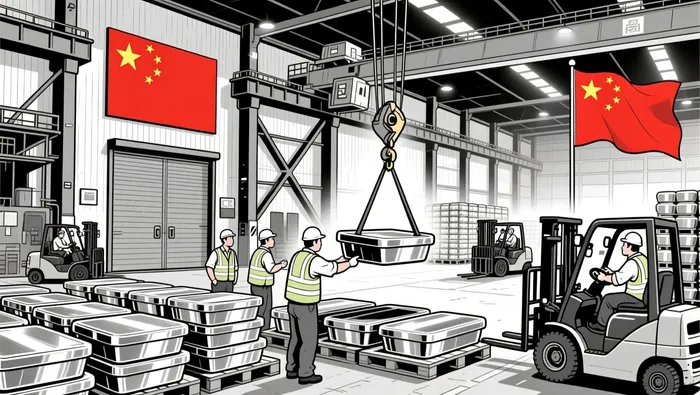
China's decision to double its high-purity Class 1 nickel reserves since late 2024 has become a defining feature of the global nickel landscape. This aggressive stockpiling, despite LME prices languishing below $15,000 per tonne-a level threatening the viability of over 50% of global producers-signals a calculated bet on nickel's long-term strategic value. Beijing's actions are not merely reactive but part of a broader strategy to secure critical materials for its energy transition, particularly for electric vehicle (EV) battery production.
According to a report by , China's stockpiling efforts are designed to create a physical supply buffer that could stabilize a structurally oversupplied market. By absorbing excess global inventory, China is effectively hedging against future price volatility while reinforcing nickel's role in decarbonization. This move also underscores the country's geopolitical positioning, as it seeks to insulate itself from supply chain disruptions and maintain dominance in battery-grade nickel processing.
Structural Rebalancing: From Oversupply to Rationalization
The global nickel market is projected to remain oversupplied in 2025, with a surplus of 198,000 tonnes driven by Indonesia's production growth and weak demand in stainless steel and EV sectors. However, this oversupply is not a permanent condition. As Stainless Steel World notes, the surplus reflects short-term imbalances rather than a fundamental mismatch between supply and demand.
China's influence extends beyond stockpiling. The country's control over refining capacity in Indonesia-a nation that now dominates global nickel production-has created both opportunities and risks. While this concentration raises concerns over environmental compliance and supply chain security, it also provides Beijing with leverage to manage output. Industry experts predict that unsustainable production will eventually rationalize as weak prices force weaker producers to exit the market. This attrition, combined with slower demand growth in stainless steel, could pave the way for a rebalanced market by 2027–2028.
ESG-Driven Supply Diversification: A New Frontier
Amid concerns over Indonesia's environmental practices and geopolitical tensions, a parallel trend is emerging: the rise of ESG-compliant nickel projects in North America. The Crawford Project in Ontario, for instance, is gaining traction as a high-quality sulphide source that aligns with stringent environmental, social, and governance (ESG) criteria. Such projects not only diversify supply away from Indonesian dominance but also attract institutional capital seeking jurisdictions with strong regulatory frameworks.
This shift is critical. highlights, nickel's long-term demand in batteries and energy storage remains robust, even if near-term prices are depressed. The energy transition's insatiable appetite for battery-grade nickel-driven by EV adoption and grid-scale storage-will eventually outpace current supply constraints. Investors who position themselves in projects with clear ESG credentials and proximity to major demand centers (e.g., North America and Europe) stand to benefit from this structural reorientation.
Navigating the Near-Term Headwinds
There is no denying the challenges: a stronger U.S. dollar, U.S.-China trade tensions, and Indonesia's limited success in curbing production quotas have all exacerbated price pressures. Yet these factors are cyclical rather than structural. The key for investors is to distinguish between temporary headwinds and enduring fundamentals.
China's stockpiling, coupled with the rationalization of unprofitable supply, is already laying the groundwork for a more resilient market. Meanwhile, the energy transition's demand trajectory-anchored by EVs and renewable storage-provides a clear long-term tailwind. notes, industry experts anticipate that oversupply will persist in the near term but will eventually give way to tighter balances as demand growth accelerates.
Conclusion: A Bull Case Built on Structure, Not Sentiment
The nickel bear case is rooted in short-term pain: weak prices, oversupply, and geopolitical risks. But the bull case is built on structure. China's strategic stockpiling, the rationalization of unprofitable supply, and the emergence of ESG-aligned projects are creating a foundation for long-term value. For investors willing to look beyond the noise, nickel's role in the energy transition offers a compelling opportunity-one where oversupply fears fade in the face of systemic change.







Comentarios
Aún no hay comentarios