
NFT-Driven User Engagement and Ecosystem Value in Crypto Exchanges
The crypto exchange landscape in 2025 is marked by a critical juncture: platforms must innovate to retain users and sustain liquidity in an increasingly competitive and volatile market. Platform-issued NFTs, such as Ourbit's "ourbie," have emerged as a focal point for addressing these challenges. By embedding utility, exclusivity, and real-world value into digital assets, exchanges aim to transform user engagement and liquidity dynamics. However, the long-term viability of these strategies hinges on overcoming structural friction and aligning with broader trends in blockchain adoption.
The Friction-Liquidity Paradox
User retention in crypto exchanges remains a persistent challenge. A 2025 case study on Coinbase revealed that speculative users, often driven by FOMO (fear of missing out), exhibit high churn rates-over 90% of new users become dormant within months due to onboarding friction, unclear fee structures, and trust deficits. This pattern underscores a paradox: while speculative demand drives short-term liquidity, it also exacerbates instability. High-intent users demonstrate stronger retention when platforms reduce friction, such as streamlining KYC processes or offering transparent incentives.
 The broader NFT market mirrors these dynamics. In 2024, over 79% of listed NFTs remained unsold, reflecting a liquidity crisis fueled by speculative bubbles and technological bottlenecks. High-profile collections like Bored Ape Yacht Club saw dramatic price depreciation, further eroding confidence. For platform-issued NFTs to succeed, they must transcend speculative value and offer tangible utility-such as loyalty rewards, identity verification, or real-world asset representation-to foster long-term engagement according to analysis.
Gamification and Tokenomics: A New Paradigm
Crypto exchanges are increasingly leveraging gamification and tokenomics to address retention and liquidity. Tap-to-Earn (T2E) games, integrated into superapps like Binance and OKX, create daily interaction loops by rewarding users with native tokens or NFTs. These mechanics not only boost daily active users (DAU) but also embed utility into tokens through burn models or vesting periods, reducing the likelihood of immediate cashouts. For instance, platforms can generate revenue via NFT drops, utility token economics, and targeted advertisements, creating a self-sustaining ecosystem according to industry analysis.
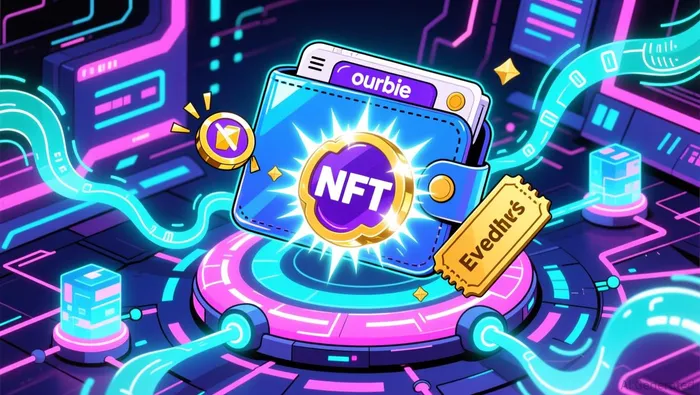
Ourbit's "ourbie" NFT exemplifies this approach. Priced at 10,000 $BITCH with a buyback peg of 300 USDT, the NFT grants holders exclusive benefits like platform coin airdrops, event access, and merchandise. By tying NFT ownership to platform participation, Ourbit aims to incentivize long-term engagement while mitigating the risks of speculative trading. However, the absence of specific ROI metrics for 2024–2025 highlights the need for further data to assess its impact.
Liquidity in a Derivatives-Dominated Market
While NFTs play a role in user retention, liquidity in crypto exchanges remains dominated by derivatives. In Q3 2025, perpetual futures accounted for 78% of trading activity, with daily volumes reaching $24.6 billion-surpassing spot trading by 5–10 times. Centralized exchanges (CEXs) retained a 52.06% market share in 2025, driven by regulatory compliance and high liquidity. Decentralized exchanges (DEXs) also gained traction, with DEX-to-CEX futures volume tripling to 13% according to market research. This shift suggests that platforms must integrate NFTs into broader liquidity strategies, such as using them as collateral or embedding them into derivatives markets.
Prediction markets, for example, have grown to a total value locked (TVL) of $317.91 million in 2025, demonstrating the financial significance of blockchain-based products. NFTs could further enhance these markets by representing tradable assets or governance rights, creating new avenues for liquidity generation.
The Road Ahead: Balancing Utility and Speculation
For platform-issued NFTs to deliver sustainable ROI, exchanges must prioritize utility over speculation. This includes:
1. Reducing Onboarding Friction: Simplifying KYC, payment linking, and fee structures to attract high-intent users.
2. Enhancing Real-World Utility: Leveraging NFTs for supply chain management, identity verification, or asset tokenization, as seen in blockchain Australia's gold-backed NFTs.
3. Gamification and Community Building: Expanding T2E mechanics to foster daily engagement and token utility.
Ourbit's "ourbie" NFT, with its lottery-based subscription model and platform-specific benefits, represents a step in this direction. However, its success will depend on addressing liquidity challenges and proving its ability to retain users beyond speculative cycles.
Conclusion
Platform-issued NFTs like "ourbie" hold promise for redefining user engagement and liquidity in crypto exchanges. By addressing friction points, embedding utility, and aligning with broader trends in gamification and derivatives, exchanges can build ecosystems that prioritize long-term value over short-term speculation. While quantitative metrics for 2024–2025 remain limited, the strategic integration of NFTs into tokenomics and community-driven initiatives offers a compelling roadmap for investors seeking to capitalize on the next phase of blockchain innovation.







Comentarios
Aún no hay comentarios