
The NFRC Bill and Nigeria's Fintech Future: Regulatory Clarity or Innovation Risk?
Regulatory Overhaul: Structure and Scope
The NFRC Bill, spearheaded by the Federal Competition and Consumer Protection Commission (FCCPC), mandates a centralized licensing regime for digital lenders, including telecoms, mobile money operators, and agritech platforms, as described in a Mondaq analysis. Entities must secure approvals within 90 days of the bill's enactment, with non-compliance risking fines up to N100 billion or operational shutdowns. Partnerships between fintechs now require FCCPC validation, and transparency obligations-such as clear disclosure of loan terms-have become non-negotiable, as noted in the same Mondaq analysis.
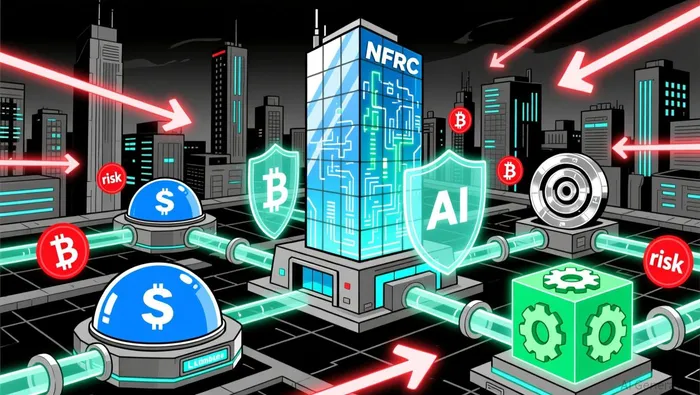
This overhaul replaces a patchwork of regulators, including the Central Bank of Nigeria (CBN) and Securities and Exchange Commission (SEC), with a unified Nigerian Fintech Regulatory Commission (NFRC). The new body will enforce data governance, anti-competitive practices monitoring, and local ownership thresholds, reshaping foreign investment strategies, according to a TechCabal report. For instance, foreign-backed fintechs may need to restructure to meet Nigerian management participation requirements, as the TechCabal report also notes.
Stakeholder Reactions: Caution and Optimism
Investor sentiment remains polarized. On one hand, the CBN's 2024 relaxation of crypto regulations-allowing Virtual Asset Service Providers (VASPs) to open bank accounts-signals a progressive stance, according to a Chambers guide. On the other, the FCCPC's stringent compliance mandates, including mandatory audits and compliance teams, raise operational costs for startups, as the TechCabal report notes.
Data from the Chambers guide highlights Nigeria's dominance, attracting 47% of Africa's fintech deals in 2024. Yet, challenges persist: high inflation, foreign exchange scarcity, and enforcement actions against non-compliant institutions underscore the sector's volatility, as noted in the Chambers guide.
Resilient Operators: Innovation Amidst Constraints
Resilient fintechs are adapting through embedded finance and AI-driven solutions. Scaled players like digital wallets and challenger banks leverage partnerships to bypass regulatory friction, as noted in a BCG analysis. For example, embedded finance models-where financial services are integrated into non-financial platforms-have enabled seamless transactions across industries, as described in a Dirox report.
AI personalization and cybersecurity are also critical. Fintechs now deploy machine learning for fraud detection, provided data governance is robust, as noted in a Crowe report. DeFi platforms and CBDCs, supported by central banks, further illustrate innovation within regulatory guardrails, as the Dirox report also notes.
Investor Strategies: Navigating Compliance and Growth
Investors are prioritizing fintechs with agile compliance frameworks. The NFRC's emphasis on local participation has spurred restructuring among foreign-backed ventures, while SOC reporting and cybersecurity certifications are becoming de facto requirements for funding, as noted in the Crowe report.
A key trend is the rise of "regulatory tech" (RegTech) solutions. Fintechs investing in automated compliance tools-such as real-time transaction monitoring-position themselves to meet NFRC standards without sacrificing speed, according to the Crowe report.
Expert Analysis: Balancing Risks and Rewards
Localized experts argue the NFRC Bill's long-term benefits outweigh short-term friction. By curbing predatory lending and data misuse, the commission could boost consumer trust-a critical factor for scaling in Nigeria's underbanked market, according to the TechCabal report. However, critics warn that overregulation might drive innovation underground, particularly in crypto and decentralized finance, as noted in a CNBC Africa article.
The bill's success hinges on implementation. If the NFRC avoids bureaucratic inertia and collaborates with industry stakeholders, it could catalyze a new era of responsible innovation. Conversely, rigid enforcement risks alienating startups, which comprise 60% of Nigeria's fintech landscape, according to the BCG analysis.
Conclusion: Strategic Engagement for Investors
For investors, the NFRC Bill is neither a death knell nor a panacea. The key lies in identifying fintechs that align compliance with innovation. Prioritize operators with:
1. Regulatory agility: Those leveraging RegTech to meet FCCPC and NFRC standards.
2. Local partnerships: Firms collaborating with Nigerian institutions to navigate ownership requirements.
3. Scalable models: Embedded finance and AI-driven platforms that thrive in structured environments.
Nigeria's fintech future will be defined by its ability to harmonize regulation with creativity. As the NFRC moves toward final legislative approval, investors who act now-targeting resilient operators-stand to reap outsized rewards in a market poised for transformation.







Comentarios
Aún no hay comentarios