
Nextracker's Insider Selling: Signal or Opportunity in a Reshoring Solar Supply Chain Story?
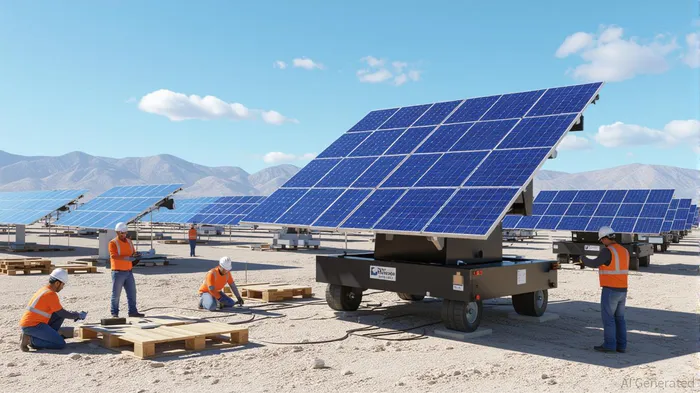
The solar industry in 2025 is defined by two converging forces: the global energy transition and the urgent reshoring of supply chains. NextrackerNXT--, the world's leading solar tracker manufacturer, has positioned itself at the intersection of these trends. While the company's public financials and strategic initiatives paint a compelling picture of growth and innovation, the absence of disclosed insider transactions in 2025 raises questions about whether this silence signals caution or presents an overlooked opportunity for investors.
Reshoring as a Strategic Imperative
Nextracker's commitment to reshoring the U.S. solar supply chain is no longer aspirational—it is operational. The company has invested heavily in domestic manufacturing, aiming to build 10 gigawatts of annual solar tracker capacity within the U.S. by 2025. This includes partnerships with firms like Asteelflash/USI to produce patented components and the establishment of fabrication lines for solar steel and self-powered controller hardware in Silicon Valley and other U.S. hubs [1]. These moves align with broader industry efforts to mitigate supply chain risks, reduce reliance on foreign production, and capitalize on U.S. policy incentives such as the Inflation Reduction Act.
The environmental angle further strengthens this narrative. Nextracker's NX Horizon Low Carbon tracker, which cuts carbon emissions by 35% compared to conventional systems, underscores its dual focus on sustainability and domestic production [2]. For investors, this positions the company as a beneficiary of both decarbonization mandates and the political momentum behind reshoring.
Financial Performance and Market Leadership
Nextracker's financials reinforce its strategic credibility. In Q1 2024, the company reported a 19% year-on-year revenue increase, reaching $479.5 million, alongside a net income of $63.6 million [3]. While 2025 data is not yet available, the company's track record of consistent growth and its dominance in the solar tracker market (over 130 gigawatts shipped globally) suggest resilience amid macroeconomic volatility.
The absence of insider selling in 2025—unlike in previous years—could be interpreted in multiple ways. On one hand, it may indicate that executives and major shareholders are confident in the company's long-term trajectory, given its strong financials and alignment with policy-driven tailwinds. On the other, it could reflect a lack of liquidity events or a deliberate focus on reinvesting capital into domestic operations rather than share sales.
Industry Tailwinds and Risks
The solar industry's 2025 growth is underpinned by record global energy investments, with renewables, grids, and storage expected to attract $2.2 trillion in funding [4]. Nextracker's NX Horizon and NX Horizon-XTR trackers, designed for complex terrains and bifacial optimization, are well-positioned to capture a share of this growth. However, risks remain, including geopolitical tensions over raw materials and potential regulatory shifts.
For investors, the key question is whether Nextracker's reshoring efforts will translate into sustained profitability. The company's focus on reducing levelized cost of energy (LCOE) through advanced tracking systems and low-carbon designs provides a clear value proposition. Yet, the absence of insider transaction data in 2025 means investors must rely on the company's public trajectory rather than private signals.
Conclusion: Opportunity in the Absence of Signals
While the lack of insider selling data in 2025 may frustrate those seeking direct behavioral insights, Nextracker's strategic and financial performance offers a robust alternative. The company's domestic manufacturing push, technological innovation, and alignment with decarbonization goals create a compelling long-term story. For investors, this suggests that the absence of a “signal” is not a red flag but an opportunity to focus on fundamentals.





Comentarios
Aún no hay comentarios