
Nextpower Arabia: A Strategic Power Play in the Middle East Solar Boom
The Middle East and North Africa (MENA) region is emerging as a global epicenter for solar energy development, driven by aggressive clean energy targets and a confluence of geopolitical and economic factors. At the heart of this transformation is Nextpower Arabia, a joint venture between Abunayyan Holding and NextpowerNXT--, which is poised to redefine localized manufacturing and industrialization in the region. By aligning with Saudi Vision 2030 and leveraging strategic partnerships, the venture is not only accelerating the Kingdom's renewable energy ambitions but also positioning itself as a high-margin player in a market projected to exceed 180 gigawatts (GW) of solar capacity by 2030.
Strategic Localization: Building a Solar Manufacturing Hub
Nextpower Arabia's cornerstone initiative is the establishment of a 12 GW annual manufacturing facility in Jeddah, Saudi Arabia, set to open in Q2 2026. This facility will produce solar tracking systems and related technologies, with a focus on sourcing core materials like Saudi-produced steel to bolster local industrial ecosystems. The decision to localize production is a masterstroke in reducing reliance on foreign supply chains, a critical objective under Saudi Vision 2030. By creating up to 2,000 jobs and fostering technical talent, the venture directly supports the Kingdom's goal of economic diversification and self-reliance.
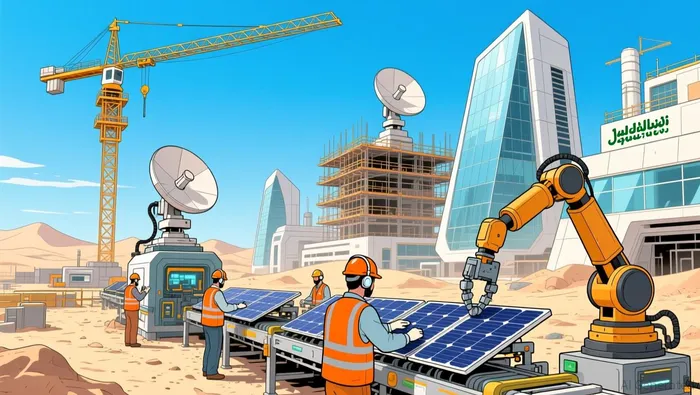 The strategic partnership between Abunayyan Holding-a regional infrastructure leader with 75 years of experience-and Nextpower, a global solar technology innovator, underscores the venture's dual focus on operational expertise and cutting-edge solutions. This synergy enables Nextpower Arabia to deliver cost-competitive solar infrastructure while adhering to the stringent quality standards required for utility-scale projects.
Aligning with Saudi Vision 2030: A Blueprint for Industrialization
Saudi Vision 2030 envisions a post-oil economy, with renewable energy as a linchpin for industrial and economic growth. Nextpower Arabia's 12 GW annual capacity is directly aligned with the Kingdom's ambition to deploy 130 GW of clean energy by 2030, with solar energy accounting for a significant share. The joint venture's emphasis on localizing manufacturing also aligns with the National Renewable Energy Program, which seeks to increase renewables' contribution to the energy mix while reducing the cost of clean energy for regional projects.
Moreover, the $88 million in equity and debt financing secured over two years highlights the venture's commitment to scaling technical capacity and infrastructure development. This financial backing, combined with Abunayyan's regional expertise and Nextpower's technological leadership, creates a robust framework for long-term value creation.
Regional Solar Projections: A 180 GW Opportunity
The MENA region's solar potential is no longer theoretical. According to the Middle East Solar Industry Association (MESIA), the region's solar capacity is projected to surpass 180 GW by 2030, fueled by declining costs and government-backed policies. Meanwhile, the Dii Desert Energy report estimates that 75 GW of solar PV capacity could be installed by 2030 if current projects materialize.
The venture's localized production model also addresses a critical bottleneck in the region: the high logistics costs associated with importing solar equipment. By manufacturing closer to project sites, Nextpower Arabia can reduce capital expenditures and accelerate deployment timelines, making solar projects more viable for developers and governments alike.
High-Margin Growth and Strategic Positioning
Nextpower Arabia's value proposition extends beyond capacity. The joint venture is strategically positioned to capitalize on Saudi Arabia's export development plans, which aim to transform the Kingdom into a regional manufacturing hub for renewable energy technologies. By producing high-value solar tracking systems-components that optimize energy output-Nextpower Arabia can command premium margins compared to lower-margin segments like panel manufacturing.
Furthermore, the venture's alignment with Saudi Vision 2030 ensures access to favorable regulatory frameworks, including tax incentives and streamlined permitting processes. These advantages, coupled with the growing demand for clean energy in the MENA region, create a compelling case for sustained growth.
Conclusion: A Model for Emerging Solar Markets
Nextpower Arabia exemplifies how strategic localization, industrialization, and alignment with national visions can unlock value in emerging solar markets. By addressing supply chain vulnerabilities, fostering job creation, and leveraging regional demand, the joint venture is not only advancing Saudi Arabia's energy transition but also setting a precedent for other nations in the MENA region. As the 180 GW solar target looms on the horizon, Nextpower Arabia's 12 GW capacity represents more than a fraction of the market-it is a calculated, high-impact investment in the future of clean energy.







Comentarios
Aún no hay comentarios