
Nexstar Media’s Strategic Expansion in Regional Sports Broadcasting: Leveraging Localized Rights to Navigate a Fragmented TV Market
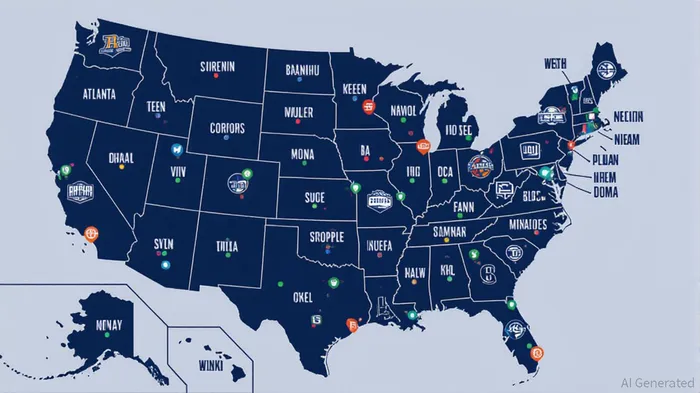
In an era where traditional TV audiences are splintering across streaming platforms and digital channels, Nexstar Media Group’s $6.2 billion acquisition of TEGNA Inc.TGNA-- represents a bold bet on localized sports content as a cornerstone of viewer retention and revenue growth. By combining their portfolios, Nexstar and TEGNATGNA-- aim to create a media juggernaut with 265 full-power television stations, reaching 39% of U.S. TV households. This merger, pending regulatory approval, underscores a strategic pivot toward regional sports rights—a niche that remains resilient despite broader industry headwinds.
The Power of Localized Sports Rights in a Fragmented Market
Localized sports rights have long been a lifeline for regional broadcasters, offering a unique value proposition that national platforms struggle to replicate. Nexstar’s expanded portfolio now includes exclusive coverage of NBA, MLB, NHL, and WNBA teams in key markets like Atlanta, Phoenix, and Seattle. These rights not only anchor local programming but also serve as a magnet for advertising revenue. According to a report by Newscast Studio, advancements in IP workflows and remote production are reducing the cost of live sports broadcasting, enabling smaller leagues and niche content creators to scale efficiently [2]. For Nexstar, this means lower production costs and higher margins as it leverages its expanded footprint to deliver hyper-localized sports content.
Moreover, localized sports rights foster a sense of community that drives viewer loyalty. A 2025 industry analysis by WSC Sports highlights that direct-to-consumer (DTC) streaming services are increasingly using first-party fan data to personalize experiences, from multi-angle camera views to real-time statistics [4]. Nexstar’s investment in digital platforms and Connected TV (CTV) aligns with this trend, allowing it to offer immersive, interactive experiences that keep audiences engaged. For instance, integrating real-time stats and localized language support into broadcasts can deepen fan attachment, particularly in markets with diverse demographics.
Revenue Diversification and Synergy Potential
While Nexstar has not yet released post-merger financial metrics, the broader media landscape offers clues about the potential of localized sports rights. The combined entity is projected to generate $300 million in annual synergies, primarily through operational efficiencies and shared infrastructure [1]. These savings could be reinvested into expanding local news and sports programming, a strategy that resonates with audiences seeking authentic, community-focused content.
The rise of FAST (free ad-supported streaming television) channels further amplifies Nexstar’s opportunities. As noted in a Newscast Studio report, FAST platforms are increasingly hosting niche content, including regional sports, which allows broadcasters to reach underserved audiences without the high costs of subscription models [1]. For Nexstar, this opens a pathway to monetize local sports rights through targeted advertising, particularly in markets where cord-cutting trends have eroded traditional TV ad revenue.
However, challenges persist. TEGNA’s recent Q2 2025 results revealed a 5% year-over-year revenue decline to $675 million, with Q3 projections pointing to an 18–20% drop, largely due to the absence of political and Olympic advertising [5]. Nexstar’s ability to offset these declines will depend on its success in converting local sports rights into sustainable revenue streams. This includes leveraging data-driven personalization and flexible pricing models—such as single-game passes—to cater to price-sensitive younger viewers [4].
Strategic Risks and Industry-Wide Shifts
The fragmented TV market demands agility. Nexstar’s focus on localized sports rights is not without risks. For example, the churn rate among 18–34-year-olds remains high, with many viewers willing to abandon subscriptions for cheaper or more tailored alternatives. To counter this, Nexstar must continue innovating in content delivery, such as integrating immersive technologies like 360° camera angles and interactive overlays [4]. Additionally, the shift toward hybrid models—combining live sports with on-demand and traditional TV—will be critical to maintaining relevance in a competitive landscape [3].
Investment Outlook
Nexstar’s merger with TEGNA positions it as a leader in the regional sports broadcasting space, but success hinges on its ability to adapt to evolving viewer behaviors and technological advancements. While direct post-merger revenue data is currently unavailable, the broader industry’s pivot toward localized, data-driven content suggests a strong foundation for growth. Investors should monitor Nexstar’s progress in monetizing its expanded sports portfolio, particularly its integration of digital platforms and FAST channels. If executed effectively, this strategy could transform Nexstar into a resilient player in a fragmented media ecosystem.
Source:
[1] Nexstar Media GroupNXST--, Inc. Enters into Definitive Agreement to Acquire TEGNA Inc. for $6.2 Billion [https://www.nexstar.tv/nexstar-media-group-inc-enters-into-definitive-agreement-to-acquire-tegna-inc-for-6-2-billion-in-accretive-transaction/]
[2] Ten Trends Defining Broadcast and Media in 2025 [https://www.newscaststudio.com/2025/01/06/outlook-trends-defining-broadcast-and-media-in-2025/]
[3] Streaming - SVOD Platforms Are Adapting to Slower Growth [https://www.filmtake.com/streaming/streaming-market-trends-svod-platforms-are-adapting-to-slower-growth/]
[4] From Fickle Viewers to Committed Fans [https://wsc-sports.com/blog/industry-insights/from-fickle-viewers-to-committed-fans-winning-the-retention-game/]
[5] TEGNA (TGNA) AI Stock Analysis [https://www.tipranks.com/stocks/tgna/stock-analysis]





Comentarios
Aún no hay comentarios