
NexPoint's Small Bay III DST Offering: Capitalizing on Undervalued Industrial Real Estate in a Post-Recession Era
The post-recession real estate landscape in 2025 presents a unique confluence of challenges and opportunities, particularly in the industrial sector. NexPoint's Small Bay III DST Offering, launched on October 13, 2025, exemplifies a strategic approach to capitalizing on undervalued assets in high-growth markets. By targeting two small bay industrial properties in Deerfield Beach, Florida, and Richardson, Texas, the offering aligns with broader economic recovery trends in the Miami and Dallas metropolitan areas, where industrial real estate fundamentals remain resilient despite market cooling.
Strategic Asset Allocation and Market Positioning
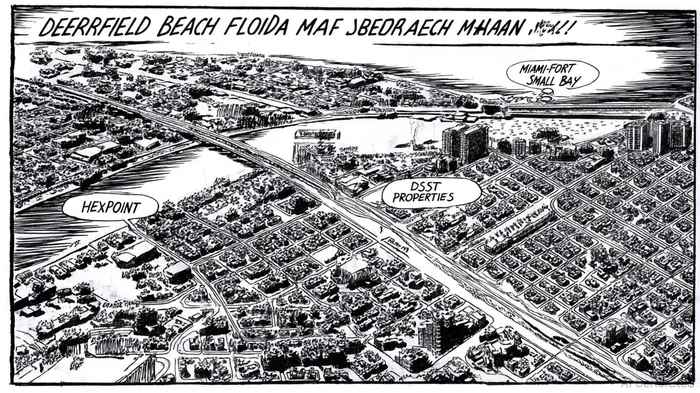
NexPoint's Small Bay III DST Offering targets two properties totaling 509,914 rentable square feet, with a $50.4 million capitalization. The Deerfield Property in Deerfield Beach, Florida, spans 102,245 square feet, while the Arapaho Property in Richardson, Texas, offers 407,669 square feet of flexible industrial space[1]. These assets are strategically located in the Miami-Fort Lauderdale-West Palm Beach and Dallas-Fort Worth MSAs-two of the fastest-growing U.S. regions. Miami's MSA, for instance, has seen a 2.4% annual increase in industrial asking rents to $20.89 per square foot in Q2 2025, despite a 6.5% vacancy rate[3]. Similarly, Dallas's industrial market stabilized in Q2 2025, with vacancy rates declining to 9.1% and rental rates rising 3.5% quarter-over-quarter[1].
The offering builds on NexPoint's prior success with Small Bay I and II DSTs, which raised $59.5 million and $38.8 million, respectively[1]. These earlier ventures focused on Orlando's industrial sector, a market that has similarly benefited from population growth and e-commerce-driven demand for flexible logistics infrastructure. By expanding into Miami and Dallas, NexPoint is leveraging its expertise in small bay industrial assets-properties that offer adaptable layouts and lower construction costs compared to traditional warehouses-while diversifying geographic exposure[5].
Post-Recession Recovery Dynamics in Key Markets
The industrial real estate markets in Miami and Dallas reflect broader post-recession trends characterized by supply-demand imbalances and sector-specific resilience. In Miami, the Q2 2025 vacancy rate of 6.5% marked a 3.2 percentage point increase from Q1 2024, driven by 8.2 million square feet of new warehouse supply[4]. However, asking rents have remained robust, underscoring the region's logistical advantages and demand from e-commerce and international trade[1]. Dallas, meanwhile, has seen a more pronounced correction, with vacancy rates peaking at 10.1% in Q1 2025 before stabilizing to 9.1% in Q2 2025[1]. The Dallas market's 243% quarterly increase in construction activity-delivering 6.8 million square feet of new supply-highlights its capacity to absorb oversupply while maintaining long-term growth potential[1].
These dynamics position NexPoint's Small Bay III properties as undervalued opportunities. For instance, the Arapaho Property in Richardson is situated in the Dallas-Fort Worth MSA, which ranks as the fourth-largest U.S. metropolitan area. Despite Dallas's elevated vacancy rates, specialized industrial sectors like manufacturing have maintained vacancy rates around 4%, indicating persistent demand for niche uses[2]. Similarly, Miami's industrial sector benefits from its role as a gateway to Latin America, with e-commerce and logistics firms prioritizing proximity to ports and transportation networks[1].
Risk Mitigation and Operational Synergies
NexPoint's collaboration with Basis Industrial, a vertically integrated real estate operator, further enhances the offering's risk-adjusted returns. Basis Industrial's expertise in renovating and managing small bay properties ensures that assets like the Belle Property (a prior NexPoint acquisition) and the newly acquired Deerfield and Arapaho properties are optimized for tenant needs[1]. This operational synergy is critical in a post-recession environment, where landlords must balance cost efficiency with tenant retention.
The DST structure itself offers additional advantages. By fractionalizing ownership, NexPoint enables accredited investors to access high-barrier markets like Miami and Dallas with a minimum investment of $100,000[1]. This democratization of access aligns with broader trends in alternative investments, where liquidity constraints and regulatory hurdles often limit participation in traditional real estate ventures.
Conclusion
NexPoint's Small Bay III DST Offering represents a calculated response to the evolving industrial real estate landscape. By targeting undervalued small bay properties in high-growth MSAs, the firm is capitalizing on structural demand drivers-e-commerce expansion, population growth, and supply chain realignment-while mitigating risks through operational expertise and geographic diversification. As Miami and Dallas markets navigate post-recession adjustments, the offering's focus on flexible, cost-effective industrial assets positions it as a compelling vehicle for passive income and long-term capital appreciation.







Comentarios
Aún no hay comentarios