
Nexperia's Geopolitical Crossroads and Its Implications for Global Semiconductor Supply Chains
Geopolitical Tensions and Corporate Sovereignty: A Catalyst for Crisis
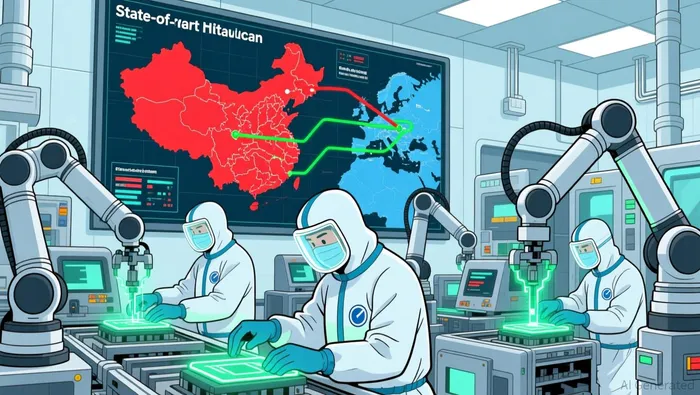
Nexperia's supply chain has become a battleground for geopolitical interests. In October 2024, the Dutch government invoked Cold War-era laws to seize control of Nexperia's operations, citing national security concerns linked to its parent company, Wingtech Technology, according to a StreetInsider report. This move followed a corporate governance clash between Nexperia's Dutch and Chinese entities, which culminated in halted wafer shipments to China's Guangdong assembly plant and unauthorized financial actions by the Chinese subsidiary, according to Coinotag. China retaliated with export restrictions on Nexperia components, disrupting 70% of its packaging operations and sending shockwaves through the automotive and electronics industries, as reported by Coinotag.
The crisis underscores how corporate sovereignty disputes are increasingly weaponized in the semiconductor sector. The U.S. further intensified the situation by imposing export controls on Wingtech, aligning with broader efforts to restrict advanced technologies to China, as noted in the StreetInsider report. These actions reflect a growing trend of governments prioritizing strategic assets over corporate autonomy, with far-reaching implications for global supply chains.
Investment Shifts and Risk Mitigation: Diversification and Localization
In response to Nexperia's crisis, investors and automakers are accelerating strategies to mitigate supply chain risks. Companies like Toyota and Volkswagen are diversifying suppliers, turning to alternatives such as Onsemi, Infineon, and STMicroelectronicsSTM--, according to Cryptorank. This shift has driven increased demand for discrete semiconductors, tightening supply conditions and pushing component prices up by 5% to 20%, according to a SourceAbility analysis.
A key trend is the adoption of localized production and supply chain decoupling. According to a report by the Semiconductor Industry Association, U.S. chipmakers have announced over $500 billion in private-sector investments to revitalize domestic manufacturing, leveraging incentives from the CHIPS Act, as reported in the Semiconductors.org 2025 report. Similarly, the EU's Chips Act aims to double its semiconductor market share by 2030 through €43 billion in public and private funding, as noted in the StreetInsider report. These initiatives are driving capital reallocation toward regions perceived as politically stable, such as the U.S., Germany, and Japan.
Government Incentives and Strategic Alliances
Government policies are playing a pivotal role in reshaping investment dynamics. The U.S. CHIPS Act prohibits recipients of federal subsidies from expanding manufacturing in China or other "adverse foreign jurisdictions," redirecting capital to domestic facilities, as explained in PwC's CHIPS Act analysis. Meanwhile, the EU's Chips Act emphasizes coordination between member states and private firms to secure critical technologies, including quantum chips and advanced packaging, as described in the EU Chips Act.
These policies are not without challenges. The European Court of Auditors has questioned the EU's ability to achieve its 2030 targets, citing insufficient funding and global competition, as reported in the StreetInsider report. Similarly, U.S. firms face pressure to balance national security goals with profitability, as export restrictions risk alienating key markets. However, the long-term benefits of reducing dependency on geopolitically sensitive regions are driving investor confidence in localized ecosystems.
Future Outlook: Navigating a Fractured Landscape
The Nexperia crisis has accelerated a structural inflection in semiconductor supply chains. Investors must now weigh geopolitical risks alongside traditional market factors. For instance, Onsemi's recent focus on AI-driven demand and stock buybacks signals a strategic pivot to high-growth sectors, according to a Finimize report, while Infineon's participation in EU-led initiatives highlights the importance of aligning with regional policies, as noted in the EU Chips Act.
Looking ahead, the sector will likely see continued fragmentation, with companies adopting multi-headquarters models to ensure legal autonomy across jurisdictions. This trend will favor firms with flexible supply chains and strong R&D capabilities, as governments prioritize technological sovereignty.
Conclusion
Nexperia's crisis is a microcosm of the broader semiconductor industry's transformation. As corporate sovereignty clashes and export controls redefine the investment landscape, success will hinge on adaptability, strategic alignment with government incentives, and a commitment to supply chain resilience. For investors, the path forward lies in capitalizing on localized production hubs, diversifying supplier ecosystems, and leveraging policy-driven growth opportunities in the U.S. and EU.





Comentarios
Aún no hay comentarios