
Nexans' Leadership Transition and Strategic Implications for Growth
The recent leadership transition at Nexans has sparked renewed interest in the company's strategic direction and its implications for the industrial transformers market. Julien Hueber, a long-time executive with deep operational expertise, has been appointed as the new Chief Executive Officer, succeeding Christopher Guérin, who will remain in an advisory role until October 31, 2025, according to a PR Newswire release. This transition, while marking a generational shift in leadership, underscores a continuity of vision centered on sustainable electrification-a sector where Nexans has positioned itself as a global leader.
Leadership Continuity and Operational Excellence
Julien Hueber's appointment is not a departure from Nexans' strategic priorities but a reinforcement of them. With over two decades at the company, Hueber has held pivotal roles in supply chain, procurement, and global operations, including leading the PWR Grid & Connect Europe segment-a division critical to the company's industrial electrification ambitions, according to the PR Newswire release. His track record in driving operational efficiency and innovation aligns with Nexans' broader goals of optimizing performance and executing its roadmap for growth, as detailed in the H1 2025 guidance upgrade.
Christopher Guérin, the outgoing CEO, leaves behind a legacy of transformation. Under his leadership, Nexans restructured its operations in 2025 to enhance customer engagement and regional management, while also divesting non-core assets like Lynxeo and AmerCable to focus on high-value electrification solutions, as highlighted at the Nexans Innovation Summit 2025. Guérin's emphasis on sustainability and simplicity has laid the groundwork for Hueber to build on, ensuring that the company's strategic DNA remains intact.
Strategic Initiatives in Industrial Transformers and Electrification
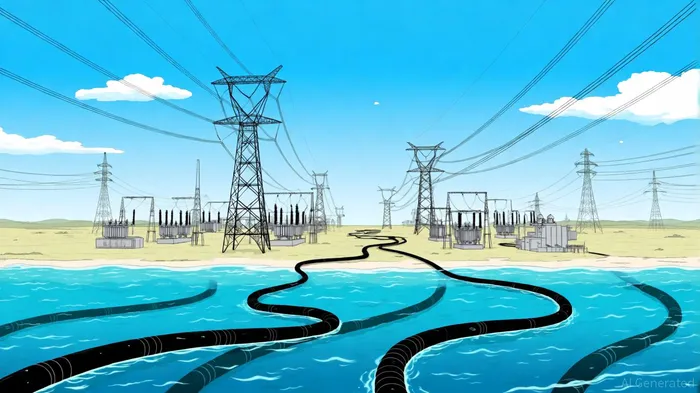
Nexans' focus on industrial transformers and broader electrification is evident in its 2025 financial and operational performance. The company reported a 7.8% organic growth in electrification businesses during the first half of 2025, driven by double-digit expansion in the PWR-Transmission segment, according to Nexans' first-quarter 2025 financial information. This growth was fueled by major contracts, including a €1 billion framework agreement with RTE for offshore wind infrastructure and a subsea cable project for Malta's interconnector, detailed in the H1 2025 guidance upgrade. These projects highlight Nexans' ability to secure high-margin, long-term contracts in the industrial transformers and transmission sectors.
The company's E3 operating model-Environment, Economy, and Engagement-further reinforces its commitment to sustainability and operational performance, a point emphasized at the Nexans Innovation Summit 2025. By aligning its strategic initiatives with global energy transition goals, Nexans is not only addressing regulatory and market demands but also building long-term value for stakeholders. The acquisition of Cables RCT in Spain and the divestiture of non-electrification assets exemplify this focus, enabling Nexans to consolidate its position as an "electrification pure player," as noted in the first-quarter 2025 financial information.
Market Confidence and Financial Resilience
Nexans' financial resilience has bolstered market confidence. For 2025, the company upgraded its guidance, projecting adjusted EBITDA between €770 million and €850 million and free cash flow between €225 million and €325 million, according to the H1 2025 guidance upgrade. These figures reflect the strength of its electrification businesses and the effectiveness of its strategic reorganization. The PWR-Transmission segment, in particular, has become a growth engine, with an adjusted backlog of €8.1 billion as of Q1 2025, per the first-quarter 2025 financial information.
Investor sentiment appears cautiously optimistic. While the market reaction to the leadership transition remains to be fully observed, Nexans has scheduled an investor call to detail the strategic implications of Hueber's appointment, according to the PR Newswire release. The company's ability to maintain strong EBITDA margins and secure large-scale contracts suggests that its operational and financial foundations are robust, even amid global economic uncertainties.
Visualizing the Path Forward
Conclusion
Nexans' leadership transition, while a natural evolution, is a strategic move that reinforces its commitment to industrial electrification and sustainable growth. Julien Hueber's deep operational experience and alignment with the company's long-term vision provide a strong foundation for continuity. As the industrial transformers market evolves in response to decarbonization and digitalization trends, Nexans' focus on innovation, regional expertise, and high-value contracts positions it to capitalize on emerging opportunities. For investors, the combination of leadership stability, strategic clarity, and financial strength offers a compelling case for confidence in the company's future.







Comentarios
Aún no hay comentarios