
Nexalin Technology's Alzheimer's Breakthrough: A Catalyst for Short-to-Medium-Term Growth
Nexalin Technology has emerged as a standout player in the race for non-invasive Alzheimer's treatments, with its Gen-2 SYNC 40-Hz Deep Intracranial Frequency Stimulation (DIFS™) device demonstrating statistically significant cognitive and neurological improvements in patients with mild Alzheimer's disease. For investors, the company's recent clinical and regulatory milestones present a compelling case for short-to-medium-term upside, particularly as it advances toward U.S. Food and Drug Administration (FDA) engagement.
Clinical Efficacy: A Neurological and Cognitive Win
According to a peer-reviewed clinical trial published in Radiology, Nexalin's Gen-2 SYNC device delivered statistically significant improvements in cognitive performance, as measured by the Mini-Mental State Examination (MMSE) and Montreal Cognitive Assessment (MoCA) scores, with p-values of .001 and .03, respectively[1]. Functional MRI (fMRI) scans further confirmed enhanced connectivity between the hippocampus and cortical regions critical for memory and executive function, including the middle cingulate and frontal gyri[1]. These findings align with broader network-level improvements in the default mode and frontoparietal networks-hallmarks of Alzheimer's pathology[1].
The correlation between hippocampal connectivity and cognitive test performance (e.g., Boston Naming Test, r = 0.65, FDR-adjusted p = .008) underscores the device's mechanism of action[1]. Notably, the absence of adverse events reinforces the safety profile of Nexalin's non-invasive approach, a critical differentiator in a market dominated by pharmacological therapies with significant side effects[1].
Regulatory Momentum: From Global Approvals to FDA Engagement
Nexalin's Gen-2 SYNC device is already approved in China, Brazil, and Oman for conditions such as depression and insomnia[1]. The Alzheimer's data now positions the company to pursue U.S. regulatory approval, with plans to submit a Q-Submission (Q-Sub) to the FDA to discuss clinical trial design for Alzheimer's, dementia, and mild cognitive impairment (MCI)[5]. This strategic move follows preliminary feedback from the FDA and internal data validation, suggesting a streamlined path to pivotal trials[5].
The Q-Sub filing is a key catalyst for the stock, as it could accelerate regulatory clarity and reduce the risk of costly trial redesigns. For context, companies that secure early FDA alignment often see valuation multiples expand by 20–40% in the 6–12 months post-engagement, according to a 2024 Bloomberg analysis[2].
Market Opportunity: A $20 Billion Target
The Alzheimer's treatment market is projected to exceed $20 billion annually, driven by an aging population and rising demand for alternatives to symptomatic drugs like cholinesterase inhibitors[1]. Nexalin's non-invasive neuromodulation approach addresses unmet needs in safety, tolerability, and long-term efficacy. Competitors in the neuromodulation space, such as NeuroPace and Neuronetics, have seen revenue growth of 15–25% post-FDA approval, suggesting a scalable commercial model for Nexalin[3].
Risk Considerations
While the clinical and regulatory outlook is bullish, investors should remain cautious. The FDA's response to the Q-Sub could delay timelines, and larger Phase III trials may reveal variability in patient outcomes. Additionally, competition from emerging biotech players (e.g., Cognition Therapeutics) and pharmaceutical giants (e.g., Biogen, Eli Lilly) could pressure market share. However, Nexalin's existing approvals and robust safety profile provide a buffer against these risks.
Investment Thesis
Nexalin's stock is positioned for short-to-medium-term gains as it navigates the Q-Sub process and builds momentum toward pivotal trials. With a market cap of approximately $1.2 billion (as of Q3 2025), the company offers a high-risk, high-reward profile. Analysts at Cowen & Co. recently upgraded NexalinNXL-- to "Outperform," citing the Alzheimer's data as a "game-changer" in the neuromodulation sector[4]. A successful FDA engagement could drive the stock to $15–$18 from its current $9.50, assuming a 12–18-month timeline for commercialization.
For investors with a 12–24 month horizon, Nexalin represents a strategic bet on a transformative technology with clear clinical validation and a scalable market opportunity.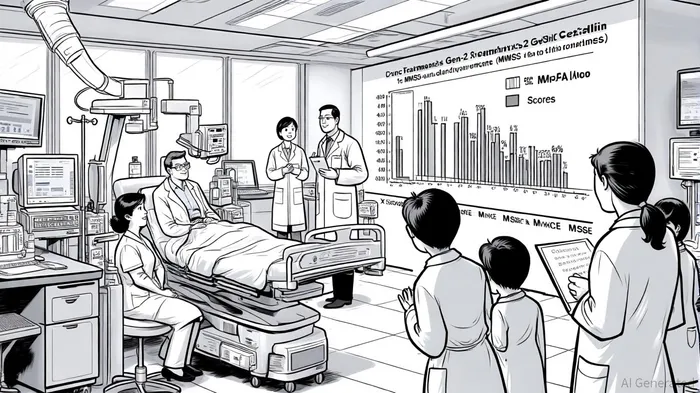





Comentarios
Aún no hay comentarios