
NewtekOne's Baby Bond 2025: Navigating Risk and Reward in High-Yield Corporate Debt
The allure of high-yield corporate debt lies in its promise of outsized returns, but this comes at the cost of elevated risk. For investors considering NewtekOne's Baby Bond 2025—a speculative instrument tied to the company's broader financial services portfolio—the challenge is to balance potential gains against the uncertainties of a market increasingly shaped by macroeconomic turbulence. While specific data on the Baby Bond's yield, credit rating, or maturity remains opaque, a broader analysis of high-yield debt frameworks and NewtekOne's business model offers a lens to evaluate its risk-reward profile.
The High-Yield Landscape: A Double-Edged Sword
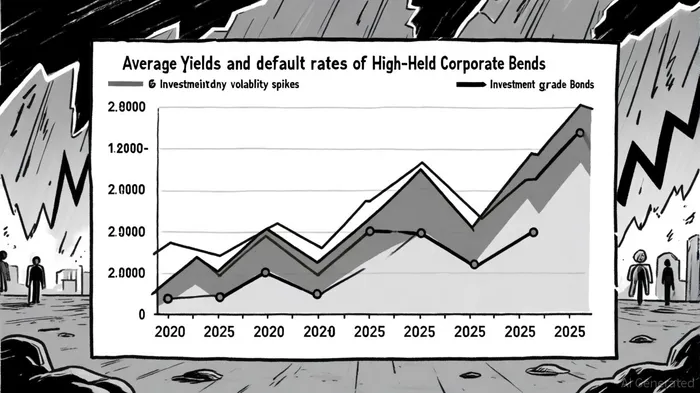
High-yield bonds, often dubbed “junk bonds,” typically offer higher coupon rates to compensate for the increased default risk of issuers with lower credit ratings. According to a report by Bloomberg, the average yield on high-yield bonds in 2025 stands at approximately 7.2%, compared to 4.1% for investment-grade debt[1]. However, this premium comes with volatility. Historical data from the Federal Reserve shows that during economic downturns, default rates for high-yield bonds can surge from 1.5% to over 10% within a single year[2]. For NewtekOne's Baby Bond, which appears to sit within this risk spectrum, investors must weigh these systemic risks against the company's operational resilience.
NewtekOne's Business Model: A Mixed Bag
NewtekOne, a NASDAQ-listed entity (NEWT) operating since 2000, offers a diversified suite of financial services, including lending, insurance, and payment processing[3]. Its ability to generate consistent cash flows from these operations could theoretically support its debt obligations. However, the lack of granular data on the Baby Bond's terms—such as its maturity date or covenants—leaves critical gaps in assessing its specific risk factors. For instance, while the company's website highlights competitive interest rates on certificates of deposit and savings accounts[4], it provides no details on the Baby Bond's structure or collateralization. This opacity is a red flag for risk-averse investors.
Risk Factors: Beyond Credit Ratings
Even without a formal credit rating for the Baby Bond, general principles of risk analysis apply. High-yield debt is inherently sensitive to interest rate fluctuations and liquidity crunches. A study by the Journal of Finance notes that a 1% increase in benchmark interest rates can lead to a 5–7% decline in high-yield bond prices[5]. Given the Federal Reserve's recent hawkish stance, this dynamic could pressure the Baby Bond's market value. Additionally, NewtekOne's exposure to niche markets—such as small business lending—introduces sector-specific risks. If its borrowers face cash flow constraints, the company's ability to service its own debt could be compromised.
Reward Potential: A Question of Timing
The potential rewards of the Baby Bond hinge on its alignment with macroeconomic cycles. If the bond matures during a period of economic expansion, its yield could outperform traditional fixed-income instruments. However, the absence of a stated maturity date complicates this calculus. Investors must also consider NewtekOne's track record: while the company has weathered past downturns, its reliance on fee-based revenue streams (e.g., insurance underwriting) introduces variability in cash flow generation[6].
Conclusion: Proceed with Caution
NewtekOne's Baby Bond 2025 embodies the classic trade-off between yield and risk. While the company's diversified financial services model offers a degree of stability, the lack of transparency around the bond's terms and the broader volatility of high-yield markets demand rigorous due diligence. For investors, the key takeaway is clear: without concrete data on credit metrics, liquidity terms, or stress-test scenarios, the Baby Bond remains a speculative bet best suited for those with a high-risk tolerance and a long-term horizon.





Comentarios
Aún no hay comentarios