
Newsom Leans on Veteran Republican to Push $40 Billion California Fire Aid
Generado por agente de IAHarrison Brooks
jueves, 27 de febrero de 2025, 3:18 pm ET2 min de lectura
ETN--
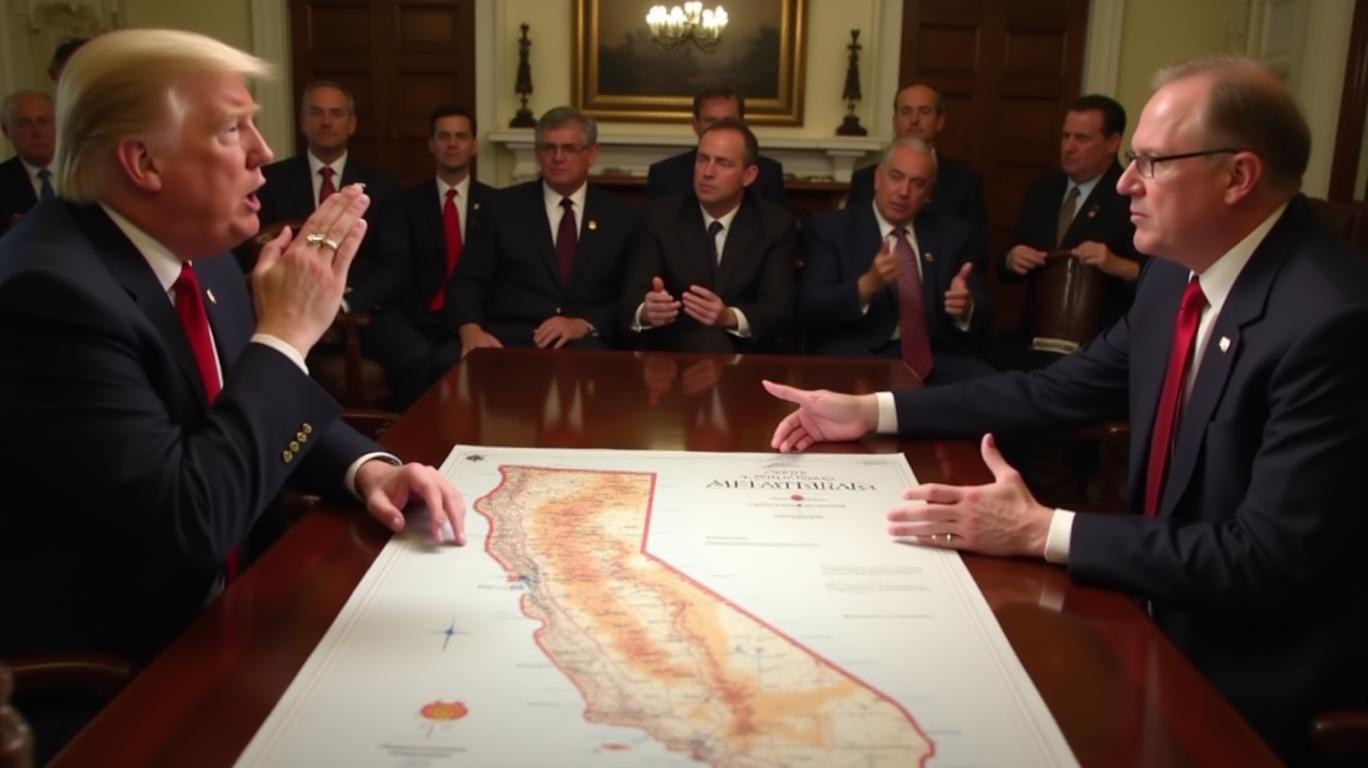
Governor Gavin Newsom is seeking a significant increase in federal aid to help California recover from the devastating wildfires that struck the state in January. In a letter to Congress, Newsom requested nearly $40 billion in disaster funding, a substantial escalation from the initial $2.5 billion relief package he signed earlier this year. To bolster his case, Newsom has enlisted the support of a veteran Republican, former President Donald Trump, who has demonstrated a strong commitment to supporting Los Angeles' recovery efforts.
The escalation in aid request reflects the evolving needs and priorities of the affected communities. The fires in Southern California, particularly the Palisades and EatonETN-- fires, were unprecedented in their scale and devastation. They destroyed over 16,000 structures, including homes and businesses, and resulted in at least 29 deaths. The economic impact of the fires has been substantial, with estimates suggesting that the total economic loss from the firestorm could surpass $250 billion, and real estate losses alone potentially topping $30 billion.
As the recovery process progressed, it became clear that there were significant long-term needs, such as rebuilding infrastructure, businesses, schools, and health care facilities. These long-term needs required a substantial increase in aid. Additionally, political pressure mounted as the extent of the destruction and the needs of the affected communities became more apparent. This pressure came from both state and federal officials, as well as from the affected communities themselves.
In his letter to Congress, Newsom outlined the proposed allocation of funds across various sectors to address the immediate and long-term recovery needs of the impacted regions. The $40 billion package includes $16.8 billion for public assistance emergency work, $9.9 billion to repair houses and businesses, $5.3 billion for business loans, $4.32 billion for business grants, $2 billion for low-income housing tax credits, and hundreds of millions more for transportation and water infrastructure and other programs.
The involvement of a veteran Republican like Trump in pushing for $40 billion in California fire aid can significantly impact the bipartisan support for the legislation. By having a prominent Republican back the legislation, it sends a signal to other Republican lawmakers that the aid is a bipartisan priority, potentially increasing the likelihood of its passage. This strategic move by Newsom's administration can provide political cover for Republican lawmakers who might otherwise be hesitant to back a Democratic governor's request for federal aid. Additionally, Trump's involvement can generate significant media attention, which can help to raise awareness about the devastating impact of the fires and the urgent need for aid.
In conclusion, the escalation of the requested aid from $2.5 billion to $40 billion reflects the evolving needs and priorities of the affected communities, as the scale of destruction, economic impact, long-term recovery needs, political pressure, and changing priorities all contributed to the increase in the aid package. The involvement of a veteran Republican like Trump in pushing for the aid can significantly impact the bipartisan support for the legislation and bring strategic benefits to Newsom's administration, such as increased political cover, media attention, potential for future cooperation, and a demonstration of leadership.
Governor Gavin Newsom is seeking a significant increase in federal aid to help California recover from the devastating wildfires that struck the state in January. In a letter to Congress, Newsom requested nearly $40 billion in disaster funding, a substantial escalation from the initial $2.5 billion relief package he signed earlier this year. To bolster his case, Newsom has enlisted the support of a veteran Republican, former President Donald Trump, who has demonstrated a strong commitment to supporting Los Angeles' recovery efforts.
The escalation in aid request reflects the evolving needs and priorities of the affected communities. The fires in Southern California, particularly the Palisades and EatonETN-- fires, were unprecedented in their scale and devastation. They destroyed over 16,000 structures, including homes and businesses, and resulted in at least 29 deaths. The economic impact of the fires has been substantial, with estimates suggesting that the total economic loss from the firestorm could surpass $250 billion, and real estate losses alone potentially topping $30 billion.
As the recovery process progressed, it became clear that there were significant long-term needs, such as rebuilding infrastructure, businesses, schools, and health care facilities. These long-term needs required a substantial increase in aid. Additionally, political pressure mounted as the extent of the destruction and the needs of the affected communities became more apparent. This pressure came from both state and federal officials, as well as from the affected communities themselves.
In his letter to Congress, Newsom outlined the proposed allocation of funds across various sectors to address the immediate and long-term recovery needs of the impacted regions. The $40 billion package includes $16.8 billion for public assistance emergency work, $9.9 billion to repair houses and businesses, $5.3 billion for business loans, $4.32 billion for business grants, $2 billion for low-income housing tax credits, and hundreds of millions more for transportation and water infrastructure and other programs.
The involvement of a veteran Republican like Trump in pushing for $40 billion in California fire aid can significantly impact the bipartisan support for the legislation. By having a prominent Republican back the legislation, it sends a signal to other Republican lawmakers that the aid is a bipartisan priority, potentially increasing the likelihood of its passage. This strategic move by Newsom's administration can provide political cover for Republican lawmakers who might otherwise be hesitant to back a Democratic governor's request for federal aid. Additionally, Trump's involvement can generate significant media attention, which can help to raise awareness about the devastating impact of the fires and the urgent need for aid.
In conclusion, the escalation of the requested aid from $2.5 billion to $40 billion reflects the evolving needs and priorities of the affected communities, as the scale of destruction, economic impact, long-term recovery needs, political pressure, and changing priorities all contributed to the increase in the aid package. The involvement of a veteran Republican like Trump in pushing for the aid can significantly impact the bipartisan support for the legislation and bring strategic benefits to Newsom's administration, such as increased political cover, media attention, potential for future cooperation, and a demonstration of leadership.

Divulgación editorial y transparencia de la IA: Ainvest News utiliza tecnología avanzada de Modelos de Lenguaje Largo (LLM) para sintetizar y analizar datos de mercado en tiempo real. Para garantizar los más altos estándares de integridad, cada artículo se somete a un riguroso proceso de verificación con participación humana.
Mientras la IA asiste en el procesamiento de datos y la redacción inicial, un miembro editorial profesional de Ainvest revisa, verifica y aprueba de forma independiente todo el contenido para garantizar su precisión y cumplimiento con los estándares editoriales de Ainvest Fintech Inc. Esta supervisión humana está diseñada para mitigar las alucinaciones de la IA y garantizar el contexto financiero.
Advertencia sobre inversiones: Este contenido se proporciona únicamente con fines informativos y no constituye asesoramiento profesional de inversión, legal o financiero. Los mercados conllevan riesgos inherentes. Se recomienda a los usuarios que realicen una investigación independiente o consulten a un asesor financiero certificado antes de tomar cualquier decisión. Ainvest Fintech Inc. se exime de toda responsabilidad por las acciones tomadas con base en esta información. ¿Encontró un error? Reportar un problema


SOBRE NOSOTROS
Nuestra historiaAutores de noticiasBase de conocimientosPolítica de privacidadTérmino de usoDescargo de responsabilidad de corretaje de tercerosTérminos de uso de AIMEDivulgaciones de riesgos de AInvest AICarrerasCONTÁCTENOS
Email: support@ainvest.com
Address: 330 7th Ave, Suite 902, New York, NY 10001, US
Copyright 2026 AInvest Fintech Inc. All rights reserved.


Comentarios
Aún no hay comentarios