
News Corp's $1 Billion Buyback: A Strategic Bet on Undervaluation and Core Growth Pillars
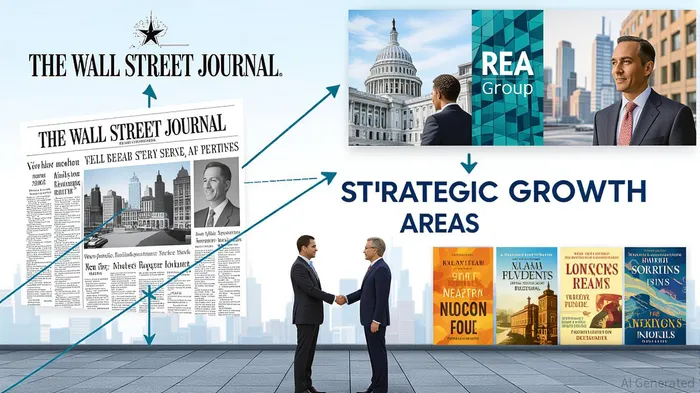
News Corp (NWS) has announced a $1 billion stock repurchase program, signaling confidence in its financial resilience and undervalued equity. This move underscores a deliberate capital allocation strategy aimed at enhancing shareholder returns while leveraging the strength of its core businesses—Dow Jones, Digital Real Estate, and Book Publishing. With robust cash flows, a strengthening balance sheet, and strategic partnerships propelling growth, the buyback could unlock value for investors. However, risks tied to cyclical markets and execution remain critical considerations.
Financial Health: A Solid Foundation for Buybacks
News Corp's 2024 financial results reveal a company primed for capital returns. Full-year revenue grew to $10.09 billion (+2% year-over-year), driven by standout performances in its high-margin segments. Digital Real Estate Services (via REA Group) surged 19% annually, while Book Publishing revenue rose 6%, fueled by audiobook dominance. Dow Jones also delivered 4% revenue growth, with its professional information division (Risk & Compliance, Energy) leading the charge.
Despite these gains, the stock trades at a trailing P/E of ~11x, below its five-year average of 14x, suggesting undervaluation. This creates an opportunity for NewsNWSA-- Corp to repurchase shares at a discount. Cash flow metrics further support the buyback: free cash flow increased to $121 million in Q2 2025, up 25% year-over-year, while net debt has shrunk to $1.95 billion—a 7% decline from mid-2024. The pending sale of Foxtel to DAZN, valued at A$3.4 billion, could reduce debt further and free up capital for strategic initiatives.
Core Growth Pillars: The Engine of Sustained Cash Flow
The buyback's success hinges on the durability of News Corp's core segments:
Digital Real Estate (REA Group):
REA's Q4 revenue jumped 37% to $305 million, driven by Australian residential listings and expansion into India. Its 2024 full-year revenue grew 19%, with international markets now contributing 11% of its top line. This geographic diversification positions REA to capitalize on global housing demand, a key lever for recurring revenue.Book Publishing:
HarperCollins' 15% Q4 revenue growth (to $512 million) reflects strong demand for physical and digital books, with audiobooks now outselling e-books. Titles like The Bridgerton Series and The Midnight Feast have driven subscription-based sales, while partnerships with platforms like SpotifySPOT-- amplify reach. Digital sales now account for 12% of Book Publishing's revenue, up from 10% in 2023.Dow Jones:
The Wall Street Journal's 7% subscription growth (to ~4.2 million subscribers) and 12% rise in digital ad revenue highlight its premium content strategy. Dow Jones' professional information division, which accounts for 52% of its revenue, benefits from rising demand for compliance and energy data tools.
These segments collectively generated 80% of News Corp's 2024 EBITDA, ensuring a stable cash flow base to fund buybacks without compromising growth investments.
Rationale for Accelerating Buybacks: Undervaluation and Shareholder Focus
News Corp's buyback is a calculated response to its stock's current discount to intrinsic value. With a dividend yield of 2.5% and a 5-year average buyback yield of 4%, the $1 billion program could meaningfully reduce shares outstanding, boosting EPS and valuation multiples. Management has emphasized portfolio simplification, with the Foxtel sale redirecting capital toward higher-margin businesses.
The company's focus on cost discipline—evident in a 5% headcount reduction and lower production costs—further supports free cash flow generation. Meanwhile, strategic bets like its OpenAI partnership aim to future-proof content creation and IP protection, mitigating risks from AI-driven content aggregators.
Risks and Challenges
Despite the positives, several risks cloud the outlook:
- Cyclical Exposure: Declines in News Media advertising (down in 2024) and housing market weakness in the U.S. (affecting Move) could strain margins.
- Execution Risks: The Foxtel sale's regulatory approval timeline remains uncertain, delaying balance sheet improvements.
- Content Competition: AI-driven content aggregators pose a threat to traditional publishing revenue, despite legal actions taken by News Corp.
Investment Takeaways
News Corp's $1 billion buyback is a compelling move for long-term investors, provided they acknowledge the risks. Key catalysts include:
- Balance Sheet Strength: The Foxtel sale could reduce net debt below $1.5 billion, enhancing financial flexibility.
- Segment Resilience: REA's international growth, Dow Jones' premium subscriptions, and audiobook dominance offer secular tailwinds.
- Valuation Multiplier Expansion: A buyback-fueled EPS boost could narrow the P/E discount to peers.
For investors, the stock's current yield and the buyback's accretive potential make it attractive at current levels. However, short-term volatility tied to macroeconomic factors or regulatory delays may warrant a gradual approach.
Conclusion
News Corp's strategic capital allocation—prioritizing buybacks while nurturing high-growth segments—positions it to deliver shareholder value in a challenging media landscape. While risks exist, the company's financial discipline and focus on undervalued assets suggest this is a stock to watch for patient investors.
Consider News Corp for a balanced portfolio seeking exposure to digital-first media and real estate services, but monitor macroeconomic headwinds and execution milestones.







Comentarios
Aún no hay comentarios