
Newmont's Strategic Divestment of Orla Mining Ltd.: Repositioning Capital for Higher-Growth Opportunities in the Evolving Gold Sector
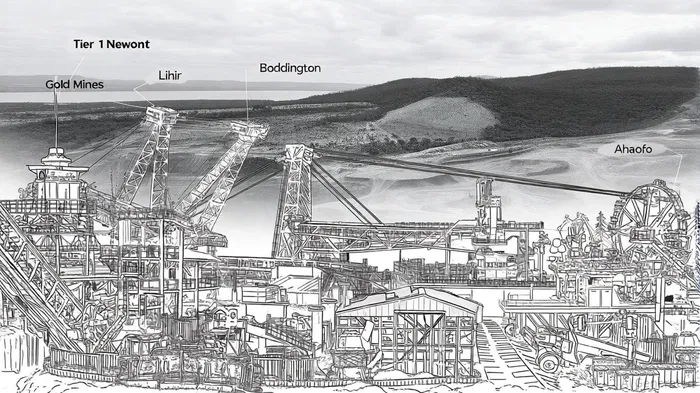
Newmont Corporation's recent $439 million divestment of its 13.3% stake in Orla Mining Ltd.ORLA-- marks a pivotal step in its broader strategy to reallocate capital toward higher-growth opportunities in the gold sector. This move, part of a $4.3 billion divestiture program[4], underscores Newmont's commitment to streamlining its portfolio, enhancing financial flexibility, and prioritizing core operations amid a rapidly evolving industry landscape. By divesting non-core assets like Orla, NewmontNEM-- is not only unlocking liquidity but also positioning itself to capitalize on technological advancements, sustainability-driven demand, and long-term gold price trends.
Strategic Rationale: Unlocking Capital for Core Priorities
Newmont's decision to exit Orla aligns with its capital allocation framework, which emphasizes returning value to shareholders and reinvesting in high-return projects. CEO Tom Palmer explicitly stated that the sale “enables us to focus on Tier 1 assets and strengthen our financial position”[3]. The proceeds from this transaction, combined with the recent $150 million sale of the Coffee Project in Yukon[4], contribute to nearly $900 million in after-tax proceeds for 2025. These funds are being directed toward debt reduction, dividend sustainability, and strategic investments in long-life, low-cost gold operations.
The divestment also reflects a broader industry trend of major producers consolidating portfolios to mitigate development risks and optimize returns. For instance, Agnico Eagle Mines' prior sale of its 11.3% stake in Orla for $560.5 million[2] highlights the sector's shift toward prioritizing operational efficiency over speculative ventures. By exiting Orla, Newmont reduces exposure to development-stage projects while retaining focus on its core Tier 1 assets, which are projected to generate 5.9 million ounces of attributable gold production in 2025 at an all-in sustaining cost (AISC) of $1,630 per ounce[3].
Capital Reallocation: Shareholder Returns and High-Return Projects
Newmont's capital allocation strategy is anchored in disciplined returns to shareholders and strategic reinvestment. In the first half of 2025 alone, the company executed $1.359 billion in share repurchases and announced a new $3 billion repurchase program[2]. Additionally, Newmont maintains a consistent quarterly dividend of $0.25 per share, supported by a conservative payout ratio of 19.1%[2]. These actions reinforce investor confidence, particularly as gold prices surge to record highs—reaching $3,273 per ounce in May 2025[1].
Beyond shareholder returns, Newmont is reinvesting in high-quality, long-life projects. The Ahafo North expansion in Ghana, for example, is expected to add 275,000 to 325,000 ounces of annual production by 2028, while the Tanami Expansion 2 project will boost output by 150,000 to 200,000 ounces[3]. These investments are designed to extend mine life, reduce AISC, and enhance Newmont's competitive positioning in a sector where over 40% of companies are adopting AI-driven automation to improve efficiency[1].
Industry Trends: Innovation, Sustainability, and ESG Alignment
Newmont's divestment strategy is further contextualized by broader industry shifts toward technological innovation and sustainability. The company is leveraging AI and machine learning for exploration and predictive maintenance, while also advancing eco-friendly practices such as bioleaching and water recycling[1]. These initiatives align with the World Gold Council's Responsible Gold Mining Principles, which are becoming critical for maintaining market access and brand reputation[1].
Moreover, Newmont's focus on Tier 1 assets—defined by high production volumes, low costs, and stable geographies—positions it to weather the sector's projected production peak in 2025[2]. As global gold output is expected to decline by 17% by 2030 due to resource depletion[2], Newmont's emphasis on long-life projects and operational efficiency ensures resilience. Analysts project gold prices could reach $4,000 per ounce by mid-2026[4], further amplifying the company's growth potential.
Conclusion: A Strategic Pivot for Long-Term Growth
Newmont's divestment of Orla Mining Ltd. is a calculated move to reposition capital in alignment with its strategic priorities and industry dynamics. By exiting non-core assets and reinvesting in Tier 1 operations, the company is enhancing financial flexibility, accelerating shareholder returns, and leveraging technological and sustainability-driven growth. As the gold sector navigates rising discovery costs and evolving ESG expectations, Newmont's disciplined approach positions it as a leader in a market poised for sustained expansion.





Comentarios
Aún no hay comentarios